Taiwan in 2026 is worth visiting for three reasons that do not apply to any adjacent country: the food culture, specifically in Tainan; Taroko Gorge, which is one of the most dramatic natural landscapes in Asia and is regularly left off first-time itineraries; and the specific warmth of the welcome, which is genuine rather than performed and consistently surprises visitors who arrive expecting the formality of neighbouring countries. Taiwan welcomed approximately 3 million visitors in the first four months of 2026, with full-year arrivals targeting 9.3–9.4 million (Taiwan Tourism Administration). Visa-free entry applies to US, UK, EU, Canadian and Australian nationals.
Taiwan is not a cheaper version of Japan. This comparison is made often and flatters neither country. The food is different — more chaotic, more generous, less precise, better in specific categories that Japanese food does not attempt. The cities are different — Taipei operates at a pace and density that Tokyo does not replicate. The landscape is different — a subtropical mountain island with marble canyons and high-altitude cedar forests has different geography from Japan’s volcanic archipelago. The comparison exists because both countries use traditional East Asian characters, are geographically proximate, and were connected through Japan’s colonial period from 1895 to 1945. This connection is historical. It does not make the countries interchangeable.
Taiwan recorded 8.57 million overseas arrivals in 2025, equivalent to 72.3% of its pre-pandemic levels (Taiwan Tourism Administration), and is rebuilding international awareness specifically outside the Japan-Korea circuit. The government’s 2026 “Taiwan the Lucky Land” campaign offers registered independent travellers a lottery chance at NT$5,000 consumption vouchers — approximately £120 — valid for accommodation or transport cards. Register on the official government site one to seven days before arrival. The lottery is not guaranteed; the registration takes five minutes.
What is Taiwan actually for?
Taiwan is for the food, the mountains, and a specific kind of city life that Taipei delivers without the pressure that Tokyo or Seoul apply to the visitor experience.
The food is the most significant reason and requires specific explanation. Taiwanese cuisine is distinct from Chinese cuisine, influenced by indigenous Austronesian traditions, Japanese colonial-era cooking, and the mainland Chinese regional cuisines that arrived with the Nationalist government in 1949. The result is a food culture that contains excellent versions of xiaolongbao (soup dumplings), beef noodle soup, scallion pancakes, and oyster vermicelli alongside night market items that have no mainland equivalent. The beef noodle soup in Taipei is not the same as the beef noodle in Tainan. The oyster omelette in Tainan is not available in the same quality in Taipei. Regional distinction within a small island is a reliable indicator of a serious food culture.
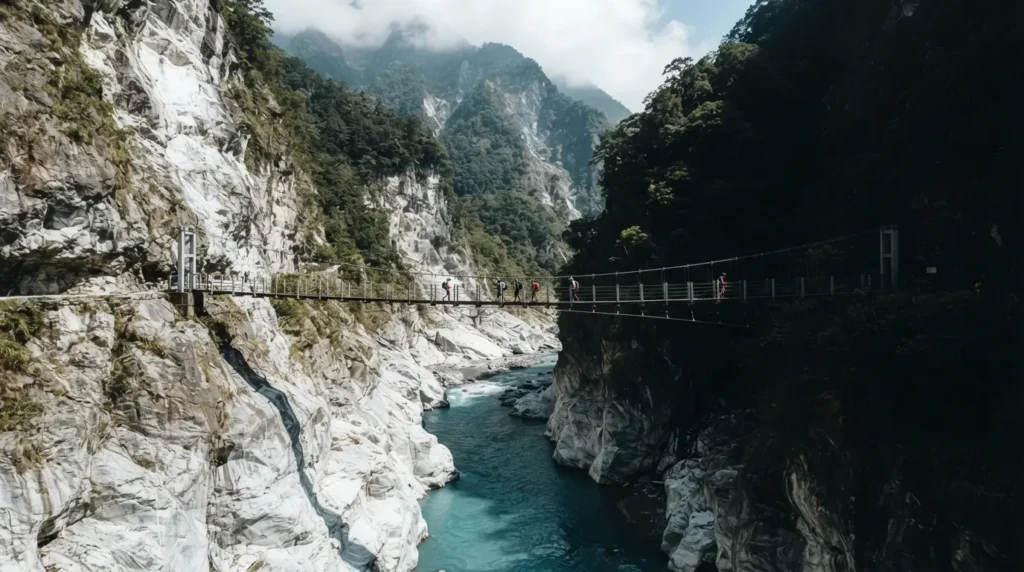
The mountains are the second reason. Taiwan’s central mountain range contains fifteen peaks above 3,000 metres. Taroko Gorge in the east is a marble canyon carved by the Liwu River, accessible by road and trail, with vertical walls and a clarity of geology that makes it one of the most dramatic single landscapes in Asia.
How do you structure a first trip to Taiwan in 2026?
| Destination | Days | Best for | Food signature | How to get there |
|---|---|---|---|---|
| Taipei | 3–4 | City base, night markets, museums, day trips | Xiaolongbao, beef noodle soup, night market | Direct international flights; city centre |
| Jiufen | Half day | Former gold-mining town, Spirited Away aesthetic, views | Tea houses, taro balls | Bus from Taipei (1h15) |
| Taroko Gorge | 1–2 | Marble canyon, serious hiking, natural scale | Eastern Taiwan seafood | Train Taipei → Hualien (2h30), bus into gorge |
| Tainan | 2 | Oldest city, best food, temples, culture | Coffin bread, milkfish, shrimp rolls, oyster vermicelli | HSR Taipei → Tainan (1h45) |
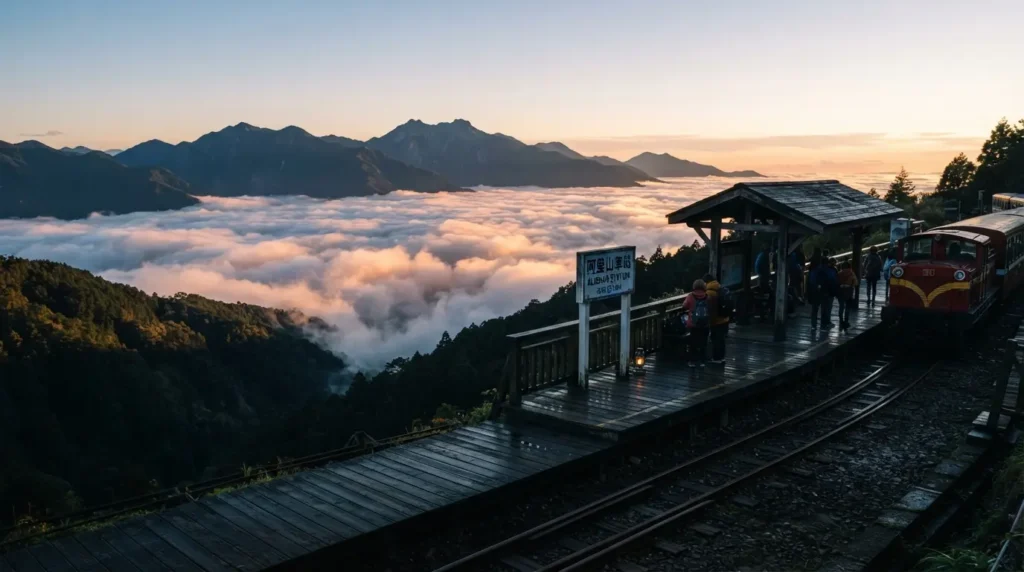
| Alishan | 1–2 | Sunrise above cloud sea, cedar forests, mountain railway | Alishan oolong tea, wild boar sausage | Train from Chiayi (2h30) |
| Sun Moon Lake | 1 | Lakeside calm, cycling, aboriginal culture | Sun Moon Lake black tea | Bus from Taichung (1h15) |
Sources: taiwan.net.tw (Taiwan Tourism Administration) 2026; taipeitourism.org 2026 Taipei guide; thechinajourney.com Taiwan guide
The correct first trip to Taiwan covers Taipei (three nights), a day in Jiufen, Taroko Gorge (one night in Hualien), and Tainan (two nights) before returning to Taipei for the flight home. Ten days total. The high-speed rail (THSR) handles the Taipei-Tainan leg in one hour and forty-five minutes. The Taroko leg requires the conventional TRA rail to Hualien.
What makes Taipei worth more than a long weekend?
The quick answer is that a long weekend does not reach any of the things that make Taipei distinctive. The Taipei 101 observation deck is correct for the view. The Longshan Temple in the Wanhua district is the oldest functioning temple in the city and operates as a working religious site rather than a heritage attraction. The National Palace Museum houses one of the world’s largest collections of Chinese imperial art — approximately 700,000 objects — and requires two full visits to see its most significant holdings adequately.
The National Chiang Kai-shek Memorial Hall at the centre of the city is the largest single public space in Taipei and worth visiting in the early morning when the changing of the guard ceremony is precise, formal and conducted without acknowledgement of the considerable audience.
The night markets — which one and what to order
Shilin Night Market is the most famous and the most tourist-adapted. Raohe Street Night Market is smaller, more local and produces better food at lower prices. The specific items worth ordering in either: oyster vermicelli (oysters in a sweet potato starch sauce with a tomato-based topping), stinky tofu (the smell is accurate; the flavour is specific and worth trying), grilled corn with sesame and chilli, and the taro ball desserts in a range of colours at the dessert stalls.
A Taipei night market street food tour through Raohe covers the stalls in sequence with context for what each item is and where it comes from.
Din Tai Fung and what it represents
Din Tai Fung, the xiaolongbao restaurant that began as a cooking oil shop in Taipei’s Da’an district and became an international chain, is worth visiting at the original location specifically. The xiaolongbao — thin-skinned steamed dumplings filled with pork and hot soup — require a specific technique to eat without burning yourself and a specific assembly line process to make at the skin thickness Din Tai Fung specifies. The queue at the Xinyi flagship runs thirty to sixty minutes in peak hours. Take a number, wait, and order the xiaolongbao and the shrimp and pork wontons.
Day trips from Taipei
Jiufen, a former gold-mining town in the mountains above the northeast coast, is the day trip that most visitors take and that produces the most consistent reaction: it looks exactly like Spirited Away’s bath house town because it influenced the production design. The tea houses on the hillside above the old street, with views over the Pacific, are the correct version of the Jiufen visit. Go on a Tuesday or Wednesday; it is genuinely crowded on weekends.
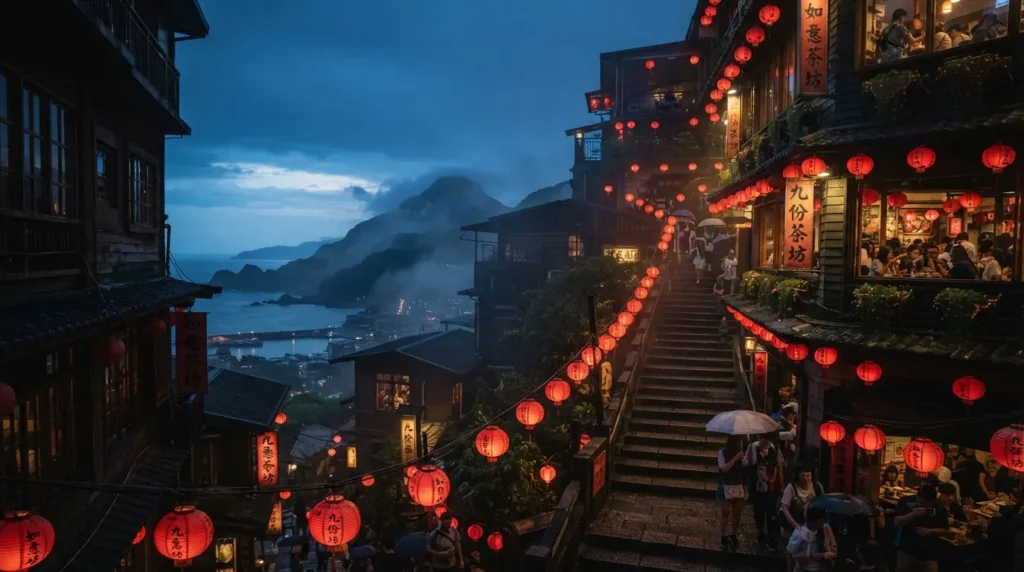
A Jiufen and Northeast Coast tour from Taipei adds the Jinguashi gold museum and the coastal Shifen waterfall to the Jiufen stop in a single day.
Why Tainan is the correct food city in Taiwan
Tainan is Taiwan’s oldest city, established as a Dutch colonial settlement in 1624 and later the capital of the Qing dynasty administration of the island. It has been eating seriously for four hundred years and the food culture reflects this.
The specific items that do not exist at the same quality in Taipei: coffin bread (a hollowed-out thick toast filled with seafood cream sauce — the name is the correct one and the dish is the correct order); milkfish belly soup, which is specific to Tainan’s aquaculture tradition; shrimp rolls at the restaurants that have been making them for fifty years; and the oyster vermicelli here, which is different from the Taipei version in ways that Tainan residents will explain at length. The night market at Flower Night Market (open Thursday, Saturday and Sunday) and the permanent stalls at Zhongyuan Night Market cover most categories in one circuit.
Tainan also has more temples per square kilometre than any other city in Taiwan. Walking the Anping district — the oldest part of the city — between the Chihkan Tower (built by the Dutch in 1653) and the Anping Fort (the original Dutch colonial settlement), with the temple activity and the food stalls at every corner, is a specific kind of afternoon that Taipei does not provide.
What is Taroko Gorge and is it worth the two hours from Taipei?
Yes. Taroko Gorge is a marble canyon carved by the Liwu River through the Central Mountain Range, accessible by road from Hualien on Taiwan’s east coast. The canyon walls are white and grey-veined marble — Taiwan sits on the collision zone of the Philippine Sea Plate and the Eurasian Plate, which produces marble in quantities and qualities that have supplied construction projects across Asia. The visual result is a canyon of extraordinary clarity: white rock, turquoise water, vertical walls, and in the upper sections, the natural tunnels blasted through the marble for the Suhua Highway.
The Shakadang Trail along the river is the correct starting point for a day visit — three and a half kilometres of relatively flat walking along the gorge floor with the river on one side and the marble walls above. The Swallow Grotto section of the gorge road, accessible by shuttle bus from the visitor centre, provides the full vertical scale. The Eternal Spring Shrine, built into the cliff face above a waterfall, is the photograph that most people take. A Taroko Gorge day tour from Hualien covers the main sites with transport and a guide.
Stay one night in Hualien. The train from Taipei takes two and a half hours; the return can be timed to include Hualien’s own night market and the fresh Pacific seafood that makes the east coast food different from Taipei’s.
What does Taiwan cost in 2026?
Substantially less than Japan or South Korea for equivalent quality. A mid-range day in Taiwan — comfortable hotel, restaurant meals, one paid activity — runs approximately NT$3,000–5,000 (£75–125). Budget travellers in hostels and eating at night markets and local restaurants can manage NT$1,500–2,500 per day (£37–62). The night market meal is a legitimate daily budget strategy: NT$200–400 (£5–10) covers a complete evening of food across several stalls.
The THSR high-speed rail from Taipei to Tainan costs NT$1,080 (approximately £27). The EasyCard covers Taipei’s metro, buses and convenience store purchases from the same contactless card. Taiwan remains predominantly cash-based in markets and smaller restaurants; carry enough New Taiwan Dollars for a day or two without ATM access.
The Tourism Administration’s NT$5,000 voucher lottery for independent travellers is worth registering for at taiwan.net.tw before arrival. The vouchers are valid for accommodation or transport cards and are redeemable if won.
When is the best time to visit Taiwan?
October to December for comfortable temperatures (20–26°C in Taipei), clear skies, and the best conditions for hiking in Taroko and the central mountains. Spring (March to May) is the alternative, with cherry blossoms on Alishan and in Taipei’s Yangmingshan National Park and temperatures before the summer humidity builds.
July and August bring typhoon season — Taiwan is hit by several per year on average, most of which cause significant rain and wind for one to three days before passing. The meteorological system tracks typhoons reliably enough that travellers can adjust plans around them, but building buffer days into a July or August itinerary is advisable. Temperatures in summer are 30–35°C with high humidity in the lowlands.
January is the coolest month and corresponds with the Lunar New Year period, when many businesses close for several days and domestic travel increases sharply. Avoid Lunar New Year for a first visit unless you are specifically interested in the celebrations.
See the official Taiwan tourism site for current entry requirements and the 2026 event calendar, which includes 109 tourism events across the island this year.
You can plan your Taiwan itinerary on PlacesToday. For how Taiwan compares to the other Asian destinations we cover, our South Korea guide and Japan 10-day itinerary map the regional choices.
Frequently asked questions
Q: Is Taiwan safe to visit in 2026?
A: Yes. Taiwan has extremely low rates of violent crime, a functioning rule of law, and is consistently rated among the safest countries in Asia. The geopolitical situation in the Taiwan Strait is a background condition that has existed for decades and does not materially affect the visitor experience. Check your government’s current travel advisory before departure, as formal advisories note the political situation alongside the safety of the destination itself.
Q: Do you need a visa to visit Taiwan?
A: Citizens of the US, UK, EU, Canada, Australia, New Zealand and most Western nations can visit Taiwan visa-free for stays of up to 90 days. Check the Taiwan Tourism Administration’s current entry requirements, as the visa exemption list is extensive and regularly updated.
Q: Is Taiwan cheaper than Japan?
A: Yes, meaningfully so. A mid-range day in Taiwan costs approximately £75–125, compared with £150–250 in Japan for equivalent quality. Night market food and local restaurant meals are significantly cheaper. The THSR high-speed rail is priced lower than Japan’s Shinkansen for comparable distances.
Q: What is the best food city in Taiwan?
A: Tainan. It is Taiwan’s oldest city and has the most developed local food culture — coffin bread, milkfish, shrimp rolls and oyster vermicelli specific to the city’s own tradition. Taipei has the widest variety and the best xiaolongbao at Din Tai Fung. For someone who can only visit one city, Taipei is the correct choice for a first visit. For someone who can visit two, Tainan is where the food itinerary should end.
Q: Is Taroko Gorge worth the journey from Taipei?
A: Yes. Two and a half hours by train from Taipei, one night in Hualien, and a day in the gorge is the minimum to experience it properly. It is one of the most dramatic natural landscapes in Asia and is regularly left out of first-time Taiwan itineraries. This is the main mistake made in planning a Taiwan trip.
Taiwan’s quality-to-recognition ratio is unusual — a country with extraordinary food, dramatic natural landscapes, and a specific hospitality that consistently surprises visitors, operating at a lower profile than neighbouring countries that receive three to five times the international visitor numbers. The recognition is catching up. The food in Tainan and the view from the Taroko Gorge suspension bridge are reasons to go before it does. Plan your Taiwan trip on PlacesToday →