Morocco’s blue city recorded a 34% year-on-year rise in overnight visitors in mid-2025, and the number is still climbing. Budget travellers cover daily costs at around $32, mid-range comfort runs $75 per day, and the best time to arrive is late September or April — warm enough to hike, cool enough to enjoy the medina on foot, and quiet enough that the famous blue alleyways are yours before 7am. Chefchaouen sits at 564 metres in the Rif Mountains, 2.5 hours south of Tangier by bus and 4.5 hours west of Fes. One night is never enough.
What Is Chefchaouen, Really?
The blue is real. The medina’s walls, doorways and steps are painted in dozens of shades of cerulean, cobalt and indigo — a tradition linked to Jewish refugees who settled here after 1492, though exactly when the whole medina turned blue is historically debated. What the Instagram grid doesn’t show is that Chefchaouen is also a working mountain town of roughly 45,000 people: women sell bundles of Rif herbs at the weekly souk, old men drink mint tea in the main square, and donkeys navigate lanes whose shape hasn’t changed in five centuries.
The famous blue staircase of Calle Sidi Buchuka takes perhaps thirty seconds to walk past. If that’s all you come for, one night is enough — and you’ll share that staircase with a hundred other phones at noon. Come for two or three nights and you can hike to the Spanish mosque at dawn, take a grand taxi to the Akchour waterfalls, and eat better food than almost anywhere in northern Morocco.
When Is the Best Time to Visit Chefchaouen?
| Season | Months | Daytime High | Crowd Level | Best For |
|---|---|---|---|---|
| Spring | Apr–May | 18–22°C | Moderate | Green hills, full waterfalls, manageable crowds |
| Summer | Jun–Aug | 30–36°C | Very high | Akchour swimming, dry weather, evening atmosphere |
| Autumn | Sep–Nov | 14–26°C | High Oct / Low Nov | Best light, comfortable temps, fading crowds |
| Winter | Dec–Mar | 10–17°C | Low | Cheapest rates, quiet medina, moody light |
Source: ChampionTraveler seasonal data, 2026
The sweet spot is late September and the first two weeks of November. Temperatures have dropped from summer highs, afternoon light suits photography, and visitor numbers fall sharply after the October peak. April runs a close second — the Rif Mountains are green, wildflowers cover the hillsides above the medina, and the Akchour waterfall runs high.
June through August brings Chefchaouen’s largest crowds: Spanish and French tourists, backpackers from Tangier, and domestic visitors all converge. The iconic alleyways can feel more like a theme-park queue than a medina in the middle of the day. In summer, the solution is simple — be at the Spanish mosque by 6am and at Calle Sidi Buchuka before 8am. The town is yours.
How Do I Get to Chefchaouen?
There is no train station; all roads in pass by bus or shared taxi.
From Fes: CTM and Supratours both run direct coaches. Journey time is 4.5–5 hours; tickets cost around $8–12. This is the most common route for travellers doing a Morocco circuit — Fes is worth two days before continuing west to Chefchaouen.
From Tangier: CTM runs a direct 2.5-hour service. Shared grand taxis from Tangier take a similar time and cost around 70 MAD (≈$7) per seat — faster once they fill up. If you’re arriving from Spain via the Tarifa–Tangier ferry, Chefchaouen is the natural first stop in Morocco.
From Casablanca: Direct buses take 6–7 hours. From Marrakech, allow 10–11 hours by direct coach or take the train to Casablanca and connect there.
From Chefchaouen: Shared transfers to Fes or Tangier run around $23 per person, arranged through guesthouses and riads. Private vehicles to Tangier cost around $87.
Where to Stay in Chefchaouen
Stay inside the medina, not in the modern hotels on the main road outside it. Riad-style guesthouses within the blue streets put you thirty seconds from the best early-morning light and the quietest lanes.
| Budget | Type | Nightly Rate |
|---|---|---|
| Budget | Basic guesthouse, shared bathroom | $10–18 |
| Mid-range | Medina riad, private bathroom, rooftop | $24–55 |
| Luxury | Boutique riad, suite, terrace views | $54–120+ |
Source: BudgetYourTrip, updated September 2026. Peak-period hotel averages around $119/night.
Book ahead for weekends in April, October and July–August. Between November and February you can usually walk in and negotiate — guesthouses fill slowly in winter and rates drop accordingly.
What Should I Do in Chefchaouen?
Is the Spanish Mosque viewpoint worth the walk?
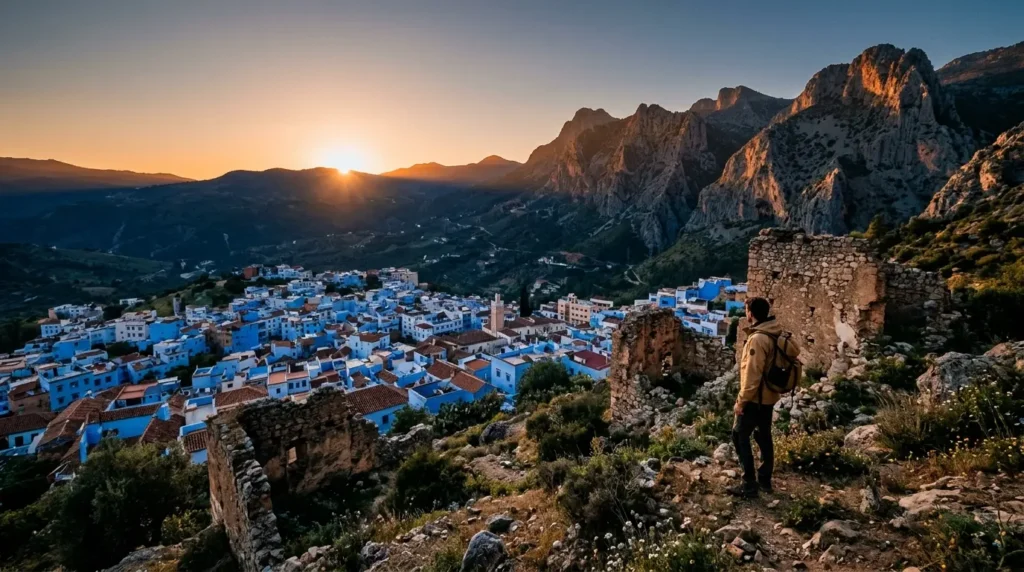
A 15-minute uphill climb from the medina, the ruined Spanish mosque (built during the Spanish Protectorate in the 1920s, never used as a mosque) sits above the town on a scrubby hillside. The view takes in the full medina, the Rif peaks behind it and the valley below. At sunrise, warm light hits the blue rooftops directly and the town is almost entirely free of people. Entry is free. The path is well-worn but steep — wear shoes rather than sandals.
Is Calle Sidi Buchuka as good as it looks in photos?
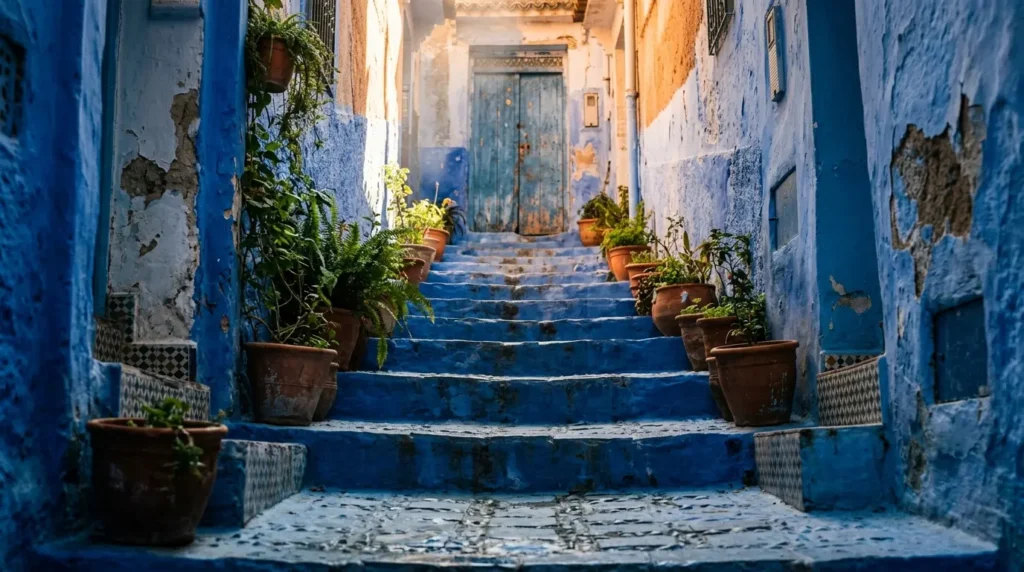
The alley — a narrow blue staircase rising between painted walls, terracotta plant pots and a weathered blue door at the top — is exactly as photographed. The experience depends entirely on when you visit. At noon in August, you’re queueing behind thirty other photographers. At 6am in late September, you’re alone, the light falls at the perfect angle, and the air smells of bread from a bakery two streets over. A “private porch” spot nearby charges about 5 MAD (≈$0.50) for a raised angle looking down the alley.
What else is there to do in the medina?
The Kasbah at the top of Plaza Uta el-Hammam holds a small museum, an Andalusian garden and a tower with panoramic views — entrance is 60 MAD. The main square itself is where Chefchaouen locals actually spend their evenings: chess under café awnings, buskers on most nights, and the town’s best people-watching over a pot of mint tea.
The Ras el-Maa waterfall at the eastern edge of the medina is a working laundry site where mountain water runs over flat rocks — locals wash rugs here, children cool off in summer, and the stalls sell the best fresh orange juice in town (10 MAD a glass). Walk the river path below the waterfall for twenty minutes of green quiet that most day-trippers never find.
For shopping: the medina souk stocks hand-woven Rif blankets and djellabas at better prices than Marrakech’s souks, and the wool quality reflects the mountain altitude.
Akchour Waterfalls: The Best Day Trip from Chefchaouen
Forty-five minutes from the medina by grand taxi — tell the driver at the taxi stand outside the medina entrance, and you’ll be directed to the right shared vehicle — Akchour is one of the most rewarding day trips in northern Morocco.
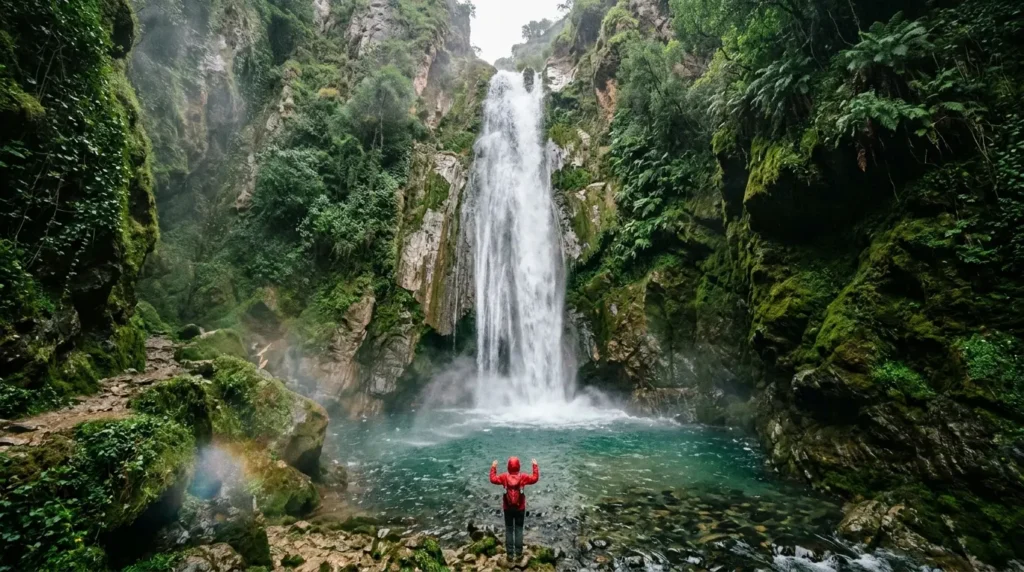
The hike is 5.5km each way, taking roughly 3–4 hours depending on pace, through a green valley where the trail follows and repeatedly crosses the river. Some crossings use large stone blocks; others have wooden bridges. The terrain is not technically demanding but includes steep sections — proper footwear matters. The destination is the Grand Cascade: long, thin streams of water falling into a deep pool, with a narrow path around the right side that takes you behind the falls.
There is no entrance fee (drivers pay 10 MAD for parking). Small stalls along the route sell cold drinks and will prepare tagine with enough notice. Carry at least two litres of water per person, and in summer bring a swimming kit — the pool below the cascade is excellent for swimming.
Best months for Akchour: April–May (waterfall full, temperatures comfortable, can swim), June–September (hot but shaded, swimming excellent), October (cooler, waterfall lower but still impressive). In winter the falls run slowly and swimming holds little appeal.
For something more demanding: Jebel el-Kelaa (1,616m) is a full-day, 20km mountain circuit above the town — self-guided but without marked trail in sections and no phone signal on the upper slopes. It requires a long day and good navigation.
Book: Akchour Waterfalls Full-Day Excursion from Chefchaouen — Includes transport, guided trail and lunch at a riverside stall. From $35–55 per person. <!– GYG Partner Link –>
What Should I Eat in Chefchaouen?
Northern Moroccan cooking differs from what most visitors know from Marrakech. The cuisine here leans on mountain herbs, fresh goat’s cheese and river trout rather than the ras-el-hanout-heavy tagines of the south.
Harira (tomato and lentil soup) with msemen flatbread makes a reliable lunch at 20–25 MAD. Tagine (lamb or chicken with preserved lemon) runs around 60 MAD at a medina restaurant, closer to 120–150 MAD at rooftop spots with views. Fresh goat’s cheese with honey and argan oil appears on most riad breakfast trays. A kefta sandwich from street stalls in the main square costs 15–20 MAD.
Fresh juice at the Ras el-Maa stalls — orange, pomegranate or a blend — is 10 MAD and worth stopping for.
Average daily food spend: $7–10 eating local on a tight budget; $20–35 mid-range with a sit-down dinner; $50+ eating at rooftop restaurants for every meal.
Practical Information
Currency: Moroccan Dirham (MAD). 1 GBP ≈ 12–13 MAD; 1 USD ≈ 10 MAD. Cash is dominant in the medina; ATMs are available on the main road outside. Exchange inside Morocco consistently beats airport rates.
Language: Darija (Moroccan Arabic) and Tarifit Berber are the local languages. Spanish is widely understood in northern Morocco — more so than French, reflecting the Spanish Protectorate history. English is spoken in most tourist-facing businesses.
Visa: UK, US and EU citizens enter Morocco visa-free for 90 days. No pre-registration is required (unlike the EASE system now required for Cape Verde). Your passport must be valid for the duration of your stay.
Safety: Chefchaouen has a lower street-crime rate than Morocco’s larger cities. Cannabis (kif) from the Rif region is widely and openly offered to tourists — it is technically illegal under Moroccan law and possession carries legal risk. The FCDO Morocco travel advice rates northern Morocco as broadly safe for travel but notes petty theft around bus stations in larger cities.
Internet: Most riads and cafés have reliable Wi-Fi. A local SIM (Orange or Maroc Telecom) is cheap and covers the medina well; signal weakens on trails above town.
Plan Your Chefchaouen Activities
Chefchaouen Medina Guided Walking Tour – History, Blue Streets & Hidden Spots — 2–3 hours with an English-speaking guide covering the Kasbah, Calle Sidi Buchuka, the Spanish mosque route and the history of the blue paint tradition. From $18–25 per person. <!– GYG Partner Link –>
Moroccan Cooking Class in Chefchaouen – Market Visit & Tagine — Morning market tour, hands-on tagine preparation, shared lunch with the host family. One of the best ways to understand northern Moroccan food culture beyond restaurant menus. From $40–60 per person. <!– GYG Partner Link –>
Not sure which activities to prioritise? The PlacesToday travel planning assistant can put together a personalised itinerary based on your travel dates and budget.
Frequently Asked Questions About Chefchaouen
How long should I spend in Chefchaouen?
Two nights as a minimum to do the medina justice and fit in one proper day trip. Three nights is the ideal structure: one morning for the Spanish mosque at sunrise, one full day at Akchour, one slow medina morning at the souk and the Kasbah. Most people who leave feeling they “didn’t get it” spent fewer than 24 hours.
Is Chefchaouen worth visiting without the big Instagram shots?
The blue medina is genuinely beautiful in person — photographs don’t exaggerate. The most memorable parts of Chefchaouen are the things cameras struggle with: the sound of the Ras el-Maa river through the lanes at 10pm, herb sellers at the weekly market, the view from the Spanish mosque at first light when the Rif peaks catch colour. Go for those. The photos are a bonus.
Can I do Chefchaouen as a day trip from Fes or Tangier?
From Tangier it’s technically feasible (2.5 hours each way), giving you four to five hours in town — enough for a walk through the medina and lunch, not enough to do it justice. From Fes (4.5 hours each way), a day trip is not realistic. Stay over.
Is Chefchaouen suitable for solo female travellers?
Generally yes. It is one of Morocco’s most visited tourist towns and the level of street harassment is significantly lower than in Marrakech’s souks or the medinas of Casablanca. Dressing modestly in the medina (covered shoulders and knees) is respectful and reduces unwanted attention. Book accommodation before arriving so you’re not navigating with a bag while being approached at the bus station.