Iceland in summer 2026 is worth it, provided you know what you are paying for and when to arrive. June gives you the midnight sun at its most pronounced, reasonable prices by Icelandic standards, and access to everything including the highland F-roads. August contains a total solar eclipse on the 12th — the last one visible from Iceland and northern Europe until 2090 — and costs 50–100% more for accommodation and car hire than June as a result. September brings the first northern lights of the year, autumn colours, and meaningful price drops. Each of these is a different trip.
Iceland is expensive. This is not a rumour or a tourist complaint — daily costs for a mid-range traveller in peak summer run $380–600 per person including accommodation, car hire, food and one or two paid activities (traveltourister.com, 2026). The eclipse window in August pushes that to $700–1,200+ per person per day on dates close to the 12th. These numbers are not a reason not to go. They are a reason to plan precisely, which is a different thing.
What Iceland delivers in return for those numbers is fairly specific. The midnight sun — twenty-three hours of daylight in late June — is not a gimmick. It genuinely reorganises the rhythm of a trip in ways that are difficult to anticipate. You hike at eleven in the evening because the light is perfect. You photograph waterfalls at two in the morning because you happen to be awake. The landscapes are geologically recent enough to feel impermanent: active volcanoes, glacier lagoons, lava fields still cooling by geological standards. If that is what you came for, Iceland earns its price.
Is Iceland worth visiting in summer 2026?
Yes, if you choose the right month. Here is the honest breakdown of what each month gives you and what it costs.
| June | July | August | September | |
|---|---|---|---|---|
| Daylight hours | 22–23 hrs | 20–21 hrs | 16–18 hrs | 12–14 hrs |
| Average temp (Reykjavík) | 11–13°C | 12–14°C | 11–13°C | 8–11°C |
| Accommodation vs peak | Shoulder–peak | Peak (+50–100%) | Peak/eclipse premium | 20–30% below peak |
| F-roads open | From mid-June | Yes | Yes | Closing from mid-Sept |
| Puffins | Yes | Yes | Leaving mid-Aug | Gone |
| Northern lights | No (too bright) | No | No | From late Sept |
| Eclipse | — | — | 12 Aug — totality | — |
Sources: iceland.org, adventures.is 2026 seasonal data, traveltourister.com
The practical recommendation is June or the first half of September. June has the best light, all roads open, puffins, full whale watching, and prices that have not yet reached July levels. September has the first northern lights, autumn colours, meaningfully lower prices, and — if the F-roads have not closed yet — most of the summer access still available. July and August are fine. They are also the most expensive and most crowded weeks of the Icelandic year, which is worth knowing before booking.
What will the solar eclipse on 12 August 2026 mean for Iceland visitors?
On 12 August 2026, Iceland sits in the path of totality for a total solar eclipse — the moon will pass across the sun and plunge parts of the island into temporary darkness in the middle of the day. It is the last time this will be visible from Iceland and northern Europe until 2090.
For travellers already planning Iceland in August, this is a significant event worth building your itinerary around. Reykjavík and much of the west coast will see totality. The practical considerations are concrete: accommodation and car hire in the days surrounding the 12th is already booking quickly, prices are at their highest of the year, and the eclipse window has attracted visitors who would not otherwise travel to Iceland in August. If your Iceland trip is for the eclipse specifically, book everything several months ahead. If you are travelling in August for other reasons, the eclipse on the 12th is simply an extraordinary addition to an already expensive week.
If August is not your plan and the eclipse is not a draw, this is not a reason to change your dates. June delivers Iceland at its most functional. The midnight sun is the reason most people go, and it is at its most complete in the weeks around the summer solstice on 21 June.
What is the midnight sun actually like?
It is genuinely disorienting, which is the point. The sky in late June does not go dark. What you get instead is a prolonged golden hour that starts around ten in the evening, deepens to amber, and then brightens again toward three or four in the morning without ever becoming night.
The practical impact on a trip is not trivial. You will not sleep normally without blackout curtains or a sleep mask. Pack one regardless of what your accommodation claims to offer. On the other side of this: activities that would be night-time anywhere else are available in full daylight in Iceland in June. A whale watching tour from Húsavík at nine in the evening is no different to noon — humpback and minke whales are reliably sighted on 90% of summer departures (nationaltraveller.com) and you can see them perfectly. The golden light on the water is, if anything, better.
Which geothermal pool should you visit — Blue Lagoon or the alternatives?
The Blue Lagoon is Iceland’s most visited attraction and requires advance booking. Admission starts at approximately $75 per person. It is genuinely beautiful — silica-rich, milky-blue, 37–39°C, set in a lava field. Whether it is worth $75 before you add the restaurant and premium facilities is a personal decision, and there are several alternatives that are not consolation prizes.
Blue Lagoon — for the specific experience
Book in advance. The prebooking system manages crowds effectively, which is one reason the experience remains good despite the volume. The lagoon stays open until 11pm in summer, and an evening visit in the golden midnight light is better than a midday one. It sits next to Keflavík airport, which makes it sensible as either an arrival or departure activity.
Mývatn Nature Baths — the northern alternative
In North Iceland near Lake Mývatn, the Nature Baths offer a similar geothermal experience at approximately $40 per person and considerably fewer international tourists. The surrounding area — pseudocraters, boiling mud pools, the highest concentration of breeding ducks in Europe — is worth the journey north on its own terms. A glacial hiking and Mývatn area day trip combines both effectively.
Secret Lagoon — the lowest-cost option
Near Flúðir in the south, the Secret Lagoon is a historically significant geothermal pool in a rural farming village. Admission is approximately $25. It is simpler than the Blue Lagoon and does not pretend otherwise. For travellers who want the geothermal experience without the premium, it is the sensible choice.
Sky Lagoon — the Reykjavík option
The Sky Lagoon sits near Reykjavík and is the most aesthetically contemporary of the alternatives — an infinity edge over the North Atlantic, a ritual of steam rooms and cold plunge pools. Admission runs approximately $65. It is a strong choice if you are based in the capital and do not want to travel further afield.

Do you need a 4WD for Iceland in summer?
For the Ring Road and the standard southern and northern attractions, no. For the highland F-roads, yes — it is a legal requirement.
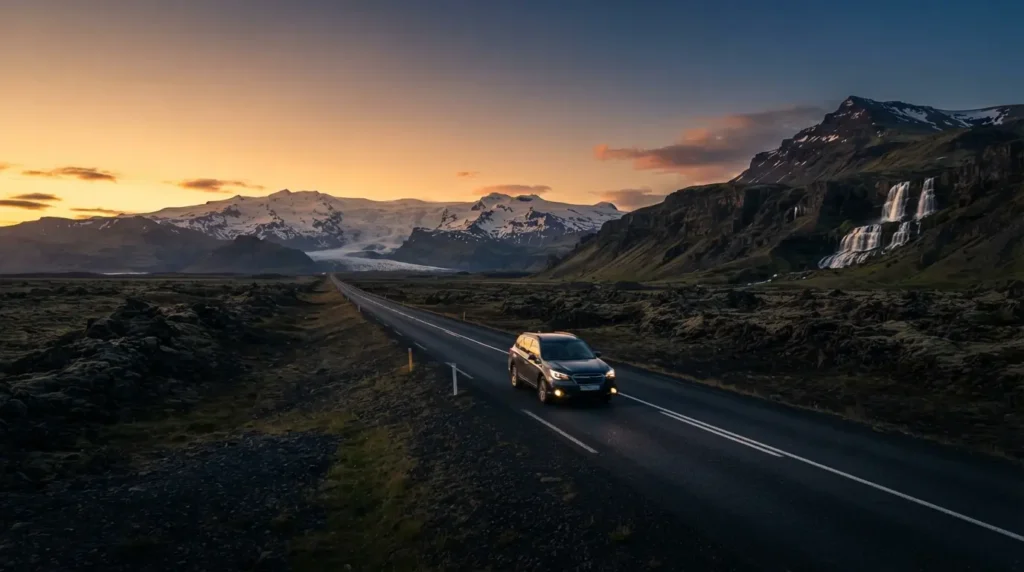
A 2WD economy car handles the Ring Road from May to September without difficulty. The paved road covers all the standard attractions: Gullfoss, Geysir, Jökulsárlón glacier lagoon, Skógafoss, the Snæfellsnes Peninsula. Car hire in summer for economy 2WD starts at $110–160 per day (thetraveltrio.com). The F-roads — the highland interior routes including Landmannalaugar and Þórsmörk — are unpaved, river-crossed and legally require a 4WD. They open from approximately mid-June depending on conditions and close from mid-September. A 4WD runs $160–320 per day. If the highlands are on your list, it is worth budgeting for it specifically. If they are not, the standard car is sufficient.
Fuel costs approximately $2.45 per litre ($9.25 per gallon). On a Ring Road trip of 1,332 kilometres, fuel alone adds up to a figure worth factoring into the budget before you leave.
How much does an Iceland summer trip actually cost in 2026?
More than you think you have budgeted, which is the universal Iceland experience. Here is the honest version.
A mid-range traveller sharing a car and a guesthouse with one other person can expect to spend $280–380 per person per day in June, covering accommodation, car hire split two ways, fuel, meals with one restaurant dinner and supermarket lunches, and one paid activity. A week on that budget runs $1,960–2,660 per person. Solo travel is considerably more expensive as car hire and accommodation are not shared. The Camping Card — around $120, covering 28 nights at over 40 campsites — cuts accommodation costs substantially for those who are organised about it (tripbudgetcalculator.com).
Supermarkets are the practical solution to Iceland’s restaurant prices. Stock the car with breakfast and lunch ingredients in Reykjavík before you leave and buy one cooked meal a day. This single adjustment saves a meaningful amount over a week. Tap water is drinkable everywhere in Iceland, which removes a cost that adds up in most destinations.
Frequently asked questions
Q: Is Iceland worth visiting in summer 2026? A: Yes, with the right expectations about cost and the right month for what you want. June is the optimal month for most travellers — all roads open, midnight sun at its strongest, puffins and whales, prices before they reach July levels. September is the better choice for value and the first northern lights of the year. August 12 specifically contains a total solar eclipse visible from Iceland — the last one from northern Europe until 2090.
Q: How much does a week in Iceland cost in 2026? A: A mid-range week for two people sharing a car and accommodation runs approximately $280–380 per person per day in June, or $1,960–2,660 per person for seven days. Solo travel is notably more expensive because car hire and accommodation cannot be split. The eclipse window around 12 August pushes those figures significantly higher, with daily costs reaching $700–1,200 per person on peak dates (traveltourister.com).
Q: Can you see the northern lights in Iceland in summer 2026? A: No. The midnight sun in June and July means the sky does not get dark enough for aurora viewing. Northern lights return to Iceland from late September and are most reliably seen October through February. If the northern lights are your reason for going, September is the earliest you can reasonably hope to see them, with October to February the better window.
Q: What is the solar eclipse in Iceland in August 2026? A: On 12 August 2026, a total solar eclipse passes over Iceland, briefly blocking the sun and producing genuine darkness in the middle of the day — an extraordinary phenomenon in a country where the sun barely sets in summer. It is the last total solar eclipse visible from Iceland and northern Europe until 2090. Reykjavík and the west coast are in the path of totality. Accommodation and flights around this date are significantly more expensive than the rest of the summer.
Q: Do you need to book the Blue Lagoon in advance? A: Yes, always. The Blue Lagoon operates a mandatory prebooking system and regularly sells out in peak summer weeks. Book as far ahead as possible, particularly for June, July and the eclipse period in August. The alternatives — Mývatn Nature Baths, Secret Lagoon and Sky Lagoon — are considerably easier to access on shorter notice and are worth considering both for practicality and on their own merits.
Iceland in summer rewards the traveller who plans it like the specific, expensive, logistically demanding trip it is — rather than treating it as a spontaneous adventure that will sort itself out. It will not sort itself out. Book the car, book the accommodation, pack the sleep mask, and decide in advance whether you are going for the eclipse, the midnight sun, the hiking or the geothermal pools. All four are excellent reasons. They require slightly different itineraries. Ready to build yours? Plan your Iceland trip on PlacesToday →