The five French regions most worth visiting beyond Paris in 2026 are Normandy, Provence, the Loire Valley, the Bordeaux southwest, and Lyon with the Auvergne. Each is accessible by high-speed train from Paris in two to four hours, each has a distinct character that no other country replicates, and each is significantly less crowded than the capital in summer. France welcomed 102 million visitors in 2025 — its highest figure ever — yet most of them spent their time within a small radius of Paris. The regions are where France actually lives.
There is a moment on the train from Paris to Avignon, somewhere past Lyon, when the landscape changes. The trees are different. The light is different. The villages you pass through are built from the same pale stone as the fields around them. You have not left France — you have arrived in it, the version that exists below the Eiffel Tower photographs, the one that has been here for considerably longer.
France remains the world’s most visited country in 2026, with projections for 105 to 110 million international arrivals if current growth continues.</cite> <cite index=”30-1″>The French government, through Atout France, has been actively directing visitors beyond Paris through campaigns promoting regional destinations — and post-campaign testing showed 50% of exposed international travellers planned visits to France by 2026, with Normandy and Auvergne-Rhône-Alpes among the strongest regional targets. The infrastructure is there. The trains are fast. And the case for spending at least half your France trip outside Paris has never been stronger.
This guide covers the five regions — what they are actually like, how to get there, and what makes each one worth your time in 2026.
Why is France beyond Paris worth the trip in 2026?
Because Paris in July is a version of itself at maximum pressure, and the regions are France at full quality. The food is better, the price per meal is lower, and the sense of being somewhere specific — rather than somewhere globally famous — is more present in a village in the Dordogne or a wine town in Burgundy than it is anywhere in central Paris in August.
France is working actively to spread tourism beyond Paris by promoting regional destinations, with authorities directing visitors beyond the most crowded Paris landmarks to the Loire Valley, Versailles, Giverny and Fontainebleau as complementary destinations. The infrastructure supports this: the TGV high-speed rail network connects Paris to every major regional city in France in under four hours, and once you are in a region the driving is straightforward and the signage is excellent.
Which French regions are worth visiting in 2026?
The five that deliver the most distinct, complete experiences — each different enough from the others to justify treating them as separate destinations.
| Region | Best for | Signature | Best time | TGV from Paris |
|---|---|---|---|---|
| Normandy | History, coast, cheese | D-Day beaches, Mont-Saint-Michel, Étretat cliffs | May–June, Sept | 2 hrs to Caen |
| Provence | Lavender, light, heat | Les Baux, Gordes, Luberon, Avignon | June–July, Sept | 2h40 to Avignon |
| Loire Valley | Châteaux, wine, cycling | Château de Chambord, Amboise, Chenonceau | May–June, Sept–Oct | 1h to Tours |
| Bordeaux / Southwest | Wine, food, coast | Saint-Émilion, Basque coast, Arcachon Bay | May–June, Sept | 2h10 to Bordeaux |
| Lyon / Auvergne | Food, volcanos, culture | Vieux Lyon, Puy de Dôme, Gorges de l’Ardèche | May–Sept | 2h to Lyon |
Sources: SNCF/TGV schedules 2026; france.fr, Atout France
Normandy — for history, coastline and the best cheese in France
Normandy sits two hours from Paris by train and contains more concentrated historical weight than anywhere else in the country outside the capital itself. The D-Day landing beaches stretch along 80 kilometres of coast — Utah, Omaha, Gold, Juno, Sword — with the American cemetery above Omaha and the memorials at Arromanches making the most direct sense of what happened there in June 1944. A guided D-Day beaches tour from Bayeux provides the context that standing on the beach alone does not fully give.
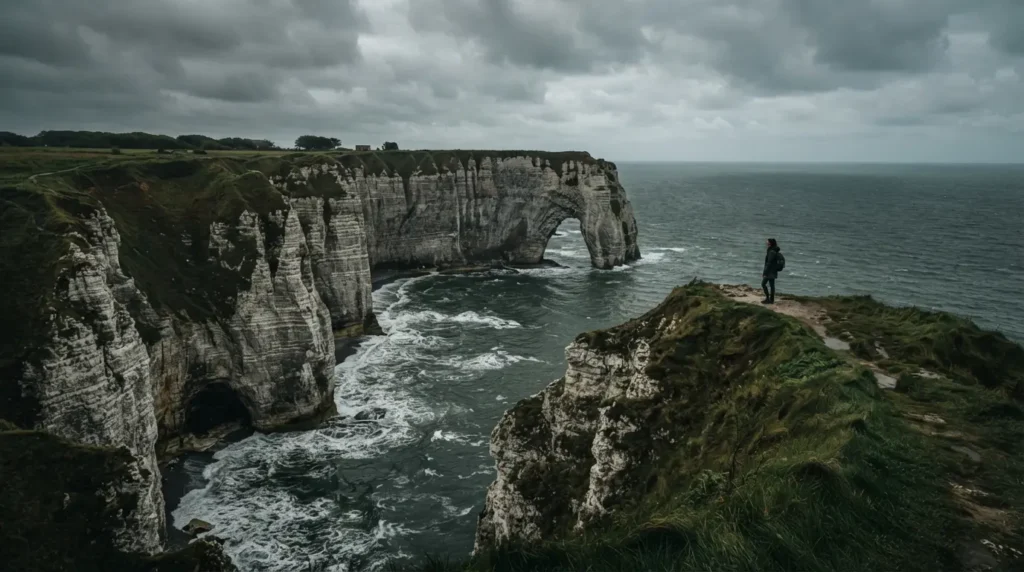
In 2026, Normandy is also the region for Monet’s centenary — Paris Region and Normandy Tourism have created itineraries following Monet’s footsteps, including his home in Giverny, the Seine River landscapes, and the cliffs of Étretat that he painted repeatedly.The cliffs at Étretat are extraordinary — white chalk arches and needles dropping into the Channel, the scale of them only apparent when you are standing at the top. The village below is small and calm compared with what the photographs suggest.
Eat the cheese. Camembert, Livarot, Pont-l’Évêque and Neufchâtel are all Norman. Eat them at a market, with bread and cider, the way they were designed to be eaten before they were exported.
Provence — for lavender, light and the particular quality of a summer evening
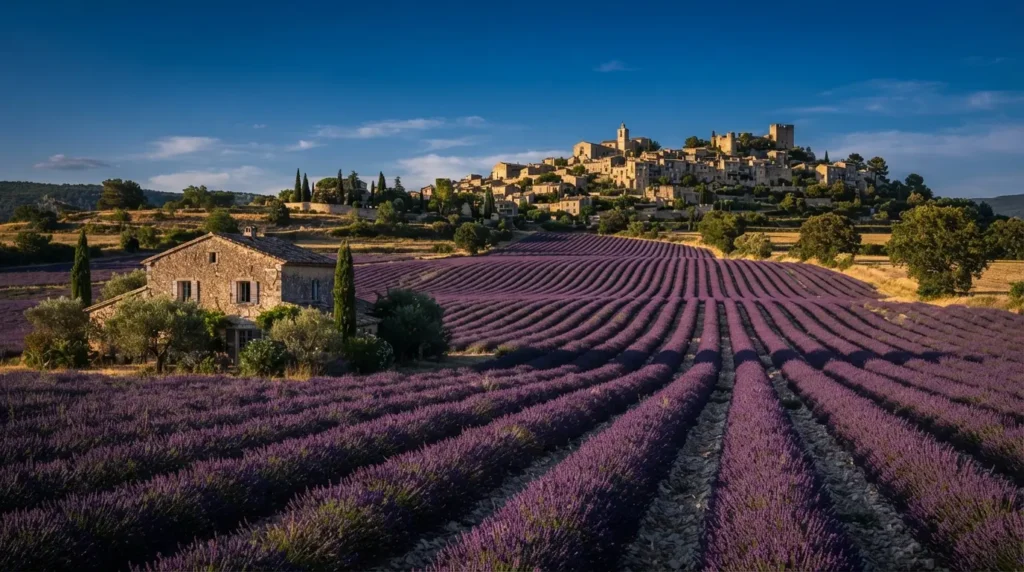
Provence in late June is where you go when you need to be reminded why France has the reputation it does. The lavender fields around the Luberon and the Valensole Plateau are at their peak from mid-June to mid-July, the light after six in the evening on the stone villages of Gordes and Les Baux is the light that painters have been returning to for a century, and the food — roast lamb, tapenade, fresh tomatoes with olive oil that actually tastes of olives — is the food that French cooking is supposedly always about but often is not in Paris restaurants.
Avignon, at two hours and forty minutes from Paris on the TGV, is the sensible base. The Palais des Papes is UNESCO-listed and genuinely monumental — the largest Gothic palace in Europe, built in the 14th century when the papacy relocated from Rome. From Avignon you can reach the Luberon villages, the Camargue wetlands, the Roman theatre at Orange, and the Gorges du Verdon (Europe’s second largest canyon) all within a day’s driving. A Provence lavender fields and villages tour in late June is the version of the region that the photographs are actually trying to show you.
The Loire Valley — for châteaux, wine and a landscape you can cycle through
The Loire Valley is one hour from Paris by TGV to Tours and contains more concentrated Renaissance architecture per kilometre than anywhere outside Italy. The UNESCO-listed châteaux — Chambord, Chenonceau, Amboise, Azay-le-Rideau — are extraordinary individually, and the landscape connecting them is itself the point: the wide river, the pale tufa stone villages, the vineyards of Vouvray and Saumur on the banks.
It is also one of the most cycleable regions in France. The Loire à Vélo route follows the river for 900 kilometres, but a three to four-day section between Tours and Saumur, connecting four or five châteaux by flat riverside path, is one of the most pleasant cycling routes in Europe. A Loire Valley châteaux cycling tour covers the best-paced version of this without requiring you to navigate the route independently. The river valley is flat, the paths are well-maintained, and you can stop for a glass of local Vouvray at most points without breaking the day.
The Loire Valley suits couples particularly well — it was designed, aesthetically and architecturally, around the idea of romance, and it delivers on it consistently.
Bordeaux and the southwest — for wine, the Basque coast and a city that has got very good at itself
Bordeaux was not always a beautiful city. Haussmann-style renovation beginning in 2006 transformed what had been a provincial port into one of Europe’s most elegant urban centres, and the wine routes radiating outward — Saint-Émilion to the east, Médoc to the north, Sauternes to the south — make it the most natural base in France for serious wine travel. Two hours and ten minutes from Paris by TGV.
Saint-Émilion is the most manageable of the wine villages for visitors — a UNESCO-listed medieval town built on limestone, with caves dug beneath the houses used for wine storage since Roman times. The tasting rooms are serious and unhurried. A half-day drive south puts you on the Atlantic coast at Arcachon, where the Dune du Pilat — the largest sand dune in Europe — runs for nearly 3 kilometres above the sea. Continue south and you reach the Basque coast: Biarritz, Bayonne, Saint-Jean-de-Luz. These towns feel different from the rest of France in the way that border regions always do — the food shifts, the architecture shifts, the language shifts at the edges.
Lyon and the Auvergne — for the best food in France and volcanoes
Lyon’s claim to be France’s gastronomic capital is not marketing. The bouchon restaurants — traditional Lyonnais bistros serving offal, quenelles, andouillette and the particular local sausages — have been feeding the city’s workers and intellectuals since the 18th century. The market at Les Halles Paul Bocuse is the reference point for what French market food looks like at its best. The old city, Vieux Lyon, is UNESCO-listed — Renaissance townhouses, traboules (hidden passageways connecting courtyards), and a hill topped by the Fourvière basilica that gives you the city and the two rivers it sits at the confluence of.
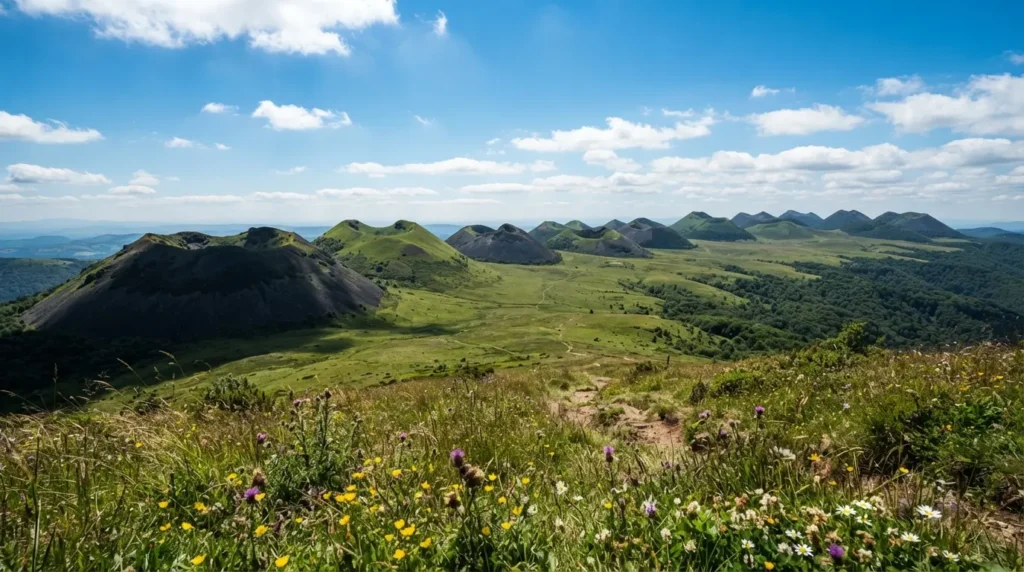
Two hours south on the A75 takes you into the Auvergne — a volcanic landscape of dormant craters and basalt plateaux that most international visitors have never heard of, despite it being one of the most geologically dramatic regions in Western Europe. The Puy de Dôme, an extinct volcano with a summit cable car and views across eighty other volcanic peaks, is the set piece. The Gorges de l’Ardèche, carved by the river through limestone, contain some of the best canoe routes in France and the Chauvet Cave — the oldest known cave art in the world, with a replica site open to visitors.
How do you get around France beyond Paris?
The TGV is the starting point for every regional trip. Paris to Avignon in 2h40, Paris to Bordeaux in 2h10, Paris to Lyon in 2h, Paris to Tours in 1h — these journeys are fast enough that Paris genuinely works as a base for day trips to the Loire Valley if needed, though staying in the region for two or three nights is the better approach. Book through SNCF’s official booking platform 3–4 months ahead for the best prices; TGV fares rise sharply for last-minute bookings.
For Normandy and the Luberon specifically, a car adds freedom that train-only travel does not. The D-Day beaches require a car to visit properly, and the Luberon hilltop villages are connected by roads rather than rail. Car hire from Caen station, Avignon station or Bordeaux airport is straightforward and well-priced outside peak summer weeks.
You can plan a France regional itinerary around your occasion on PlacesToday — tell us which regions and how many days and we will build the route.
Frequently asked questions
Q: Is France beyond Paris worth the trip in 2026? A: Yes, and by a significant margin if your interest extends beyond the Eiffel Tower and the Louvre. The regions contain the food, wine, landscape and architecture that France’s reputation is actually built on. The TGV makes access straightforward — most major regional cities are under three hours from Paris. <cite index=”30-1″>France’s government has been actively directing visitors to regional destinations through campaigns showing 50% of exposed travellers planned regional visits by 2026.</cite>
Q: What is the best region of France to visit in summer 2026? A: Provence in late June for the lavender peak, Normandy in May or September for manageable crowds and the Monet centenary exhibitions, the Loire Valley for cycling from May to October. Lyon and the Auvergne work year-round. Avoid the French Riviera in July and August if crowds are a concern — it is beautiful but at maximum capacity.
Q: How do you get from Paris to Provence by train? A: The TGV Méditerranée connects Paris Gare de Lyon to Avignon TGV station in 2 hours 40 minutes and to Marseille in 3 hours 20 minutes. Book through SNCF’s booking platform 2–3 months ahead for the best fares. From Avignon, renting a car for the Luberon and surrounding area is the most practical option.
Q: Is the Loire Valley worth visiting in 2026? A: Yes, particularly for couples and anyone interested in Renaissance architecture, cycling or wine. The châteaux are extraordinary, the cycling routes are among the best in Europe, and the TGV from Paris to Tours takes one hour. May, June and September are the best months — warm enough for cycling, not as hot as July and August.
Q: What 2026-specific reasons are there to visit Normandy? A: The Monet centenary is the main event — <cite index=”32-1″>Normandy Tourism has created itineraries following Monet’s footsteps through Giverny, the Seine River and the Étretat cliffs</cite>, with exhibitions and events running through 2026. The D-Day beaches are, as always, one of France’s most significant historical sites and best experienced with a guided tour from Bayeux or Caen.
France rewards the trip that goes past Paris — not because Paris is not worth its reputation, but because the country is too large and too varied to understand from one city. The TGV makes the reach easy. The food and the landscape make it worth it. Pick one region, give it three nights minimum, and come back for the others. Ready to plan it? Build your France itinerary on PlacesToday →