Sicily in summer is extraordinary, but the version most people visit in July and August — Taormina gridlocked, Scala dei Turchi requiring an online reservation, arancini priced for tourists — is not the island at its best. Visit in September and the sea temperature is still 24–25°C, hotel prices drop 30–50% from peak rates, and the places that matter have their character back. This guide tells you what to go to, what to avoid, and what to eat. In that order.
The White Lotus filmed in Taormina. The world noticed. In July 2026 the result is a main street that a local food writer described, accurately, as Disneyland during a parade. This is not a reason to skip Sicily. It is a reason to understand how the island works before you book, and how to build a trip that gives you the real version rather than the Instagram one.
Sicily is one of the most layered places in the Mediterranean — Greek temples, Arab markets, Norman cathedrals, Baroque hill towns, active volcanoes, Aeolian islands. The food alone would justify the trip if nothing else existed. Most first-time visitors do not see half of this because they spend too long in the wrong places at the wrong time of year.
When is the best time to visit Sicily in summer 2026?
September is the right answer for almost everyone. June is a strong second. July and August are best avoided unless a beach holiday at full intensity is specifically what you came for.
| July–August | September | October | |
|---|---|---|---|
| Coastal temperature | 29–32°C | 24–30°C | 19–25°C |
| Sea temperature | 27–28°C | 24–25°C | 22–23°C |
| Hotel prices vs peak | Peak (+50–80%) | 30–50% below peak | 40–60% below peak |
| Crowds | Maximum | Significantly reduced | Low |
| Archaeological sites | Requires early start | Manageable | Comfortable |
| Aeolian ferry schedule | Full | Full | Reduced |
Sources: machupicchu.org 2026 Sicily data; travelchasm.com; Visit Sicily / Italian National Tourist Board
August 15 — Ferragosto — is the one date worth knowing in advance. It is Italy’s national holiday. Sicilians leave coastal cities and go to beaches en masse. Inland towns empty out. Restaurants and shops close. If you are on a beach on Ferragosto, you are with the entire island. If you are looking for a quiet lunch in an inland town that day, good luck.
Is Taormina worth visiting in summer 2026?
Yes — but not how most people do it. The Greek Theatre with Etna in the background is genuinely one of the great views in Italy. The main street in July at noon is not.
Go early. The cable car from Mazzarò beach to the old town runs from the morning. Get up there before nine, before the cruise groups arrive, before the granita at Bam Bar costs twice what it should. See the theatre, walk the Corso, leave by eleven. Come back for dinner at seven when the day-trippers have gone and the town regains something of its actual character.
Isola Bella beach below the town — the one that appears in every photograph — is pebble, not sand, and reaches capacity by ten in the morning in peak summer. Bring water shoes. If you want to swim somewhere less managed, take the train four minutes north to Letojanni and walk the beach there instead.
Where should you stay in Sicily instead of Taormina?
The east coast has two better bases. Ortigia and Cefalù both give you the Mediterranean beauty with considerably more room to move.
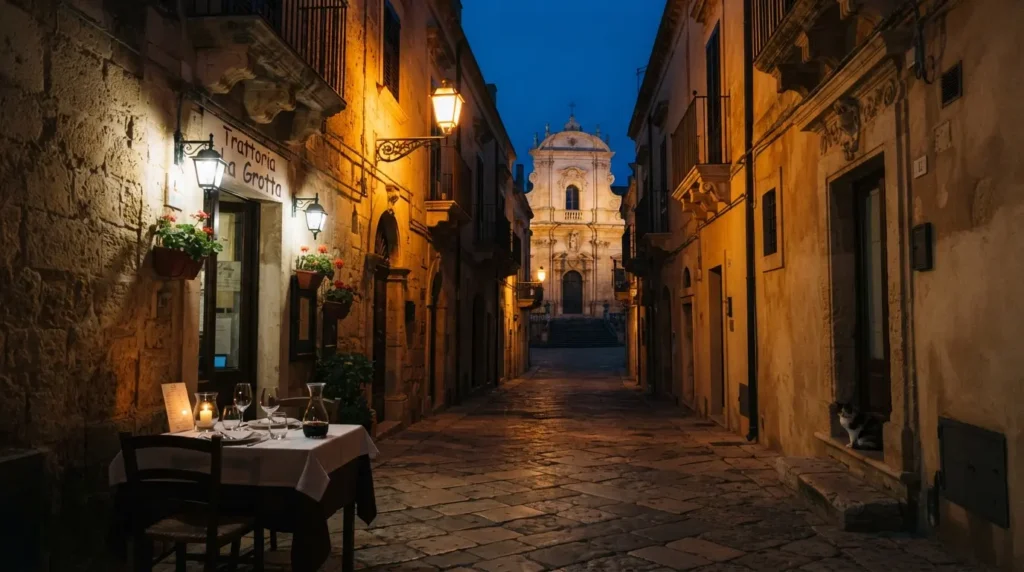
Ortigia, Siracusa — for history and food
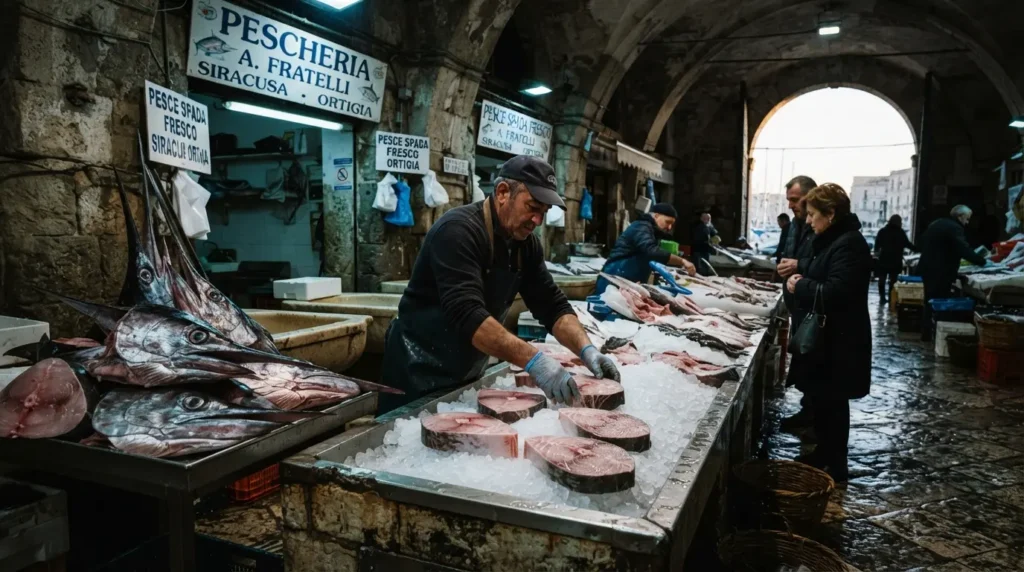
Ortigia is the old island centre of Siracusa, connected to the mainland by two short bridges. It is 1.2 by 0.7 kilometres of Greek temples converted into Catholic cathedrals, Baroque palaces, fresh fish markets, and quiet squares where the serious restaurants do not face a monument. The UNESCO-listed Greek theatre at the Parco Archeologico di Neapolis is fifteen minutes from the old town and one of the best-preserved ancient theatres in the world. The outdoor fish market on Via Trento each morning is where Ortigia’s actual character lives — swordfish, sea urchins, clams — and where you should be buying your lunch before anyone suggests a restaurant near the Duomo.
Cefalù — for the beach alongside the town
Cefalù manages something Taormina no longer does: a genuinely beautiful town with a working Norman cathedral, a beach you can actually use without strategic planning, and a price level that has not yet reached the White Lotus premium. It sits between Palermo (45 minutes by train) and the Aeolian Islands ferry point at Milazzo (two hours east), which makes it a practical base as well as a pleasant one. The beach in front of the old town is the right size — not so empty it feels abandoned, not so crowded it stops being a beach.
Noto — for baroque architecture and the best granita in Sicily
Noto is the UNESCO-listed baroque town in the southeast, rebuilt entirely after the 1693 earthquake in honey-coloured limestone that catches the afternoon sun in a way that is difficult to exaggerate. The main street, Corso Vittorio Emanuele, is pedestrianised. Caffè Sicilia on the Corso makes the granita that most other places in Sicily are trying to approximate. Go at five in the afternoon when the light on the stone is at full intensity. Stay for dinner.
Which are the best beaches in Sicily in 2026?
Sicily has over 1,000 kilometres of coastline across three seas. The quality is not the question. The question is which coast, and whether you plan to share it with the whole of northern Europe.
San Vito Lo Capo — the most reliably beautiful beach
San Vito Lo Capo on the northwest tip of Sicily is the closest the island comes to a Caribbean beach — a three-kilometre crescent of fine pale sand, water that turns from aquamarine to deep blue as it deepens, and Monte Monaco rising behind it. It fills completely in August. In September it is still warm (sea at 24°C), the sand is still pale, and you can find a spot without military-level planning.
Scala dei Turchi — go for the view, not the day
The white marl cliffs at Scala dei Turchi are one of Sicily’s most striking geological formations — steps of brilliant white stone dropping to the sea, water unnaturally clear beneath them. The photograph is worth the trip. The experience of visiting in peak summer now requires an advance Blue Pass reservation (€5 per person, maximum 35 people per slot, machupicchu.org 2026). Book it, go, take the photograph, and spend the afternoon at the less-managed beaches of Eraclea Minoa nearby instead.
The Aeolian Islands — for the trip you actually came to Italy to have
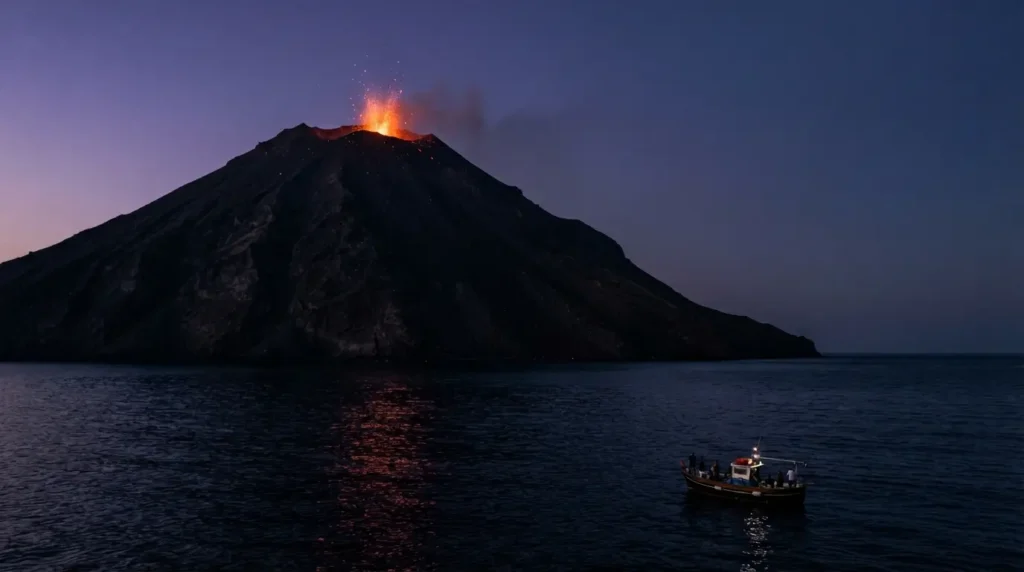
The Aeolian Islands are the part of Sicily that most people do not get to and most people who do get to never stop talking about. Seven volcanic islands north of Messina, accessible by hydrofoil from Milazzo: Lipari (the hub), Salina (wine and capers and the greenest island), Stromboli (the active volcano you can watch erupt at sunset), Panarea (the expensive one), Filicudi and Alicudi (the ones with almost nothing on them, which is the point). Salina’s Malvasia wine is one of Italy’s finest and barely distributed off the island. A boat tour of the Aeolian Islands from Lipari is the correct way to see several islands in a day if time is short. If it is not, stay on Salina for three nights and that is enough.
Where should you eat in Sicily — and what should you avoid?
Walk at least two streets back from the main piazza before you sit down. That is not a suggestion.
The best arancini in Palermo are at the Ballarò market, not at a restaurant with a laminated picture menu within eyeshot of the Palatine Chapel. The caponata — the sweet-and-sour aubergine dish that is one of Sicily’s signature preparations — should be ordered at a table without a view of a monument, ideally at lunch, ideally from a place that has been there long enough to be slightly scruffy. A Palermo street food and market tour covers the Ballarò and Vucciria markets properly and gives you the context for the food that a menu alone does not.
Pasta con le sarde — sardines, fennel, pine nuts, raisins, saffron — is the dish most people do not order because they are not sure about it. Order it. Pasta alla Norma (aubergine, tomato, salted ricotta) is Sicily’s most famous export to the rest of Italy and is worth comparing between Catania, where it originated, and Palermo, where they make it differently. The granita at a serious bar — made fresh each morning from almonds or pistachios or citrus — is the correct Sicilian breakfast. A brioche col tuppo, slightly sweet, is what you dip into it.
Do you need a car in Sicily?
For the eastern triangle of Catania, Taormina and Siracusa, no — trains connect them reasonably. For everywhere else, yes.
The western coast, the Aeolian Islands excepted, is not accessible without a car in any practical sense. The Zingaro Nature Reserve, the roads up into the Madonie mountains, the journey to Agrigento’s Valley of the Temples — all require either a car or a tour. Driving in Palermo is exactly what people say it is. The rest of the island is fine, and the roads through the interior, past wheat fields and isolated hilltowns, are some of the better driving in Italy. Rent the car outside Palermo if you want to avoid the city traffic. Pick it up at Palermo airport and leave immediately.
You can plan your Sicily itinerary — and how many days to allow for each coast — on PlacesToday. Tell us the occasion and we will build the route from there.
Frequently asked questions
Q: Is Sicily too hot in July and August 2026? A: Inland Sicily regularly exceeds 35°C in July and August, which makes sightseeing at archaeological sites genuinely uncomfortable in the middle of the day. The coast stays at 29–32°C with sea breezes. The correct approach in peak summer is early morning for ruins and temples, midday at a beach or in a cool church, afternoon rest, evening for everything else. September solves most of this — temperatures drop to 24–30°C and the light is better for photography.
Q: Is the White Lotus effect making Taormina worse in 2026? A: Yes, measurably. Visitor numbers to Taormina increased significantly after the show filmed there and have not dropped back. The practical impact is on the main Corso Umberto in peak season, which is now genuinely overwhelming. The theatre, the cable car descent to Isola Bella beach, and the town after seven in the evening remain worth the visit. Midday in July is not.
Q: How do you get to the Aeolian Islands from Sicily? A: Hydrofoils and ferries run from Milazzo on Sicily’s north coast, approximately 45 minutes from Messina by road. The crossing to Lipari takes around an hour on a hydrofoil. Full ferry schedules run through summer, with reduced winter services. Book ferry tickets at least a few weeks ahead in July and August when demand peaks.
Q: What food should you not miss in Sicily? A: Arancini from a market, not a tourist restaurant. Pasta con le sarde at least once — the sardine, fennel and raisin combination is specifically Sicilian and not available properly anywhere else. Granita with brioche for breakfast. Caponata at lunch. Cannoli filled fresh to order, not pre-filled and sitting in a case. Malvasia wine from Salina if you reach the Aeolians. And the pistachios from Bronte, on the slopes of Etna, which are incomparably better than any pistachio you have eaten before.
Q: Is Sicily better than the Amalfi Coast? A: For food, history and value, Sicily is not comparable to the Amalfi Coast — it is better. For a specific kind of coastal drama with pastel cliffside villages and one famous road, the Amalfi Coast does something Sicily does not. Most people who have been to both return to Sicily. The anti-overtourism guide for Italy covers the Amalfi alternatives in detail.
Sicily rewards the trip built around it rather than fitted in between other things. Give the east coast three days and the west coast three days. Add the Aeolians if the timing allows. Eat at tables without a view of a monument. Go in September. That is the version of the island that justifies what people say about it. Ready to plan it properly? Build your Sicily itinerary on PlacesToday →