Spain in summer 2026 works in the north and struggles in the south and on the islands. While Barcelona, Mallorca and the Canary Islands operate under new tourist taxes, resident protests and beaches at capacity, the Atlantic coast — Galicia, Cantabria, Asturias and the Basque Country — sees a fraction of the visitors with green cliffs, empty walking trails and the best food in the country. Cantabria received just over 2 million visitors in 2025; Cataluña received 20.1 million (INE). That gap is the whole argument.
The first thing you notice about Galicia is that it is not the Spain you were expecting. The hills are green and steep. The villages are built from granite. The coast is made of ría inlets and white sand beaches backed by pine forest, and the mist comes in from the Atlantic and burns off by eleven most mornings. This is the same country as Ibiza. It does not resemble it in any way.
Spain is on track for close to or exceeding 100 million international visitors in 2026, with record numbers arriving from the UK, Germany and France.Barcelona, the Balearic Islands and the Canary Islands are confronting overtourism protests from residents, driven by growing concerns over overcrowded beaches, soaring rental prices and strained local infrastructure.The northern coast, by comparison, is where Spain’s travel industry is actively redirecting visitors — and where the country makes an entirely different case for itself in summer.
Is Spain too crowded to visit in summer 2026?
In the south and on the islands, yes. In the north, no — and the gap in visitor numbers between the two is larger than most travellers realise.
| Mediterranean south and islands | Atlantic north | |
|---|---|---|
| Key destinations | Barcelona, Mallorca, Ibiza, Canary Islands | Galicia, Cantabria, Asturias, Basque Country |
| 2025 visitor numbers | Cataluña: 20.1M; Canaries: 18.4M; Balearics: 15.7M (INE) | Cantabria: ~2M (INE) |
| Tourist tax (2026) | Barcelona: up to €6.75/night; Balearics: studying €15 peak eco-tax | Minimal or none |
| Summer climate | 30–38°C, dry, intense | 18–24°C, Atlantic, occasional rain |
| Beach access in July | Fills by 9–10am at popular beaches | Space available most days |
| Local sentiment | Active protests in multiple destinations | Visitors largely welcomed |
Sources: INE (Instituto Nacional de Estadística) 2025; Catalonia plans to raise Barcelona’s nightly surcharge from €3.25 to €6.75 per night for four- and five-star hotels, with the Balearic Islands studying a peak-season deterrent rate of €15 per adult per night (visahq.com); idealista.com 2026
A recent CNN Travel article features the Costa Verde — Spain’s Green Coast — in a piece about the parts of Spain where tourists are very much welcome. The contrast to the overcrowded south is not just anecdotal. It is in the data, in the policy, and in the lived experience of arriving somewhere that still has room for you.
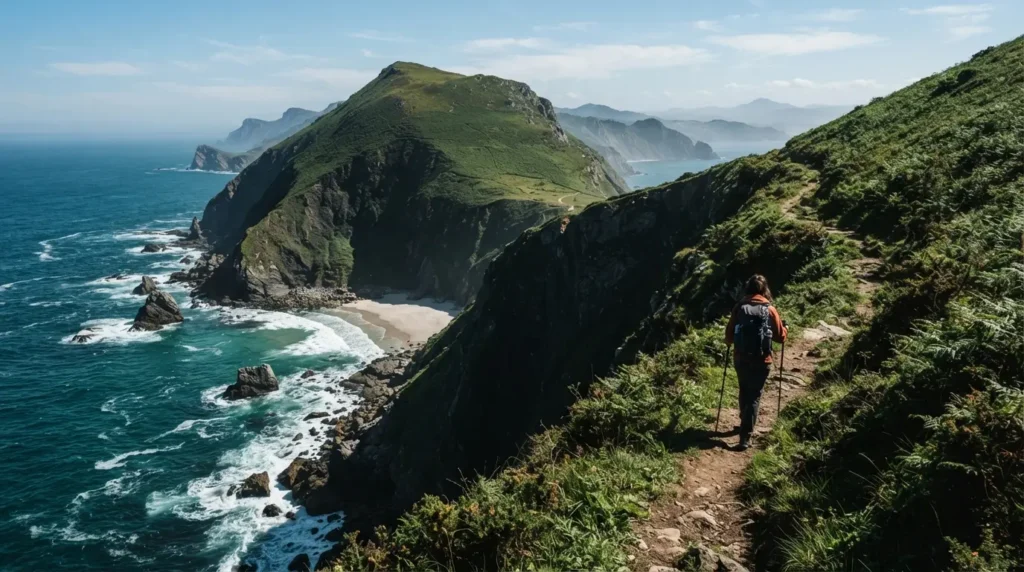
Which northern Spain destinations are worth visiting in summer 2026?
Four distinct regions, each with a different character and each considerably easier to enjoy in July than anything on the Mediterranean coast.
Galicia — for seafood, the Camino and Celtic landscape
Galicia occupies the northwest corner of Spain and feels, in many lights, more like Ireland than Andalucía. The coast is carved into deep rías — drowned river valleys that create sheltered beaches and inlets where the water is calmer than the open Atlantic. The seafood is the best in Spain by most serious assessments: percebes (barnacles), navajas (razor clams), pulpo á feira (octopus with paprika and olive oil) — cooked without ceremony and eaten standing at a granite counter or at a picnic table above the harbour.
Santiago de Compostela, the final destination of the Camino de Santiago, is in Galicia. The city’s cathedral is one of the most significant pilgrimage destinations in the world, and arriving at it — whether you walked a hundred kilometres or took the bus — produces a particular atmosphere, a particular quality of square, that very few European cities can match. A guided Camino walk on the Portuguese Way from Tui to Santiago is the most manageable introduction to the route for travellers who want the experience without committing to a month.
The Rías Baixas, in southern Galicia, produce Albariño wine — a white variety with a particular salinity that makes it the natural pairing for everything that comes out of the sea here. It is the wine that most visitors to Galicia order without knowing it, and then spend the rest of the trip trying to find at home.
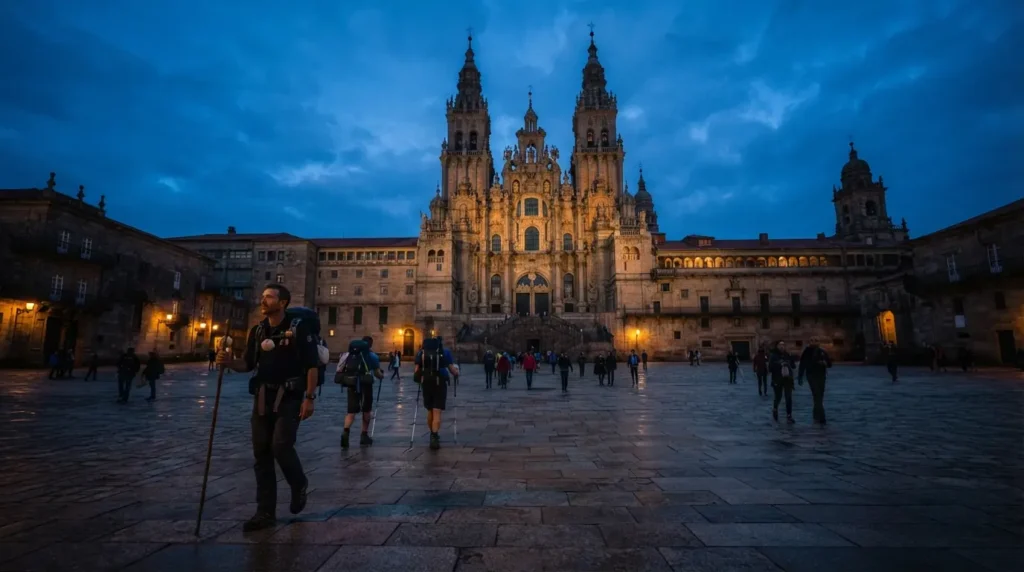
Cantabria — for Atlantic beaches without a queue
Cantabria, even in July and August, offers space on the sand, room in a seaside restaurant and walking trails that feel properly immersed in nature rather than funnelled into a queue. The beaches here — Playa de Oyambre, El Sardinero, Liencres — are wide, Atlantic, backed by dunes or cliffs, and while they fill on warm weekends, they never reach the overcrowding of a Costa Brava beach in peak season.
The Picos de Europa, shared between Cantabria, Asturias and León, rise dramatically from the coast to over 2,600 metres. The Cares Gorge trek — twelve kilometres along a path cut into the rock above a river gorge — is one of Spain’s great walking routes and is accessible from both sides without a guide. In summer the wildflowers are at full height, the water in the gorge runs clear and cold, and you are likely to see griffon vultures overhead. The drive through the Liébana valley to the Potes village market is, on a good morning, one of the more quietly beautiful things available in the country.
Asturias — for cider, cheese and one of Spain’s great food traditions
Asturias sits between Galicia and Cantabria and has its own food culture distinct from both. The sidrerías — traditional cider houses where the cider is poured from height in a thin stream to aerate it — are a working institution, not a tourist attraction. You stand at a wooden barrel, order by the bottle, and pour your glass with the same practiced movement everyone around you uses. The cider is dry and low in alcohol. The food it accompanies — fabada asturiana (a white bean and pork stew), cachopo (two veal escalopes with jamón and cheese, breaded and fried), Cabrales cheese aged in mountain caves — is the kind that requires no explanation or context, only appetite.
The Picos de Europa has its most dramatic faces in Asturias, particularly around Lagos de Covadonga — two glacial lakes above a pilgrim church that are among the most quietly extraordinary landscapes in Spain. The road to them is narrow and requires an early start in summer to avoid the shuttle bus queue.

San Sebastián and the Basque Country — for the best food city in Spain
San Sebastián’s claim to have more Michelin stars per capita than anywhere in the world is often quoted. Less often stated: the pintxos bars of the Parte Vieja — the old quarter — deliver the same quality of food for €2–4 per piece, standing at the bar, without a reservation or a dress code. A San Sebastián pintxos tour of the old quarter moves through five or six bars in two hours and covers the range from classic to contemporary, with txakoli white wine from a local producer at each stop.
La Concha beach, curving around the bay below the old city, is consistently rated among Europe’s finest urban beaches. In July it fills, but the bay is wide enough that it never reaches the density of a Mediterranean resort. The surf beach at Zurriola on the other side of the river is the better choice if you want to move — it draws a younger crowd, the waves are consistent, and there is always room on the sand.
Is Barcelona still worth visiting in summer 2026?
Yes — but it requires managing. Barcelona is an extraordinary city and no overtourism controversy changes the quality of the Sagrada Família, the Gràcia neighbourhood, the Mercat de Santa Caterina or a gin and tonic at dusk somewhere in El Born.
Barcelona has implemented measures including reducing the number of short-term rental permits and working to spread tourism beyond peak seasons, with plans by 2028 to reduce the number of tourist rentals by 10,000.The practical impact for visitors in 2026 is higher accommodation prices and more crowded central sights. The solution is the one that always works in dense tourist cities: early morning and evening, side streets over main boulevards, neighbourhoods beyond the Gothic Quarter. Gràcia, Poblenou, the Eixample above the tourist core — these are Barcelona operating at normal intensity rather than maximum pressure. Three days in the city, combined with a week in the north, is the itinerary that works best in summer 2026. You can plan your Spain itinerary across north and south on PlacesToday with the AI planner mapping the route.
Frequently asked questions
Q: Is northern Spain worth visiting in summer 2026?
A: Yes — it is arguably the best part of Spain to visit in July and August specifically. The Atlantic north stays at 18–24°C while the south bakes above 35°C. Visitor numbers are a fraction of the Mediterranean coast’s. Cantabria received approximately 2 million visitors in 2025 against Cataluña’s 20.1 million (INE). The food, coastline and walking are all excellent and remain accessible without the crowd management required further south.
Q: What tourist taxes apply in Spain in summer 2026?
A: Catalonia plans to raise Barcelona’s nightly hotel surcharge to €6.75 per night for four- and five-star hotels, with cruise passengers paying a flat €8 per day. The Balearic Islands are studying a peak-season eco-tax of €15 per adult per night.Northern Spain regions currently have minimal or no tourist taxes. Check before booking if you are staying in a Balearic or Catalan property, as the charges are paid at check-in and do not appear on most booking confirmations.
Q: Is the Costa Verde the same as the Basque Country?
A: No. The Costa Verde — or Green Coast — refers to the Asturian and Cantabrian Atlantic coastline. The Basque Country (with San Sebastián and Bilbao) sits to the east, sharing the Atlantic character but with its own distinct culture, language and food tradition. All four regions — Galicia, Asturias, Cantabria and the Basque Country — are worth visiting and can be combined on a ten-to-fourteen-day northern Spain itinerary.
Q: How do you travel around northern Spain? A: A rental car gives the most freedom, particularly for the Picos de Europa, rural Galicia and the Cantabrian coast. The RENFE train network connects San Sebastián, Santander, Oviedo and Santiago de Compostela, with connections from Madrid and Barcelona. Spain’s high-speed AVE network does not extend to the far north, so train journeys take longer than in the south — a rental car for at least part of the trip is the practical recommendation. See Spain.info for regional transport maps and current route options.
Q: Which is better for summer — northern Spain or Portugal?
A: Different trips. Northern Spain is greener, cooler and more dramatic than Portugal’s Atlantic coast, with Galicia’s Celtic character and the Basque Country’s unmatched food scene setting it apart. Portugal offers the Douro Valley, Lisbon’s tiled beauty and the Alentejo’s quieter version of the south. Both are far preferable to the Mediterranean resort circuit in peak summer. Our Portugal budget guide covers the cost comparison in detail.
The version of Spain that summer visitors tend to overlook is the one that stays green when the south turns brown, cool when the coast swelters, and calm when the islands are at maximum pressure. Northern Spain in July is not a compromise. It is an argument that the country has been making for years to anyone willing to go past the flight comparison sites and look at a map. Ready to build the trip? Plan your Spain itinerary on PlacesToday →