For a first visit to Portugal, Lisbon. For a second visit, or for anyone whose priorities are wine, food, romance and a city that feels like it has not finished revealing itself, Porto. Both are outstanding. Porto is 15–25% cheaper than Lisbon across every category (monkeytravel.app, 2026 data). The train between them takes three hours and costs €13–35 each way. If you have a week, the honest answer is both.
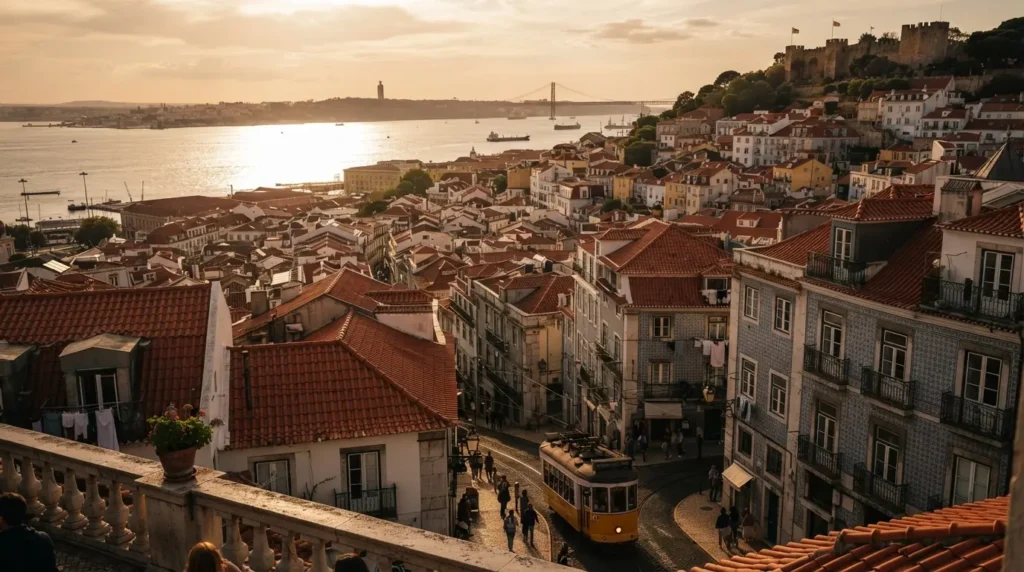
Lisbon has a particular quality of light in the late afternoon — the way it falls on the tiles of Alfama’s narrow lanes, turning them the colour of a flame through copper. Porto smells of port wine from across the river, the barrels in the Vila Nova de Gaia lodges aging in the dark on the water’s south bank, and the specific combination of rain on granite and the Atlantic wind that comes up the Douro from the sea. Both of these things are real and both of them matter. They are different cities with different rhythms and different reasons to go, and the question of which one to visit first is worth answering correctly rather than diplomatically.
Portugal welcomed 27 million visitors in 2024, a record (Turismo de Portugal). Both Lisbon and Porto sit consistently among Europe’s most visited cities. The two share the same national character — warm, understated, serious about food and wine — and the same tiled facades and fado tradition. Everything else about them is different.
Lisbon or Porto for a first visit to Portugal?
| Lisbon | Porto | |
|---|---|---|
| Size | 550,000+ residents; capital city scale | 230,000 residents; compact and walkable |
| Best for | First visit, variety, day trips, history | Second visit, couples, food and wine focus |
| Days needed | 4–5 minimum | 2–3 days |
| Price level | Mid-range | 15–25% cheaper than Lisbon |
| Day trips | Sintra, Cascais, Belém, Setúbal | Douro Valley, Viana do Castelo, Guimarães |
| Wine | Vinho verde, Alentejo reds, ginjinha | Port wine, Vinho verde, Douro reds |
| Character | Cosmopolitan, diverse, city-pace | Intimate, working-city, wine-soaked |
| Weather | More sunshine, warmer | Cooler, more rain in winter |
Sources: monkeytravel.app 2026; whenshoulditravel.com Lisbon vs Porto; geekyexplorer.com 2026 price comparison
Lisbon for a first visit because it is larger, has more of Portugal’s headline history and monuments, enables better day trips and has more tourist infrastructure in place. Porto for when Lisbon has already been done — or for couples who want a smaller, more concentrated city, or for food and wine travellers for whom the port wine cellars and the particular quality of Porto’s restaurant culture are the reason to go.
What is Lisbon actually like in 2026?
Lisbon is a capital city that manages to feel smaller than it is, mostly because its geography — seven hills, tramlines, unexpected viewpoints — keeps breaking it into neighbourhoods that each have their own character. The city is not compact: walking from the Alfama to Belém takes an hour. But it is walkable in the sense that the walking is always interesting.
Alfama, Mouraria and the viewpoints
Alfama is the oldest district, the one that survived the 1755 earthquake, and the one that still operates as a neighbourhood rather than a museum of itself. The lanes are steep and narrow. Fado — Portugal’s melancholic musical tradition, UNESCO-listed since 2011 — drifts from small restaurants in the evenings. The viewpoints (miradouros) at Graça, Santa Catarina and São Pedro de Alcântara give you the city laid out toward the Tejo at the best times of the day to see it: morning and evening. A Lisbon Alfama fado evening and walking tour moves through the neighbourhood at the right hour.
Mouraria, adjacent to Alfama and Lisbon’s most ethnically diverse neighbourhood, has the best and least tourist-adapted restaurants in the central city. The Intendente square, once the city’s roughest corner, now has the best neighbourhood café in central Lisbon.
Belém and what it represents
Belém, a riverside district 6 kilometres west of the centre, is where the Portuguese Age of Discovery monuments are concentrated. The Jerónimos Monastery — built in Manueline style by Manuel I, partially funded by the spice trade, and the burial place of Vasco da Gama and Luís de Camões — is one of Portugal’s finest buildings. The Tower of Belém on the river is the postcard image. The Discoveries Monument, the MAAT contemporary art museum, and the Museu de Marinha tell the rest of the story.
The Pastéis de Belém bakery at the monastery’s corner has been producing the original pastel de nata recipe since 1837. It is almost always busy. It is always worth the queue.
The day trips Lisbon enables
Sintra — 40 minutes by train from Rossio station, €2.50 each way — is the most significant. UNESCO-listed, a hillside covered in palaces (the Pena Palace, the Moorish Castle, the Quinta da Regaleira), and a town compact enough that a full day covers the main sights without a car. Book palace tickets in advance; the Pena Palace sells out in summer. Cascais, 40 minutes in the other direction, is a beach town that doubles as a day trip for Atlantic coast swimming and seafood lunch.
What is Porto actually like in 2026?
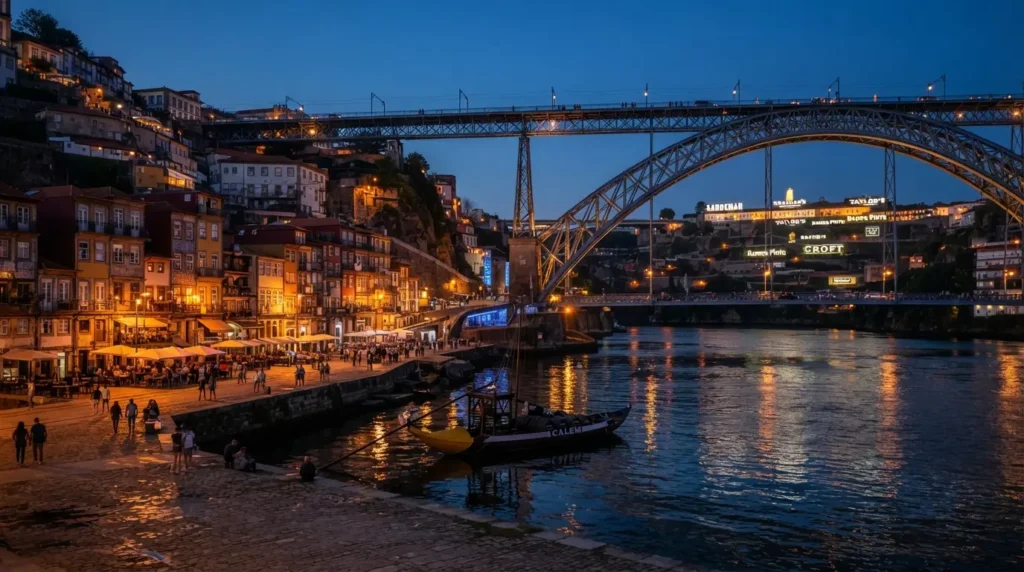
Porto is compact, its centre walkable end to end in forty minutes, and it operates at a pace that Lisbon, for all its charm, does not consistently match. The Ribeira waterfront — the UNESCO-listed neighbourhood that climbs the granite cliffs from the river — is the most photogenic stretch of any city in Portugal: narrow buildings in ochre and terracotta reflected in the Douro, rabelos (flat-bottomed boats that once transported port wine barrels) moored at the quay, the Dom Luís I bridge above it all.
The Ribeira and Vila Nova de Gaia
The Ribeira is best seen from across the river, from the southern bank of the Douro in Vila Nova de Gaia, where the port wine lodges are. The great names — Sandeman, Graham’s, Taylor’s, Ramos Pinto — have their lodges and cellars here, visible from the quay. A cellar tour runs €15–25 per person and includes a structured tasting of multiple port styles: white port as an aperitivo, ruby and tawny aged ports, vintage ports from specific years. A Porto port wine cellar tour in Vila Nova de Gaia covers two lodges and three tastings in two hours and is the correct introduction to what makes Porto distinctive.
São Bento station
São Bento railway station in the city centre has no trains of significance. What it has is 20,000 azulejo tiles depicting scenes from Portuguese history across its main hall’s walls — the Battle of Valdevez, the entry of João I into Oporto, the history of transport in Portugal — installed between 1905 and 1916 by artist Jorge Colaço. It is one of the most extraordinary decorative interiors in any train station in the world and it is free to enter.
Foz do Douro and the Atlantic coast
Foz do Douro, at the river’s mouth 6 kilometres from the centre, is where the Douro meets the Atlantic. The promenade along the rocky Atlantic coast has the particular quality of all Portuguese Atlantic coastlines — grey-green sea, clean air, the sense of being at the end of something. The neighbourhood here is one of Porto’s quietest and most residential.
Which is better for couples — Lisbon or Porto?
Porto, for most couples, for most kinds of trips. The city’s scale — small enough to walk everywhere, with the river on one side and the Atlantic not far in the other direction — makes it easier to feel settled in. Two nights in a riverfront hotel, the port wine cellars in the afternoon, dinner at a tasca in the Bonfim neighbourhood, and the Douro Valley on the third day is a specific and repeatable combination that works.
Lisbon suits couples who want more to do — the museums, the day trips, the variety of neighbourhoods — and for whom the capital city scale is a feature rather than an obstacle. The Alfama at dusk, with fado coming from somewhere below, is an evening that works for almost everyone. So does a table at a Mouraria restaurant with vinho verde and whatever was cooked that day.
Both cities are in our European anniversary trip guide, which covers the full Portugal case for couples alongside Italy, Greece and France.
Which city has better food — Lisbon or Porto?
Porto, by a narrow margin, for the quality and character of the restaurant at the neighbourhood level. Lisbon has more variety and more of the international-facing food scene. Porto’s food has more personality and costs less.
The francesinha is Porto’s signature dish — a sandwich of cured meat, linguiça, fresh sausage and steak, covered in melted cheese and a tomato-beer sauce, served with chips — and is not available in Lisbon in any authentic form. It is best eaten for Saturday lunch, the way Porto eats it. Bacalhau (salt cod, the national ingredient, allegedly prepared 365 different ways) is excellent in both cities, though the specific treatment differs by region. The caldo verde (kale and potato soup with a round of chouriço) is Portugal’s most fundamental dish and is better in the north.
Lisbon’s food scene is more internationally diverse — better Japanese, better creative contemporary Portuguese, better coffee (the specialist coffee culture is centred in Lisbon’s Intendente and Mouraria). Porto is the city for traditional Portuguese food done without compromise. The choice between them is not quality but style.
How much cheaper is Porto than Lisbon in 2026?
Porto is 15–25% cheaper across accommodation, food and activities. A mid-range hotel in Porto’s centre costs €95–130 per night; the Lisbon equivalent runs €120–160 in peak season (geekyexplorer.com, 2026). A restaurant meal in Porto at a neighbourhood tasca costs €12–20 per person; a similar standard in Lisbon runs €15–25. Port wine cellar tastings at €15–25 represent a cultural activity at a price point that similar experiences in other wine regions do not reach.
Porto is, as one comparison puts it, what Lisbon felt like ten years ago in terms of tourist pricing — not cheaper because it is lower quality, but cheaper because it has not yet fully priced in its own fame (whenshoulditravel.com). That gap will narrow. It has not closed yet in 2026.
Our Portugal budget travel guide covers the specific daily cost breakdown for both cities in detail, including the tourist tax and neighbourhood savings.
Can you visit both Lisbon and Porto on the same trip?
Yes — and most travellers who have been to one immediately begin planning a return for the other. A week works well as three nights in Lisbon and three nights in Porto, with one day in the Sintra direction from Lisbon and one day in the Douro Valley from Porto. The Alfa Pendular high-speed train between Lisbon Santa Apolónia and Porto Campanhã takes approximately two hours and fifty minutes and costs €33–40 booked ahead. The slower intercity trains take three hours and cost from €13.
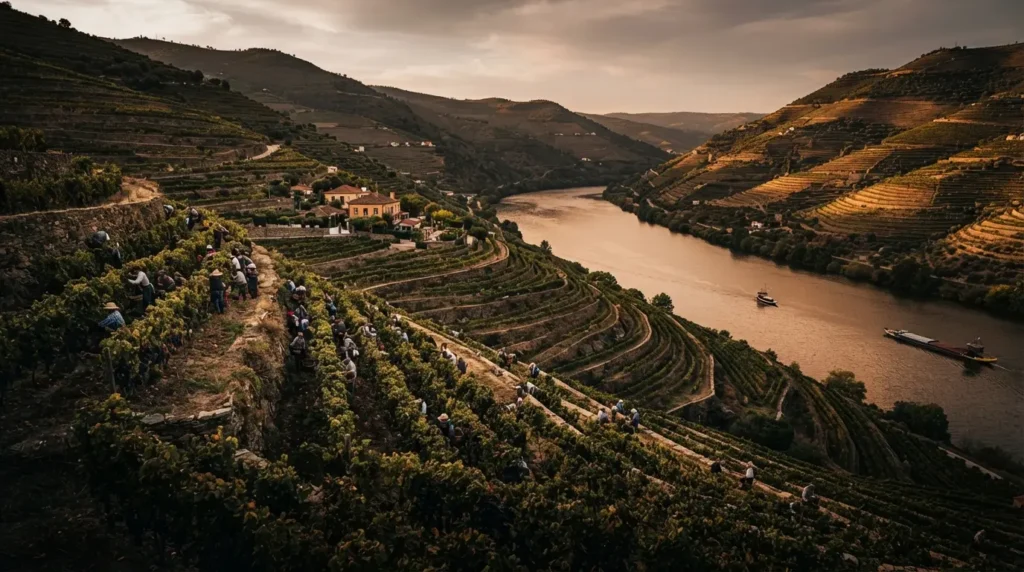
The Douro Valley day trip from Porto — terraced vineyards, a river cruise, wine tasting at a quinta — is the best single day available from Porto and works most powerfully in September and October during the grape harvest.
You can plan your Portugal itinerary across both cities on PlacesToday — tell us how many days you have and whether you want to prioritise wine, history or walking, and the route follows from there.
Frequently asked questions
Q: Should I visit Lisbon or Porto first?
A: Lisbon for a first visit to Portugal. It is larger, has more of Portugal’s headline history, enables better day trips (Sintra, Cascais, Belém) and has more tourist infrastructure. Porto for a second visit, for couples who prefer a smaller city, or for travellers whose primary interest is food and wine. If you have a week, visit both — the train is under three hours.
Q: Is Porto significantly cheaper than Lisbon?
A: Yes — 15–25% cheaper across accommodation, food and activities in 2026. A mid-range Porto hotel costs what a basic Lisbon hotel costs. Neighbourhood restaurants, port wine tastings and transport all cost less. Porto is still excellent value by Western European standards even at its non-discounted prices.
Q: What is the best time to visit Lisbon and Porto?
A: September and October for both. Temperatures are comfortable (20–26°C), summer crowds have thinned, the Douro Valley harvest gives Porto its best day-trip experience, and hotel prices are 20–30% below the July and August peak. April to June is the spring equivalent — warm, green, quieter than summer.
Q: How do you get between Lisbon and Porto?
A: The Alfa Pendular high-speed train from Lisbon Santa Apolónia to Porto Campanhã takes approximately two hours and fifty minutes and costs €33–40 booked ahead at cp.pt. Slower intercity trains take three hours and cost from €13. Flights between the cities exist but add airport transit time, making the train faster door-to-door for central city accommodation.
Q: Which city is better for a romantic trip — Lisbon or Porto?
A: Porto by a small margin — its scale, the riverfront, the port wine cellars and the Douro Valley day trip combine into a specific kind of romantic trip that Lisbon’s larger scale and busier pace does not quite replicate. Lisbon’s Alfama in the evening is exceptional for a couple’s evening. Porto works for a couple’s full trip. Both are covered in our European anniversary guide.
Portugal has two great cities and three hours of train between them, which means the Lisbon vs Porto question is less either/or and more which one first. Lisbon opens the country. Porto deepens it. A week with both, and a day in the Douro Valley, is the version of Portugal that most travellers say they wish they had built from the beginning. Plan your Portugal trip on PlacesToday →