Egypt in 2026 is worth visiting for three reasons that have converged in the same year for the first time: the Grand Egyptian Museum beside the Giza pyramids opened in late 2025 and now displays the complete Tutankhamun collection together for the first time in history; the Egyptian pound’s weakness against the euro and dollar makes this one of the better-value long-haul destinations currently available; and 19 million visitors arrived in 2025 — up 21% on 2024 — confirming that global confidence in the country has returned. October to March is the best window. Cairo first, then Luxor, then the Nile south to Aswan.
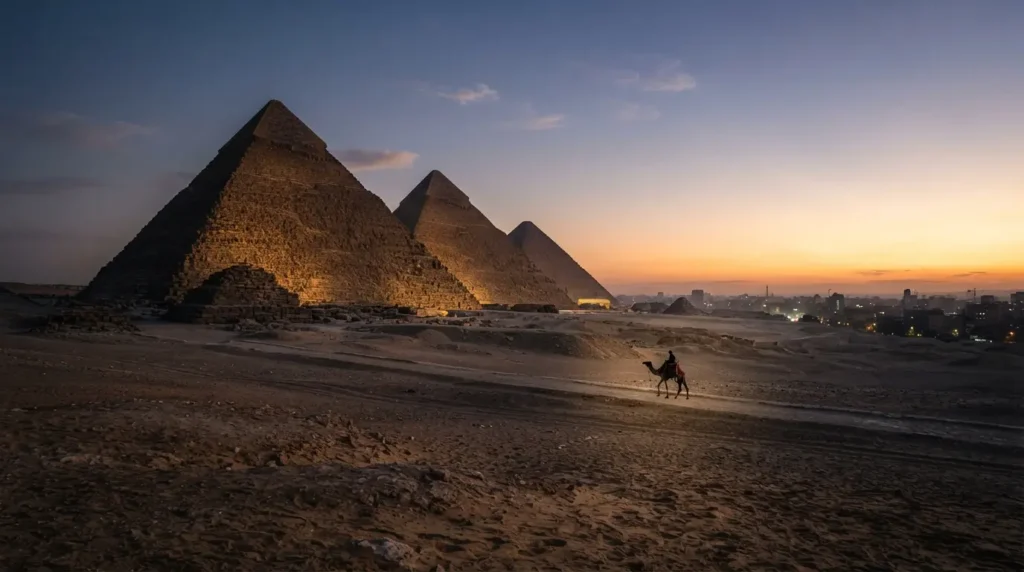
The first view of the pyramids is never quite what the photographs prepared you for. They are larger. They sit at the edge of Cairo’s suburban sprawl in a way that no aerial photograph conveys — the city pressing up against them, the desert beginning immediately behind, the scale of the structures only apparent when a person or a camel appears at the base for reference. This is one of those moments when the world’s most-reproduced image reveals the photograph’s central lie: three dimensions are not two, and standing at the foot of the Great Pyramid of Cheops at six in the morning, when the light comes in low across the limestone and the tourist groups have not yet arrived, is a different order of experience from knowing the image.
Egypt recorded 19 million international visitors in 2025, a record that represented a 21% increase on the year before (Egypt’s Ministry of Tourism and Antiquities). The government is targeting 21 million for 2026. The Grand Egyptian Museum, opened in November 2025 after two decades of construction at a cost of over one billion dollars, is attracting approximately 15,000 visitors per day and is expected to draw six million annually (Rio Times Online, July 2026). The complete Tutankhamun collection — the 5,000 artefacts from the boy king’s tomb, displayed together for the first time since their discovery in 1922 — is the single exhibit that makes 2026 the specific year to go.
Is Egypt safe to visit in 2026?
Yes, in the areas that form Egypt’s tourist circuit. Cairo, Luxor, Aswan, Hurghada and Sharm el-Sheikh operate with dedicated tourism police, metal detectors at major sites, and a safety satisfaction rating of 94% among international visitors in 2025 (Egypt Travel Consultant, 2026 data). The incident-free visit rate recorded in 2025 was 99.97%.
The areas to avoid are clearly defined and well away from anything on a standard itinerary: North Sinai and the territory within 50 kilometres of the Libyan border. No tourist site, Nile cruise route or Red Sea resort is near either. The FCDO Egypt travel advice provides current guidance and specifies the affected zones clearly. Check it before departure; the broader Egyptian circuit is not in those zones.
What is the Grand Egyptian Museum and why does it matter for a 2026 trip?
The Grand Egyptian Museum sits 2 kilometres from the Giza pyramids and houses more than 100,000 artefacts — the largest collection of ancient Egyptian antiquities in the world — in a purpose-built complex that connects directly to the plateau. Its centrepiece is the Tutankhamun galleries: every object from the discovery of his tomb by Howard Carter in 1922, displayed complete and in sequence for the first time since excavation. Previous display of the collection across multiple rooms and storage facilities meant that no visitor had ever seen it whole. In 2026, you can.
The museum also houses colossal statues of Ramesses II that were too large to fit through the doors of the old Egyptian Museum in Tahrir Square, reconstructed royal tombs, and the oldest surviving boat in the world — the Khufu Ship, a 4,500-year-old cedar vessel found dismantled in a pit beside the Great Pyramid. Book entry in advance through the Egypt Tourism Authority official booking system; peak morning slots fill quickly.
What is Egypt’s essential route?
Most first-time visitors allocate seven to ten days and follow the same well-reasoned sequence.
| Destination | Days | Best for | Notes |
|---|---|---|---|
| Cairo / Giza | 3 | Pyramids, Grand Egyptian Museum, Islamic Cairo | Book GEM tickets in advance; visit pyramids before 8am |
| Luxor | 2–3 | Karnak, Valley of the Kings, Luxor Temple | Most concentrated ancient site per km anywhere in the world |
| Aswan | 1–2 | Nubian culture, Philae Temple, Abu Simbel day trip | Base for Nile cruise start or end |
| Nile Cruise (Luxor–Aswan) | 3–4 | Temples, river landscape, slower pace | Replaces individual days in Luxor and Aswan for those who want the river |
| Red Sea (Hurghada / Sharm) | 2–3 | Diving, snorkelling, beach | Add at start or end; direct flights from Cairo |
Sources: egypt.travel; ramassidetours.com 2026 itinerary data; nilecruisen.com 2026
The route works equally well from north to south (Cairo, then fly Luxor, then boat to Aswan) or south to north (reverse). Most travellers fly internally between Cairo and Luxor — Egypt Air and budget carriers make this forty-five minutes and inexpensive. The Nile cruise between Luxor and Aswan takes three to four days by conventional boat and replaces the need to base independently in both cities.
What is Cairo actually like?
Cairo is one of the world’s great cities in the way that only cities of extraordinary age and density can be. It is also loud, congested, and requires a recalibration of pace that takes a day or two to complete. By the third morning, the rhythm begins to feel natural.
The Pyramids — the morning visit matters
The Giza Plateau opens at 8am and the pyramids are best approached as early as the site allows. The Great Pyramid, the Pyramid of Khafre and the Pyramid of Menkaure are accompanied by the Sphinx, the Valley Temple (where royal mummification rituals were conducted), and the causeways connecting each pyramid to its funeral complex. Entry to the plateau is ticketed; entry to the interior of the Great Pyramid requires a separate additional ticket and involves a narrow ascending passage that is not comfortable for the claustrophobic. The interior chambers are stripped and dark. The exterior of the complex, walked in the early morning before the heat builds, is the experience.
A Cairo pyramids and Grand Egyptian Museum guided tour covers both in a full day with context — the museum in the morning when it opens, the plateau in the afternoon when the light comes from the west and the photography improves.
Islamic Cairo and Khan el-Khalili
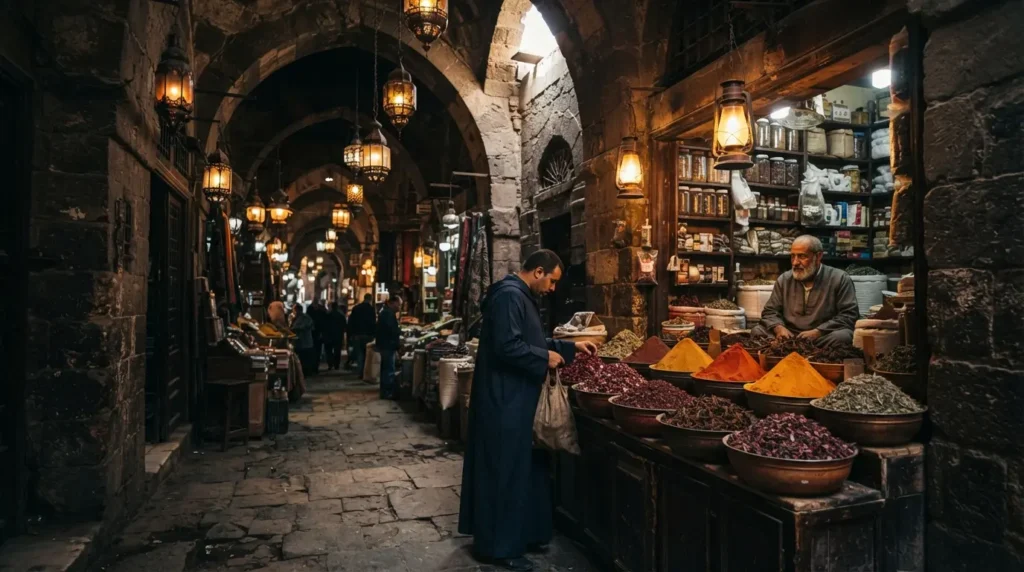
Islamic Cairo — the medieval city that grew up after the Arab conquest of 641 AD — contains one of the largest concentrations of medieval architecture surviving anywhere in the world. The Ibn Tulun Mosque, built in 879 AD and almost entirely intact, is the oldest mosque in Cairo. Al-Azhar Mosque and University, founded in 970 AD, is still a functioning centre of Islamic scholarship. Walking the streets between the Fatimid-era al-Hakim Mosque and the Mamluk-era Sultan Hassan Mosque is a sequence of architectural encounters that a morning does not adequately cover.
Khan el-Khalili, Cairo’s medieval bazaar, begins where Islamic Cairo’s main street ends. The smell arrives before the market does: incense, coffee, spices, leather. The inner lanes of the market — away from the tourist-facing shops at the entrance — sell the same goods to the same customers they have sold to for centuries. Sit at one of the old coffeehouses with a mint tea and watch.
Why is Luxor the more overwhelming of the two?
Because it is ancient Thebes — the religious and political capital of Egypt at the height of the New Kingdom, roughly 1550 to 1070 BC — and the density of temples, tombs and monuments within a twelve-kilometre radius is unlike anything else surviving from the ancient world.
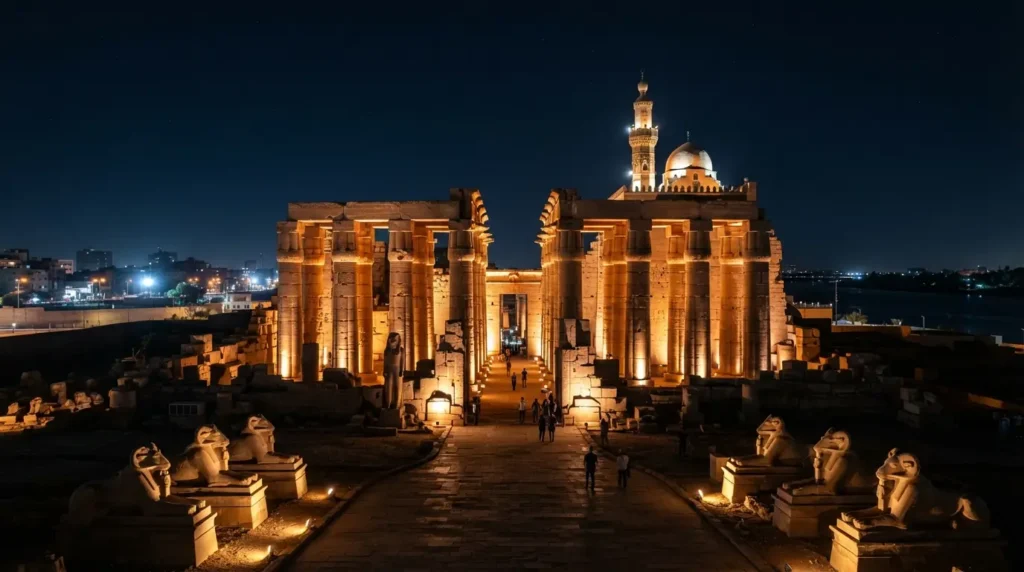
The east bank contains Karnak Temple Complex — the largest religious structure ever built, expanded by successive pharaohs over 1,300 years, covering 250 acres — and Luxor Temple, which the city literally grew around, so that a mosque was eventually built on top of one of its courts. The west bank is where the pharaohs were buried: the Valley of the Kings contains 63 known tombs, including those of Tutankhamun, Ramesses II, and Seti I. The mortuary temple of Hatshepsut rises in three colonnaded terraces against the limestone cliffs. The Colossi of Memnon — two seated statues 18 metres high, all that remains of a mortuary temple once larger than Karnak — sit alone in a field, receiving visitors.
A Luxor east and west bank full-day tour allocates a morning to Karnak and the afternoon to the west bank tombs and temple. Two days in Luxor is the correct allocation; one day leaves the west bank inadequate time. Go to the Valley of the Kings before nine in the morning — by midday in summer the interior of the tombs is hot and crowded.
Is a Nile cruise worth it in 2026?
Yes, for the specific thing it provides: the temples between Luxor and Aswan seen from the water, at the pace of the river, without the logistics of moving accommodation. A three-night cruise covers Edfu (the best-preserved temple in Egypt), Kom Ombo (a double temple with a crocodile museum), and reaches Aswan, where Philae Temple sits on an island in the river and the granite quarry contains an unfinished obelisk that explains exactly how the monuments were made.
The cruise market ranges from budget three-star boats to genuinely luxurious vessels with deck pools and butler service. Mid-range three-night cruises run approximately $150–300 per person including all meals and guided temple visits. The experience of watching the Nile’s west bank scroll past at sunset — the limestone cliffs, the date palms, the occasional temple pylon visible above the reeds — is the version of Egypt that the photographs of the monuments do not show. It exists and is worth finding.
What does Egypt cost in 2026?
Less than most visitors expect. The Egyptian pound has remained weak against both the euro and the dollar, making Egypt one of the best-value long-haul destinations currently available for European and American visitors. A mid-range day — comfortable hotel, restaurant meals, entry to major sites and a guided tour — runs approximately $80–120 per person. Budget travellers in guesthouses eating at local restaurants can manage $40–60. Luxury is available at a price that would be significantly higher in comparable European destinations.
The Grand Egyptian Museum entry costs approximately £30–35 (EGP 700–800 at current rates) for international visitors. Major Luxor site entries — Karnak, Valley of the Kings, Luxor Temple — each cost EGP 300–500. A Nile cruise including all meals and temple entries runs $150–300 per person for three nights on a mid-range vessel.
The practical note: most Egyptian heritage sites and the Grand Egyptian Museum now have online ticketing systems that should be used before arrival, particularly for the Tutankhamun galleries which book up significantly.
When is the best time to visit Egypt?
October to April. Cairo and Luxor in summer (June–August) regularly exceed 38–40°C and the interior of the tombs at Luxor becomes genuinely uncomfortable by mid-morning. October through March offers temperatures of 20–28°C across the main circuit, clear skies, and the best conditions for the outdoor sites — including the pyramids, the Valley of the Kings and the walk along Luxor’s Avenue of Sphinxes, restored and reopened in 2021.
December and January are peak season and carry a corresponding price premium for accommodation. March to April and October to November are the shoulder months that offer the best combination of comfortable temperatures, manageable crowds and reasonable hotel rates.
Egypt connects naturally with Jordan — the two countries share a land crossing at Aqaba and a short flight across the Red Sea. For how Jordan’s Petra and Wadi Rum compare as a companion trip, our Jordan travel guide covers the route in detail.
Frequently asked questions
Q: Is Egypt safe to visit in 2026?
A: Yes, in the areas comprising the tourist circuit. Cairo, Luxor, Aswan, the Nile cruise route, Hurghada and Sharm el-Sheikh all operate with dedicated tourism security and recorded a 99.97% incident-free visit rate in 2025 (Egypt Travel Consultant, 2026). North Sinai and territory near the Libyan border are the areas to avoid — both are clearly defined in the FCDO travel advice and are nowhere near any tourist site. Check the current FCDO Egypt guidance before departure.
Q: What is the Grand Egyptian Museum and is it worth the trip in 2026?
A: The Grand Egyptian Museum is the world’s largest archaeological museum, opened in late 2025 beside the Giza pyramids. It houses the complete Tutankhamun collection — all 5,000 artefacts from his tomb — displayed together for the first time since their discovery in 1922. It is drawing approximately 15,000 visitors a day and is genuinely the reason 2026 specifically is the right year to go. Book entry in advance.
Q: How many days do you need in Egypt?
A: Seven to ten days covers Cairo and the Grand Egyptian Museum (two to three days), Luxor (two days), and a Nile cruise or Aswan extension (three to four days). Ten to twelve days adds the Red Sea coast. Anything under six days reduces to Cairo only, which leaves Luxor — arguably the more astonishing of the two — out of the trip.
Q: Is a Nile cruise worth doing?
A: Yes — for the temples between Luxor and Aswan seen from the water and the particular quality of the river landscape at sunset. A three-night mid-range cruise running $150–300 per person covers Edfu, Kom Ombo and Aswan with guided temple visits included. It replaces the need for independent accommodation in multiple cities and provides the most relaxed way to cover the Upper Egypt sites.
Q: What is the best thing to see in Egypt beyond the pyramids?
A: Karnak Temple Complex in Luxor — the largest religious structure ever built, expanded over 1,300 years, covering 250 acres. Most visitors who have seen both say Karnak is the more overwhelming of the two experiences. The Valley of the Kings on Luxor’s west bank, where 63 royal tombs are carved into the limestone cliffs, is the second answer. Both are within twelve kilometres of each other and accessible in a single day from Luxor.
Egypt’s monuments are not overrated. They are, in their actual presence rather than their reproduced image, larger and stranger and more affecting than the photographs have room to convey. The Grand Egyptian Museum adds something that the monuments alone could not: the human story behind the scale, the boy king’s face in gold, the objects of daily life from a civilisation four thousand years old, arranged in full for the first time. Go before the world’s twenty-one million travellers a year all arrive in the same season. Plan your Egypt trip on PlacesToday →