Mexico City is safe to visit in 2026 in the neighborhoods where international visitors spend their time — Roma Norte, Condesa, Polanco, Coyoacán and the Centro Histórico — and genuinely extraordinary in ways that most cities of comparable size are not. Mexico recorded 8.84 million international visitors in January 2026 alone, the highest single-month figure in the country’s modern tourism history, up 10% year-on-year (Secretaría de Turismo / MICE Travel Advisor). A meaningful share of that growth is being driven by people who came specifically for the food, which is the correct reason to go.
Mexico City has spent two decades being rediscovered. At some point the rediscovering becomes the discovery, and that point is approximately now. The city that a previous generation of guidebooks described primarily in terms of what to avoid has become, by most serious measures, one of the world’s great destinations — for food above all, but also for culture, architecture, cost-to-quality ratio, and the particular energy of a metropolis of 22 million people that is operating at something close to full creative capacity.
Mexico’s tourism sector recorded 98.2 million international visitors in 2025, driven in part by a culinary tourism boom that lists Mexico City alongside Guadalajara as the country’s primary food tourism engine (Secretaría de Turismo, 2026). The restaurants are globally ranked. The street food is older, cheaper, and better. The mezcal bars are newer and excellent. And the cost, for visitors arriving from Europe or the United States, makes all of it feel like the most generous bargain available in any major city on earth.
This guide is for the first-time Mexico City visitor who has been told various things about the city — some accurate, some outdated — and wants the current version.
Is Mexico City safe to visit in 2026?
Yes, in the neighbourhoods that international visitors use. Roma Norte, Condesa, Polanco, Coyoacán, and the Centro Histórico are all well-patrolled, extensively visited and functionally safe for international travellers who apply the same common-sense precautions they would in any large city.
The honest version: Mexico City is a city of 22 million people and has real crime concentrated in specific areas that most visitors never approach. The UK Foreign, Commonwealth & Development Office advises exercising caution in Mexico City while noting that the tourist-facing districts are not among the high-risk zones. Check the FCDO Mexico travel advice for current guidance before departure. Use app-based ride services (Uber or the local DiDi) rather than hailing taxis from the street — this is the single most consistently recommended safety practice for Mexico City visitors and resolves the most common safety concern with one decision.
The fear-to-reality gap is large. Most visitors to Mexico City come back having had a better trip than they expected and a safer one than they were warned about.
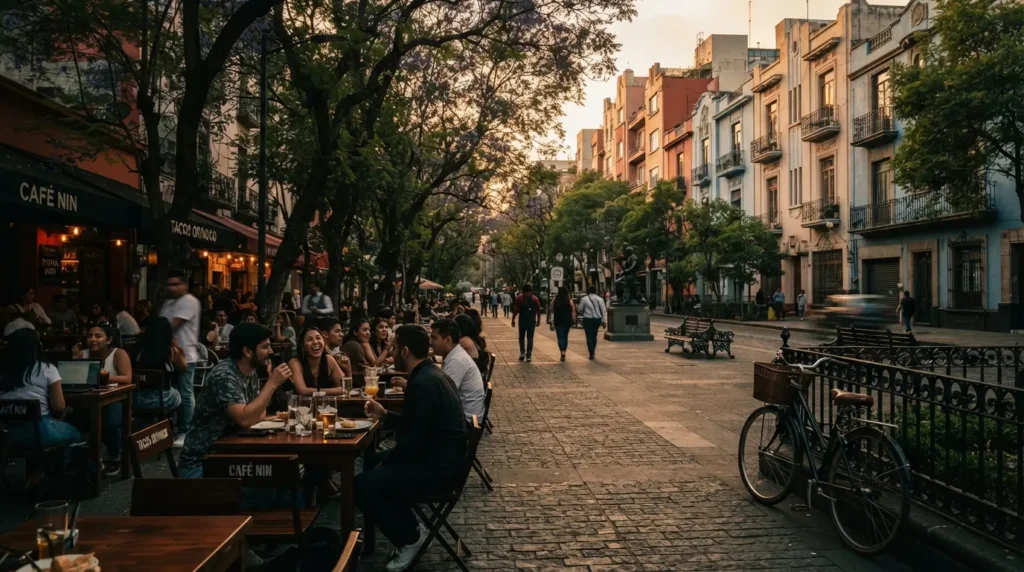
Which Mexico City neighbourhood should you stay in?
The neighbourhood decision shapes the whole experience.
| Neighbourhood | Best for | Vibe | Price level | Food/nightlife |
|---|---|---|---|---|
| Roma Norte | First-time visitors, food | Bohemian, tree-lined, walkable | Mid-range | Exceptional — cafés, taquerías, natural wine bars |
| Condesa | Couples, design lovers | Art Deco, parks, relaxed | Mid-range–high | Excellent, international mix |
| Polanco | Luxury, fine dining, shopping | Upscale, European-feeling | High | World-class restaurants, rooftop bars |
| Coyoacán | Culture, history, markets | Village-within-a-city feel | Budget–mid | Local markets, cafés, traditional food |
| Centro Histórico | History, architecture | Dense, chaotic, extraordinary | Budget–mid | Street food best in the city |
Sources: visitmexico.com; lonelyplanet.com CDMX neighbourhood guide; travelandtourworld.com 2026 data
Roma Norte is the correct base for most international first-time visitors. It is walkable, has the highest concentration of excellent cafés and restaurants per block of any neighbourhood in the city, and sits adjacent to Condesa so that both neighbourhoods are accessible on foot. Polanco is where the Michelin-level restaurants are, which makes it worth the taxi ride even if it is not where you sleep. The Centro Histórico is one of the most extraordinary urban centres in the Americas and requires significant time, but it works better as a day destination than as a base for first-time visitors who want to move easily between neighbourhoods.
What makes Mexico City one of the world’s great food cities?
Everything, but specifically three things: the street food, the fine dining, and the mezcal.
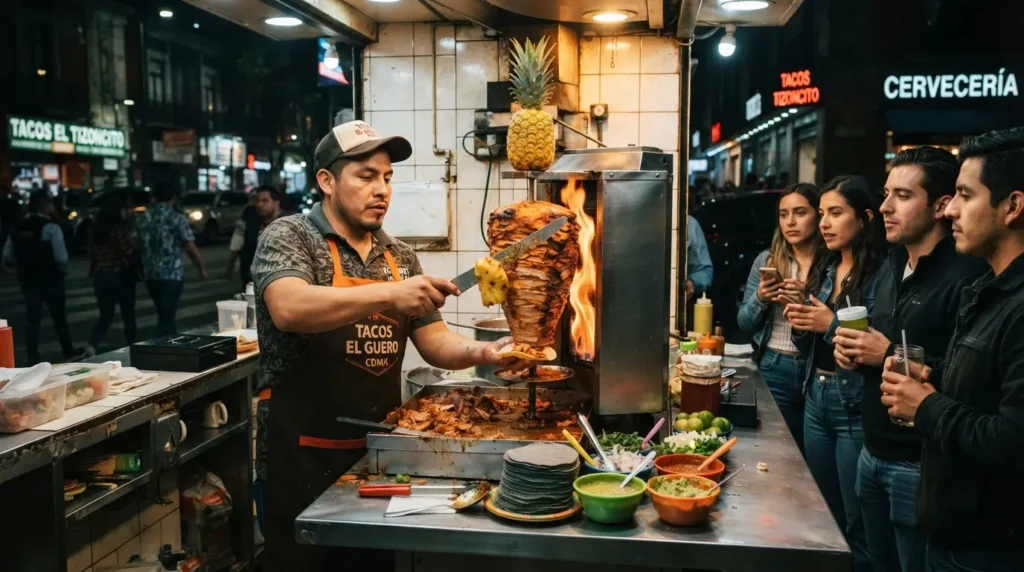
The street food is the starting point and the reference point for everything else. A taco al pastor — pork shaved from a vertical spit with pineapple, cilantro and salsa on a small corn tortilla — costs 15–20 Mexican pesos at a street taquería and is, in its best form, one of the perfect foods. The city produces its own version of every regional dish in Mexico, which means that eating through Roma Norte and the Centro Histórico is also eating through Oaxacan mole negro, Veracruz-style fish, Yucatecan cochinita pibil, and Pueblan poblano peppers, all within a few kilometres. A Mexico City street food tour through Roma and Condesa covers the geography of the food scene in two or three hours and is worth doing early — it teaches you which streets to return to independently.
The fine dining that earns its reputation
Pujol, operated by Enrique Olvera in Polanco, has been on the World’s 50 Best Restaurants list for over a decade and serves a mole madre — a mole aged for over 1,000 days — that is genuinely unlike anything available elsewhere. Quintonil, also in Polanco, translates Mexican biodiversity into tasting menus built around indigenous ingredients most visitors have never heard of. Contramar in Roma Norte is the correct seafood restaurant — tuna tostadas and grilled fish at a long communal table, lunch-only, book ahead. These are not expensive by European or American standards; a tasting menu at Pujol runs approximately 2,500–3,000 pesos (roughly £110–130). Book all of them well ahead — months in advance for Pujol.
The mezcal bar culture
Mezcal — the smoky, artisanal agave spirit of which tequila is one specific type — has its spiritual home in Oaxaca but its best bar scene in Mexico City. Roma Norte’s mezcalerías — small bars with deep lists from small producers — are among the best bars of any category in the Americas. Ordering mezcal in one of these places, with an explanation of the agave variety and the producer’s region, is an education that a tasting in an airport duty-free store does not replicate.
What are the best things to do in Mexico City?
The city is too large to approach as a checklist. Pick two or three areas per day and go deep rather than covering more ground than you can absorb.
The Centro Histórico
The historic centre of Mexico City is built on the ruins of Tenochtitlán, the Aztec capital that Cortés destroyed in 1521, and then built over again, and then built over again. The Templo Mayor — the excavated main pyramid of Tenochtitlán, now an open-air ruin beside the Metropolitan Cathedral — is the clearest physical statement of this layering. The Zócalo, one of the world’s largest public squares, is flanked by the cathedral, the national palace (with Diego Rivera’s murals inside, free to enter), and government buildings. The whole complex is a UNESCO World Heritage Site. Walking it on a clear morning, before the vendors and the tourist groups arrive, is one of the better mornings available in any city in the Americas.
The cultural circuit
The Frida Kahlo Museum in Coyoacán — the Casa Azul, the blue house where she was born, lived and died — requires advance booking and is worth planning your itinerary around. The Diego Rivera murals at the Palacio Nacional are free and extraordinary. The Museo Nacional de Antropología in Chapultepec Park is one of the great museums of the world, and the Aztec calendar stone alone justifies the entrance fee. A Frida Kahlo museum and Coyoacán walking tour combines the museum with the neighbourhood’s market and café culture in a half-day that stays in the memory.
Teotihuacán — the most important day trip
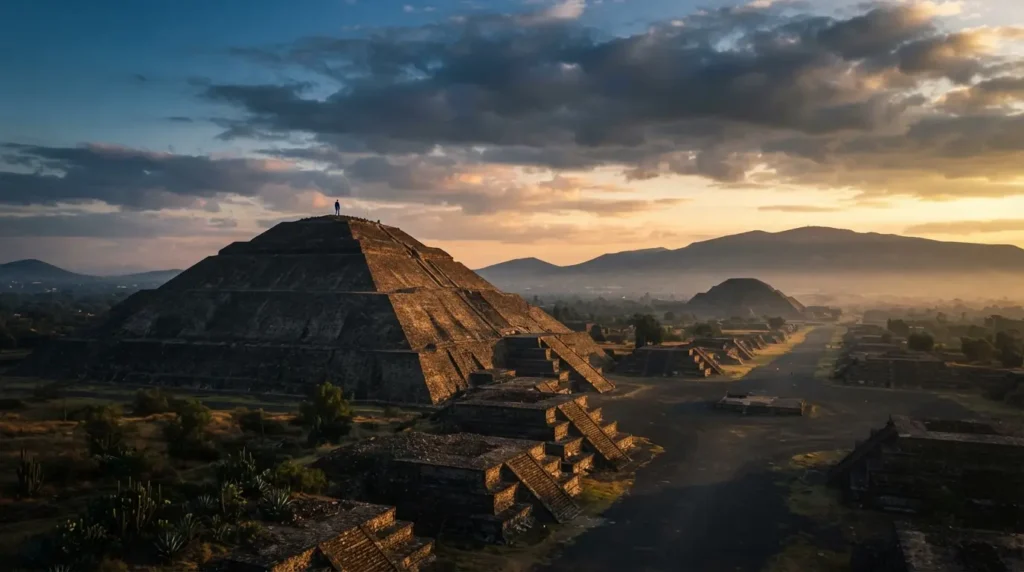
Fifty kilometres northeast of Mexico City, Teotihuacán is one of the great pre-Columbian cities of the Americas — the Pyramid of the Sun, the third largest pyramid in the world by volume, visible from twenty kilometres away; the Pyramid of the Moon; the Avenue of the Dead connecting them; and a city that at its peak in 450 AD housed 100,000 to 200,000 people. Almost nothing is known about who built it. The archaeological mystery is part of what makes standing on the summit of the Pyramid of the Sun — permitted, unlike the pyramids of Giza — one of the more disorienting experiences available anywhere. A Teotihuacán pyramids day trip from Mexico City takes two to three hours each way and a full morning at the site; go early before the heat and the tour coaches arrive simultaneously.
How much does Mexico City cost in 2026?
Less than almost any comparable major city. A street taco costs 15–20 pesos. A sit-down lunch at a local restaurant costs 80–150 pesos. A craft beer in a Roma Norte bar costs 80–120 pesos. A taxi across the city via Uber runs 80–150 pesos. Hostel dorm beds run 200–350 pesos per night; mid-range hotels in Roma Norte or Condesa run 1,000–2,000 pesos.
The exchange rate in 2026 runs approximately 17–18 Mexican pesos to the pound sterling and 16–17 to the US dollar. A mid-range traveller — comfortable hotel, restaurant meals, activities, museum entries and one or two tours — can expect to spend £60–100 per day, which makes Mexico City one of the best-value major city destinations available to British and American visitors. Even a Pujol tasting menu at 3,000 pesos represents roughly £130 — expensive for Mexico, reasonable for a world-class restaurant experience.
What is the best time to visit Mexico City?
November to April. Mexico City sits at 2,240 metres above sea level, which gives it a temperate climate year-round — never very hot, never very cold — but the rainy season from June to September brings daily afternoon downpours that limit outdoor time. The dry season from November to April is clear and pleasant, with daytime temperatures of 18–24°C and cool evenings that make a light jacket necessary after nine.
February and March are the sweet spot: school holiday crowds have cleared, prices are stable, and the city’s cultural calendar — museum exhibitions, food festivals, the spring flowering of the jacaranda trees that line Roma Norte’s boulevards in purple — is at its most active. December is excellent but increasingly popular and carries a modest price premium. Mexico is a co-host of the 2026 FIFA World Cup, with matches in Monterrey and Mexico City through June and July — if your travel dates coincide, book accommodation significantly ahead as demand is exceptionally high.
You can plan your Mexico City itinerary on PlacesToday and build it around your occasion, interests and how many days you have. For how Colombia compares as an Americas alternative, our Colombia travel guide covers the comparison in detail.
Frequently asked questions
Q: Is Mexico City safe for tourists in 2026?
A: Yes, in the neighbourhoods where international visitors spend their time — Roma Norte, Condesa, Polanco, Coyoacán and the Centro Histórico. Use app-based ride services rather than street taxis, keep valuables out of sight in crowded areas, and check the FCDO or US State Department travel advice for current guidance. The safety situation in tourist districts is considerably better than Mexico City’s overall crime statistics suggest, and the fear-to-reality gap for well-prepared visitors is significant.
Q: How many days do you need in Mexico City?
A: Four to five days covers the main neighbourhoods, the Centro Histórico, the key museums and one Teotihuacán day trip without feeling rushed. A week allows Coyoacán properly, two or three fine dining meals, and the kind of aimless afternoon in Roma Norte that produces the trip’s best conversations. Three days is the minimum for highlights only.
Q: What is Mexico City known for in 2026?
A: Food, above almost everything else. Mexico recorded 98.2 million visitors in 2025, with culinary tourism explicitly cited as the primary growth driver — and Mexico City sits at the centre of that story (Secretaría de Turismo, 2026). Beyond food: pre-Columbian and colonial history on a scale that no other American city matches, a contemporary art and architecture scene that rivals any city in Latin America, and Teotihuacán fifty kilometres away.
Q: Is Mexico City expensive?
A: No — it is one of the best-value major cities in the world for visitors from Europe or the United States. Street food costs pennies by European standards. Even world-class restaurants like Pujol run less than the equivalent meal in Paris or New York. A mid-range traveller can manage £60–100 per day comfortably including accommodation, meals, activities and transport.
Q: What is the best neighbourhood to stay in for a first visit?
A: Roma Norte. It is walkable, has the highest concentration of excellent restaurants and cafés of any neighbourhood in the city, sits adjacent to Condesa, and is well-connected by Uber to Polanco, Coyoacán and the Centro Histórico. Mid-range hotels and boutique properties here run 1,000–2,000 pesos per night — reasonable by any international standard.
Mexico City’s moment is not coming. It is here, it has been here for a while, and the visitors who have been waiting for conditions to be perfect have already missed several excellent years. The food alone would justify the flight from London or New York. The history would justify it separately. The cost of the two together makes the question not whether to go but when — and the honest answer is before the jacarandas flower in March, or in October when the weather is perfect and the World Cup crowds have gone home. Plan your Mexico City trip on PlacesToday →