Budget travellers can manage Portugal on €45–75 per person per day in 2026, covering a hostel dorm, local food and public transport. Mid-range travellers in private accommodation spending most meals in restaurants should budget €100–160 per day. Portugal is 30–40% cheaper than France or Italy for the same quality of experience, but hotel prices have risen 40–60% from 2019 levels in Lisbon and the Algarve — so where you stay, and when, is the decision that controls the budget more than anything else.
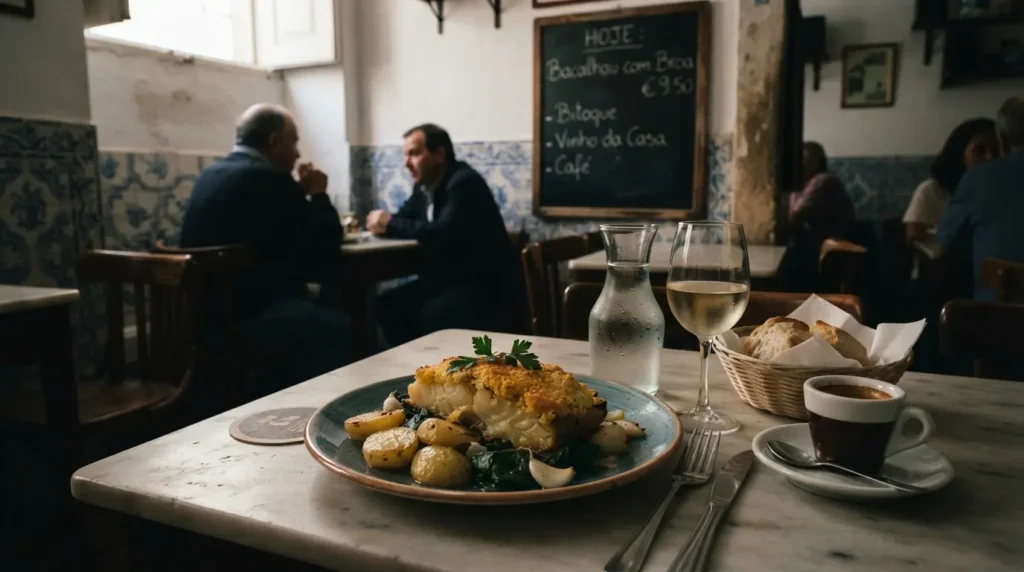
There is a meal in Portugal called the prato do dia. Three courses, often with a small carafe of house wine, for somewhere between €8 and €12 depending on the town. It arrives without ceremony — bread first, then soup, then whatever came off the boat or the farm that morning, then something sweet. The wine is local and perfectly good. This is lunch in Portugal on a Tuesday, not a special occasion, and it costs about a third of what a similar lunch costs in Paris or Amsterdam.
This is the version of Portugal that the budget numbers are built around. It still exists. It is everywhere outside the tourist-facing restaurants in central Lisbon and the Algarve resort strip. The 2026 budget challenge is not that Portugal has become expensive — it is that accommodation in the most popular areas has risen sharply, and if you book the wrong hotel in the wrong week, you erode the advantage before you’ve ordered a pastel de nata.
This guide gives you the actual numbers, the decisions that matter, and the places where Portugal’s value proposition is still completely intact.
How much does Portugal actually cost per day in 2026?
The honest breakdown by travel style, excluding international flights.
| Budget | Mid-Range | Comfortable | |
|---|---|---|---|
| Accommodation | €15–30 (hostel dorm) | €60–100 (private room/guesthouse) | €120–200 (mid hotel) |
| Food | €15–25 (markets, prato do dia, bakeries) | €35–55 (mix of local and sit-down) | €60–90 (restaurant meals) |
| Transport | €5–8 (day pass or train) | €10–20 (metro + occasional taxi) | €20–35 (taxis, car hire) |
| Activities | €5–15 (selective, mostly free) | €15–25 (one paid attraction/day) | €30–50 (tours, tastings) |
| Daily total | €45–75 | €110–160 | €230–340 |
| 7-day total (per person) | €315–525 | €770–1,120 | €1,610–2,380 |
Sources: simpletravelpath.com 2026; travelvaluefinder.com; tripbudgetcalculator.com
The gap between budget and mid-range is almost entirely explained by accommodation. Food, transport and activities in Portugal are all reasonable across every price point — it is the hotel bill that determines which column you are in.
Is Portugal still cheap compared to the rest of Europe in 2026?
Yes, by a significant margin. A mid-range day in Portugal at €100–160 compares to €200–300 for equivalent quality in Paris, and €150–220 in Rome or Barcelona (tripbudgetcalculator.com). Portugal welcomed 27 million visitors in 2024 according to Turismo de Portugal, and prices have followed the demand — but the structural value advantage over northern and central Europe remains real.
The closest comparison is Spain. Portugal is 20–30% cheaper than Spain’s major tourist cities in most categories, though the gap narrows in the Algarve in July and August, when the coast runs at high season prices that compete with Málaga and the Costa Brava.
What is the biggest cost in Portugal — and how do you manage it?
Accommodation. It absorbs 40–50% of most daily budgets and is where the largest decisions get made.
How much does accommodation cost in Portugal in 2026?
Hostel dorm beds in well-rated Lisbon hostels run €20–35 per night. Private rooms in guesthouses start around €50–65. Mid-range hotels in central Lisbon cost €110–200, with the Algarve in July and August hitting similar numbers for three-star properties (simpletravelpath.com).
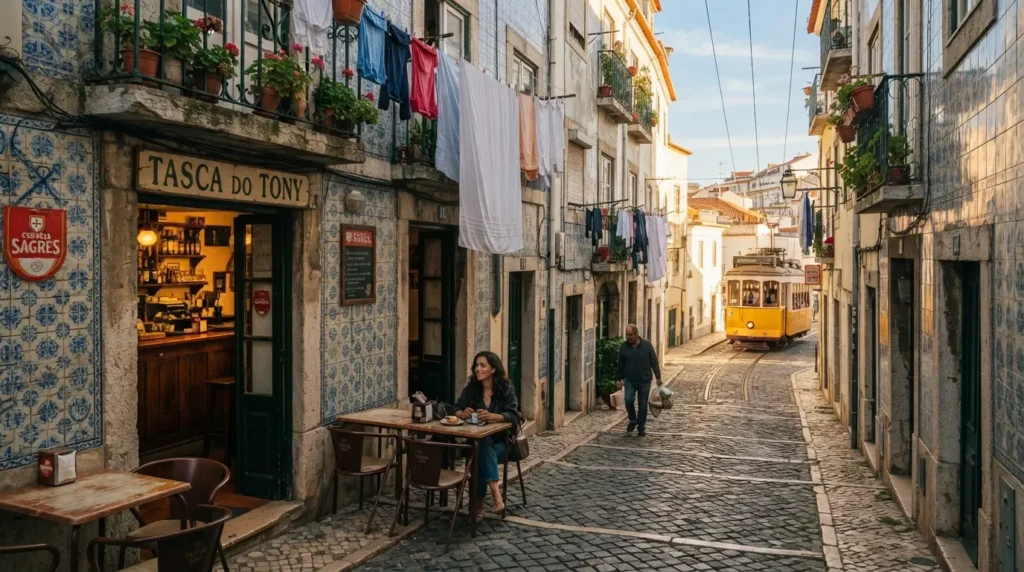
The neighbourhood choice matters as much as the property type. Staying in Mouraria or Graça in Lisbon — both excellent, genuinely Lisbon neighbourhoods — costs 20–30% less than the equivalent room in Baixa or Chiado, with a 10–15 minute metro ride to the centre (travelvaluefinder.com). In Porto, Bonfim and Cedofeita are 15–20% cheaper than Ribeira while being equally characterful. In the Algarve, staying in Tavira or Lagos rather than the central Albufeira resort strip halves your accommodation bill and gives you a more interesting base.
Booking 3–4 months ahead for summer and 4–6 weeks ahead for shoulder season saves 30–40% versus last-minute rates on the same properties.
The tourist tax most budget guides miss
Lisbon charges €4 per person per night, Porto charges €3, and most other municipalities charge €1–2. On a seven-night Lisbon trip for two people, that is €56 paid directly to the hotel at check-in — it does not appear on your booking confirmation and catches most visitors off guard (travelvaluefinder.com). Factor it in from the start.
How do you eat well in Portugal on a budget in 2026?
Better than almost anywhere else in Western Europe, if you know how the system works.
The prato do dia — the most important meal of your trip
The prato do dia — daily lunch special — is the mechanism that makes Portugal’s food budget work. Three courses including bread, soup, a main, dessert or coffee, and frequently a small carafe of house wine, for €8–12 in a local tasca. Eating this once a day and managing breakfast and dinner more cheaply saves €15–25 compared to eating all meals in tourist-facing restaurants (travelvaluefinder.com). Over two weeks, that is €210–350 saved on food alone — enough for two or three extra nights in a decent guesthouse.
The prato do dia is available at lunch, not dinner. Find it by looking for handwritten chalk boards outside small local restaurants, particularly away from main tourist squares. It will not be translated into English. This is usually a good sign.
What to drink and how much it costs
An espresso in a local café costs €0.80–1.20 anywhere outside a tourist terrace. A glass of vinho verde — Portugal’s young white wine, slightly sparkling, cold and essential in summer — costs €2–3 in a tasca and €1.50 at most markets. A small bottle of Sagres beer costs €1–1.50 in a local bar. House wine by the carafe at lunch is frequently included in the prato do dia price, or costs €2–4 separately.
The significant price jump happens on main squares and at restaurants with view terraces, where the same coffee costs €3–5 and the wine doubles. Moving one street back from the viewpoint is the consistent solution. A Lisbon food and wine walking tour is worth taking early in a Lisbon visit — it teaches you which streets to eat on and which ones to walk past for the rest of the trip.
What is the cheapest time to visit Portugal in 2026?
September and October are the strongest months for value. The sea is still warm enough to swim in the Algarve (22–24°C), the crowds have thinned from the August peak, and accommodation prices drop 30–40% from their July highs. April and May are a close second — mild temperatures (18–24°C), much lower prices than summer, and the best wildflower season in the Alentejo.
July and August are peak season across the whole country. A mid-range Lisbon hotel that costs €100 in November runs €180–220 in July (simpletravelpath.com). The Algarve in August competes with the most expensive parts of Spain and Italy for accommodation rates. If summer travel is fixed, the north of Portugal — Porto and the Douro Valley — stays significantly more affordable than the south through August.
The cheapest months are January to March, when prices drop substantially and tourist tax is still payable but accommodation rates are at their lowest of the year. Lisbon and Porto are both worth visiting in winter — the light is different, the cafés are quieter, and the Christmas markets and fado houses are genuinely excellent.
Which part of Portugal gives you the most for your money?
Outside Lisbon and the central Algarve, prices drop noticeably across every category.
The Alentejo is the most underpriced region relative to its quality. Évora — a walled Roman city with a UNESCO-listed historic centre, excellent restaurants, and genuinely interesting day trips to dolmens and cork oak forests — costs 25–40% less per day than Lisbon for accommodation and food. The Alentejo coast, with its wild Atlantic beaches and low-rise villages, is significantly cheaper than the Algarve resort coast. Our guide to avoiding Portugal’s summer crowds covers this coastline in detail.
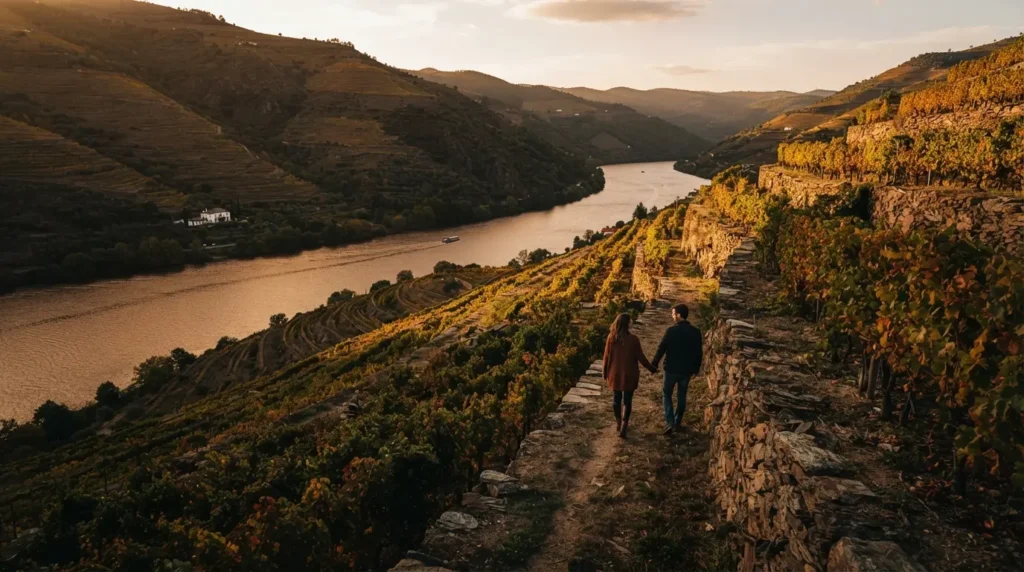
Porto, for all its popularity, is still notably cheaper than Lisbon for accommodation and dining. The Douro Valley day trip from Porto — vineyards, river views, wine tasting — is one of the best value days in the country. A Douro Valley wine cruise from Porto covers the essential river experience with wine included. The Minho region further north, and the university city of Coimbra, are both excellent budget destinations that most first-time visitors skip.
What can you do for free in Portugal?
More than in almost any other Western European country of comparable quality.
The beaches are free. Portugal’s coastline — Atlantic surf beaches in the north and west, sheltered coves in the Algarve — charges nothing for access. The Algarve’s sea caves near Lagos and the Arrábida Natural Park near Setúbal are free to enter and consistently rated among the most beautiful beaches in Europe.
Lisbon’s main viewpoints — the Miradouro da Graça, Miradouro de Santa Catarina, Miradouro de São Pedro de Alcântara — are all free and serve as informal gathering points most evenings. The Belém neighbourhood is walkable and free to explore; the Mosteiro dos Jerónimos charges €12 to enter, but the exterior cloister and the river promenade behind it cost nothing. Most of Sintra’s natural park, including the walking trails between palaces, is free to access — only the palace interiors charge entry fees. A Sintra day trip from Lisbon is worth booking early to manage the queues and get the most from the day.
Fado is technically a paid experience when the performance is formal, but in Mouraria and Alfama you can hear it drifting from open doorways on any evening without paying anything.
Ready to plan your Portugal trip around your budget and your occasion? Build your itinerary on PlacesToday →
Frequently asked questions
Q: Is Portugal still cheap in 2026? A: Cheaper than most of Western Europe, yes — but not as cheap as it was before 2022. Accommodation has risen 40–60% from 2019 levels in Lisbon and the Algarve (simpletravelpath.com). Food, local transport and activities remain very good value. Budget travellers can still manage €45–75 per day; mid-range travellers should expect €100–160. The value advantage over France, Italy and the UK remains significant.
Q: How much should I budget for a week in Portugal in 2026? A: Budget travellers: €315–525 per person for seven days excluding international flights. Mid-range: €770–1,120. These figures include accommodation, food, local transport and activities. Add international flights (€50–150 from the UK on budget carriers; €450–750 from the US East Coast) to reach your total.
Q: What is the prato do dia and how does it help with the budget? A: The prato do dia is Portugal’s daily lunch special — three courses often including wine for €8–12 in a local restaurant. Eating it once daily and managing other meals from bakeries, markets and supermarkets is the most effective single strategy for keeping food costs low. It saves €15–25 per day compared to eating all meals in tourist restaurants, or €105–175 over a fortnight.
Q: Which is cheaper in Portugal — Lisbon or Porto? A: Porto is consistently 10–20% cheaper than Lisbon for accommodation, particularly if you stay in the Bonfim or Cedofeita neighbourhoods rather than the Ribeira waterfront. Food costs are similar in both cities. The Douro Valley wine country surrounding Porto adds extraordinary day-trip value at very low cost. See our full Portugal travel guide for building a route between both cities.
Q: Is the Algarve worth visiting on a budget? A: In July and August, the Algarve is expensive — accommodation prices compete with the busiest parts of Spain and Italy. In May, June and September, prices drop significantly and the weather and sea temperature remain excellent. The eastern Algarve around Tavira is considerably cheaper year-round than the central resort coast and preserves far more of its character. The western Alentejo coast, covered in our summer crowds guide, is the alternative for travellers who want wild Atlantic beaches without the Algarve price tag.