The right Greek island in 2026 depends on what you came for: Santorini for the caldera views (but only in May or late September), Naxos for beaches and food, Milos for dramatic scenery, Paros for something chic at a lower intensity than Mykonos, and Crete for an entire week of variety that makes everything else look like a weekend trip. Mykonos is for beach clubs, designer shopping and late nights — which is perfectly fine if that is why you are going and a significant disappointment if it is not.
Most people planning a first Greek islands trip spend their first hour looking at photographs of Santorini and their second hour looking at prices for Santorini. Both are correct instincts. Santorini genuinely looks like that. It is also, in August, a city of queues. The Oia viewpoint at sunset in peak season is managed like a concert venue. The caldera views have not deteriorated. The experience of waiting for them has.
This is not a guide that tells you to skip Santorini. It is a guide that tells you which island to go to based on what you actually want, and when to go to whichever one you choose. The distinction matters more in the Greek islands than almost anywhere else in the Mediterranean, because the islands vary enormously in character and very little in flight time.
Which Greek island should you visit in 2026?
| Island | Best for | Price tier | Crowds in July/Aug | Best months |
|---|---|---|---|---|
| Santorini | Caldera views, romance | High | Very high | May, Sept–Oct |
| Mykonos | Beach clubs, nightlife, luxury | Very high | Very high | June, Sept |
| Naxos | Beaches, food, families, value | Mid-range | Moderate | May–Oct |
| Milos | Dramatic scenery, couples | Mid–high | High (but manageable) | May–June, Sept |
| Paros | Chic villages, food, variety | Mid–high | High | May–June, Sept |
| Crete | Everything — history, food, beaches, roads | Mid-range | Varies by area | May–Oct |
| Sifnos | Food specifically, slow travel | Mid-range | Low–moderate | May–June, Sept |
| Folegandros | Couples, quiet, Santorini views | Mid-range | Low | May–June, Sept |
| Naxos + Paros combo | First-timers wanting variety | Mid-range | Moderate | June, Sept |
Sources: santorinidave.com 2026; unusualnomad.com 2026 value index; visitgreece.gr seasonal data
The rule that most guides avoid stating plainly: do not spend fewer than three nights on any one island. The maths works against you if you do — half a day is lost on every island change. A ten-day trip works better as three islands at three nights each, with Athens at either end, than as six islands in six days.
Is Santorini worth visiting in 2026?
Yes, with the timing right. The caldera, the Fira-to-Oia cliff walk, the boat tour through the volcanic island arc — none of this has deteriorated. The views are genuinely one of the most extraordinary landscapes in the Mediterranean. The experience of competing for them in July and August is a different matter.
Santorini is expensive and crowded, but it is still the one island most experienced guides would not casually remove from a first Greece itinerary. The caldera views are extraordinary, and the best experiences are simple: arrive early in the morning before the cruise ships dock, walk the cliff path from Fira to Oia before ten, take a boat tour through the caldera, and leave the Oia viewpoint for the evening after most of the day-trippers have gone. A Santorini caldera boat tour is the best morning activity on the island — it gives you the scale of the volcano from the water in a way the clifftop viewpoints cannot.
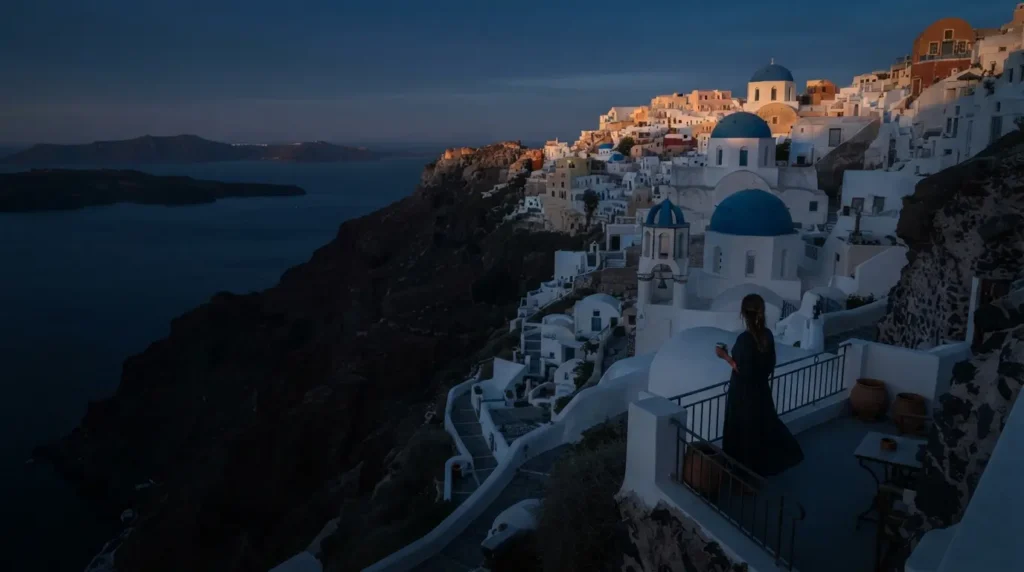
Go in late September and the gap between the images and the experience almost closes entirely. The sea temperature is still 24–25°C, the light on the caldera at sunset is at its best, and the island has approximately half the August visitor volume.
What makes Naxos the most underrated Greek island in 2026?
Scale, food, and beaches. Naxos has the longest and sandiest beaches in the Cyclades — Plaka and Prokopios are both exceptional and both long enough to absorb their visitors without reaching the concentration of a Santorini beach. The island is also the largest in the Cyclades, which means it spreads people out rather than concentrating them in one or two points.
Naxos remains one of the islands where eating well does not have to turn into a daily splurge, especially once you get away from the busiest waterfront stretches. The island produces its own cheese, its own potatoes — the Naxian potato is considered the best in Greece — and raises its own meat. This is an island where the taverna menu describes what was grown or caught this week, not what is purchased from a central supplier and presented with a view tax. A car is worth renting on Naxos; the mountain villages in the interior, the ancient Kouros statues in the marble quarries, and the beach road between Plaka and Kastraki are all worth the twenty-minute drive from the port.
Paros sits a fifteen-minute ferry from Naxos and covers a different set of priorities. Naoussa, Paros’s most characterful village, has the food and atmosphere of a town that has figured itself out — whitewashed alleys, waterfront tavernas, a wine scene that takes itself seriously without the Mykonos price tag. Paros still feels like Mykonos did twenty years ago, an authentic and relaxing Greek island experiencewhich is either a recommendation or a warning, depending on whether you were travelling twenty years ago.
Which Greek island has the best food in 2026?
Sifnos. This is not a close contest among those who have been.
Sifnos is the Cyclades’ foodie capital by wide consensus among Greek food writers, and the island has maintained that reputation not by becoming fashionable but by continuing to cook the way it always has — chickpea soup in earthenware pots, mastelo (lamb or goat slow-cooked in wine in a clay pot), revithokeftedes (chickpea fritters) that bear no resemblance to what the word suggests in the rest of the world. The island takes roughly five to six hours to reach by ferry from Athens — further than most of the islands in this guide — and that distance is why it remains what it is.
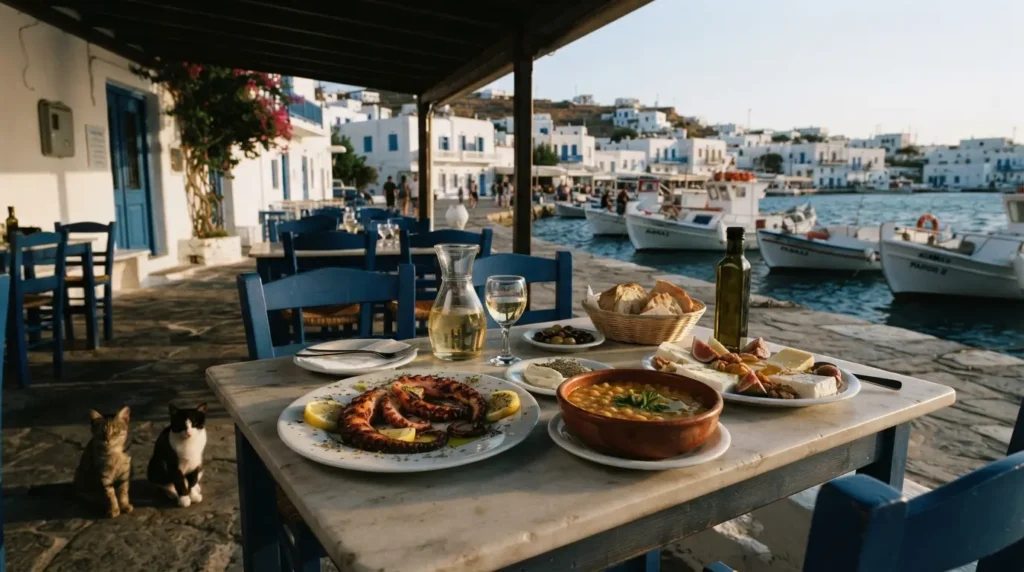
Crete for range
Crete’s food tradition is distinct from the rest of Greece and worth treating seriously. Crete has its own distinct, farm-to-table diet — dakos (barley rusk with tomato and mizithra cheese), slow-cooked lamb with stamnagathi (wild greens), Graviera cheese from the mountains, and a wine scene centred on indigenous varieties that have no equivalent elsewhere. Chania’s market, in the old covered hall near the port, is the starting point for understanding what the island eats and where it comes from.
Naxos for produce
Naxos cheese and Naxos potatoes appear on menus across Athens and are considered among the finest in the country. Eating them on the island, from a taverna that uses them because they were grown locally rather than for marketing purposes, is the correct context.
Milos or Santorini: which should you choose?
For couples, Milos is often the stronger choice in 2026 — not because Santorini is no longer beautiful, but because Milos delivers a comparable level of geological drama with considerably more space to experience it.
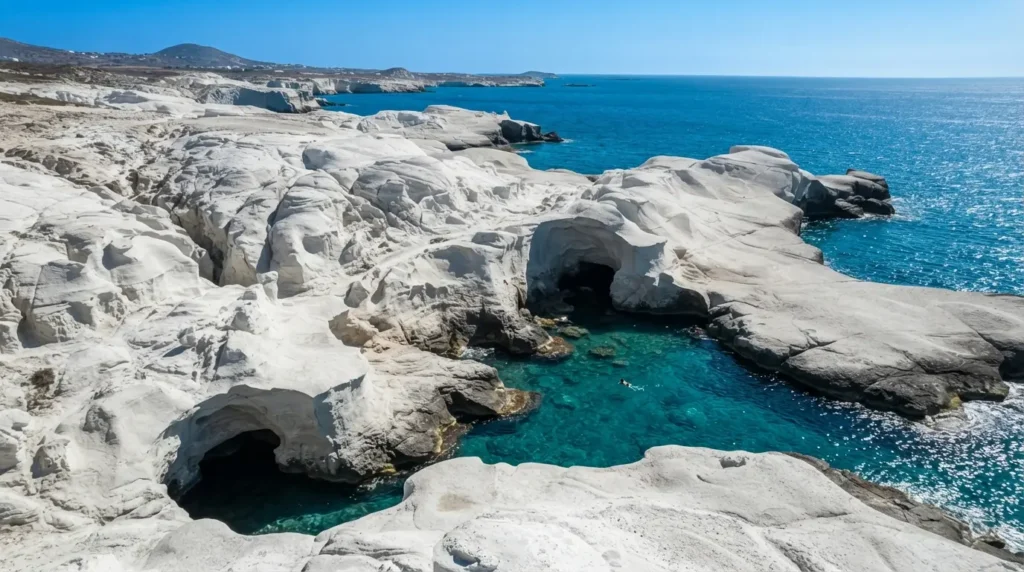
Milos has Sarakiniko, the white volcanic rock beach that looks like the surface of another planet, and Kleftiko, a series of sea caves and rock arches accessible only by boat. Neither can be reached by cruise ship, which is why both remain manageable. The boat tour to Kleftiko — turquoise water entering the caves, translucent above white sand at six metres depth — is one of the better mornings available in the Aegean. A Milos boat tour to Kleftiko and the sea caves is the essential activity on the island and worth booking several days ahead in July and August.
Santorini has the caldera. Milos has the coastline. They are not interchangeable. Choose based on which you came to see.
For the truly quiet option
Folegandros, two to three hours from Santorini by ferry, gives you the whitewashed cliff village aesthetic at a fraction of the visitor volume. The Chora perches above the sea on a ridge, the views extend to the horizon in three directions, and the island has one road, one village that matters, and a deliberate lack of development that keeps it at the scale it wants to be. It is best for couples who want romance without event planning. It is not for travellers who want variety across a week.
What is the best time to visit the Greek islands in 2026?
Late May to mid-June, and September into early October. The sea is warm enough to swim in from late May (23–24°C in the Cyclades), the crowds are manageable, ferry schedules are full, and hotel prices are 30–50% below July and August peaks.
July and August are hot, expensive and at maximum visitor volume across every island in this guide. The Meltemi — the north wind that blows across the Aegean in July and August — is strong enough to disrupt ferry schedules on smaller routes and makes some of the more exposed beaches uncomfortable in the afternoon. If you are island-hopping in these months, build extra days in your itinerary to account for a cancelled ferry. If school holidays make summer the only option, choose your islands based on which spread crowds better — Naxos and Crete both handle July better than Santorini or Mykonos.
October is underrated. Crete in early October has sea temperatures still around 23°C, almost no foreign visitors, and the olive harvest beginning in the groves outside Chania. It is the cheapest month to visit and, outside of the swimming conditions of June, one of the best.
How do you book a Greek island-hopping trip without it becoming a logistics exercise?
Ferries, not flights, for island-to-island movement — with the exception of Crete and Rhodes which are both large enough to justify a direct flight from Athens. Book ferry tickets two to four months ahead for July and August travel; the fast hydrofoils between Cycladic islands sell out. Book the first night’s accommodation on each island before you leave; the rest can be adjusted once you arrive and have spoken to someone who knows the island that week.
Athens as a two-night bracket — at the start and end — gives you the Acropolis, a full day in Plaka and Monastiraki, and a night at a rooftop bar above the city with the Parthenon lit below. It is a strong two days and the correct introduction to a Greece trip. A guided Acropolis tour in Athens covers the archaeological site with enough context that the rest of Greece makes more sense. You can plan your Greece island-hopping itinerary on PlacesToday around your occasion and travel style, and the route follows from there.
Frequently asked questions
Q: Which Greek island is best for a first visit in 2026?
A: Athens for two nights, then Santorini for the caldera, then Naxos for beaches, food and a more relaxed pace is the most reliable first Greece trip. Alternatively, replace Santorini with Milos if the crowd level in August is a concern. For most first-time visitors, Athens plus two islands is the recommended approach, with the easiest combinations being Santorini with Naxos, Paros, or Crete.
Q: Which Greek island is cheapest in 2026?
A: Among the main Cycladic islands, Naxos consistently offers the best value — good accommodation at mid-range prices, local food that is reasonably priced even near the waterfront, and a car rental market that is more affordable than Santorini or Mykonos. For the genuine budget option, Tinos, Serifos and Andros all maintain lower price levels without sacrificing character. May, June and September are when the value advantage is most pronounced.
Q: Is Mykonos worth visiting in 2026?
A: If beach clubs, late nights, designer restaurants and the party infrastructure of a place built for exactly that — yes, unambiguously. Mykonos does this better than anywhere in the Mediterranean. If that is not your reason for going, Paros covers the chic Cycladic aesthetic at meaningfully lower cost and intensity, and Folegandros covers the quiet version. Mykonos does not have a bad product. It has a very specific product, and the only mistake is going without knowing which one it is.
Q: Can you do a Greek island trip in one week?
A: Yes, if you limit yourself to two islands and Athens. Athens (two nights), one island (three nights), second island (two nights) — or skip the second island and stay longer on one. Three nights minimum on each island is the rule that most experienced Greece travellers apply. Moving every day loses more than it gains.
Q: When is the best time to visit Santorini?
A: Late September into early October for the best combination of warm sea, manageable crowds and the finest evening light on the caldera. Late May and early June as the second choice. July and August are the most crowded and most expensive, though the experience of the caldera itself does not diminish — only the conditions around it do.
Greece in summer rewards clarity about what you came for. The islands are genuinely different from each other — different food traditions, different landscapes, different crowd levels, different prices. Get the match right and Greece delivers in ways that most Mediterranean destinations no longer do. Get it wrong and you spend a week somewhere that was built for a different traveller. Ready to build the right itinerary? Plan your Greece trip on PlacesToday →