Copenhagen is expensive. Oslo and Zurich are the correct comparisons, not Paris or Amsterdam. A draft beer costs DKK 60–82 (€8–11). A mid-range restaurant meal for one runs DKK 180–350 (€24–47). A comfortable hotel room averages DKK 1,200–1,800 per night in peak season. What Copenhagen provides in return is cycling infrastructure that is genuinely the best in the world, a food culture that has influenced every serious restaurant in Europe for a decade, several of its best museums free to enter, and a harbour that is swimmable in summer. Whether the maths works depends on what you came for. This guide helps you decide.
Copenhagen ranked consistently among Europe’s most liveable cities in 2025 and 2026, which is a useful distinction from most-visited — the city functions as well for visitors as it does for residents, which is not as common as it should be. The metro runs twenty-four hours. The cycling lanes are separated from traffic, wide and respected. The tap water is excellent. These are not qualities that most cities offer simultaneously, and they are the reason that Copenhagen at €85–115 per person per day for a budget trip (radicalstorage.com, 2026) delivers better value than the sticker price initially suggests.
How much does Copenhagen cost in 2026?
More than most Western European capitals, but not without mitigation.
| Budget | Mid-Range | Comfortable | |
|---|---|---|---|
| Accommodation | DKK 300–450 (hostel dorm) | DKK 1,000–1,600 (hotel) | DKK 1,800–3,000+ |
| Food | DKK 150–250 (markets, supermarket) | DKK 400–700 (restaurant meals) | DKK 700–1,200+ |
| Transport | DKK 120 (24h metro pass) | DKK 120–200 | DKK 200+ (taxis) |
| Activities | DKK 0–100 (free museums, cycling) | DKK 200–400 (Tivoli + 1 museum) | DKK 500+ |
| Daily total | €85–115 | €170–280 | €400+ |
Sources: radicalstorage.com Copenhagen 2026 costs; machupicchu.org Denmark budget guide; copenhagentourism.org 2026 travel tips
The most effective single cost-reduction strategy in Copenhagen is eating at markets and street food sites rather than restaurants. The Torvehallerne covered food market (two glass halls in the Nørreport district) has the city’s best hot food stalls at lunch prices significantly below any sit-down restaurant serving equivalent quality. The Reffen street food market on the harbour (seasonal, typically April to October) covers most of the world’s cuisines in a converted industrial dockland space. Neither requires a reservation or a dress code.
The Copenhagen Card (72h = 879 DKK, approximately £80) covers unlimited city transport and entry to 80+ attractions including Tivoli, Rosenborg Castle, the National Museum, and canal tours. It breaks even at roughly three paid attractions plus daily transport — straightforward for a first-time visitor spending three days in the city (copenhagentourism.org, 2026). Skip it if your plan involves primarily free museums and cycling.
What makes Copenhagen worth the price?
Three things that other expensive cities do not consistently deliver.
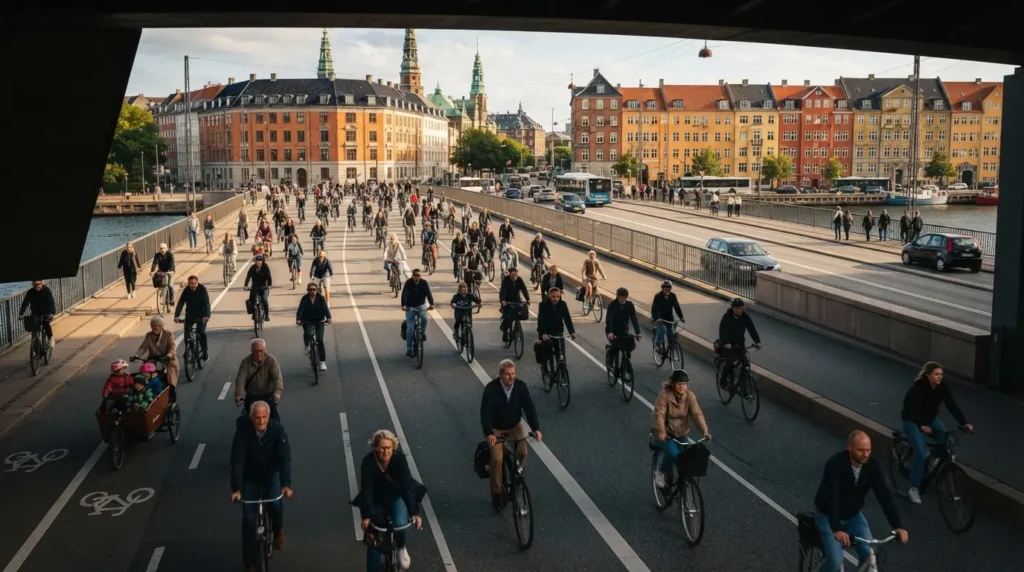
The cycling. Sixty-two percent of Copenhagen residents commute by bicycle daily — not as a lifestyle statement but as the straightforward consequence of infrastructure that makes cycling the fastest and most convenient option. The Cykelslangen (Bicycle Snake) bridge, the Dronning Louises Bro across the lakes, the harbour ring cycle route — these are not tourist infrastructure. They are the city’s circulatory system, open to visitors who hire a bicycle and use them. One afternoon on a rented bicycle covers more of Copenhagen, at a better pace, than two days on foot.
The food culture. Noma’s influence on how serious restaurants worldwide think about fermentation, foraged ingredients and seasonal Nordic produce is not overstated. The restaurant itself still operates (reservations through its website, DKK 2,000+ per person, the reservation process is its own exercise in patience) and the city around it has absorbed enough of that approach to make Copenhagen one of the most technically accomplished places to eat in Europe across every price point.
The free museums. The National Museum of Denmark (Danish prehistory through to the present — the rune stones and the Viking material are the strongest sections), the Statens Museum for Kunst (Denmark’s national art gallery, permanent collection free), and the David Collection (the best Islamic art collection in Scandinavia, always free) are all world-class and cost nothing to enter. Thorvaldsen’s Museum is free on Wednesdays. The model of making cultural institutions accessible without admission is the correct model and Copenhagen has adopted it without fuss.
What should you do in Copenhagen?
Three days covers the headline sights without hurrying. Four gives you the Louisiana Museum and a slower pace.
Nyhavn and the waterfront
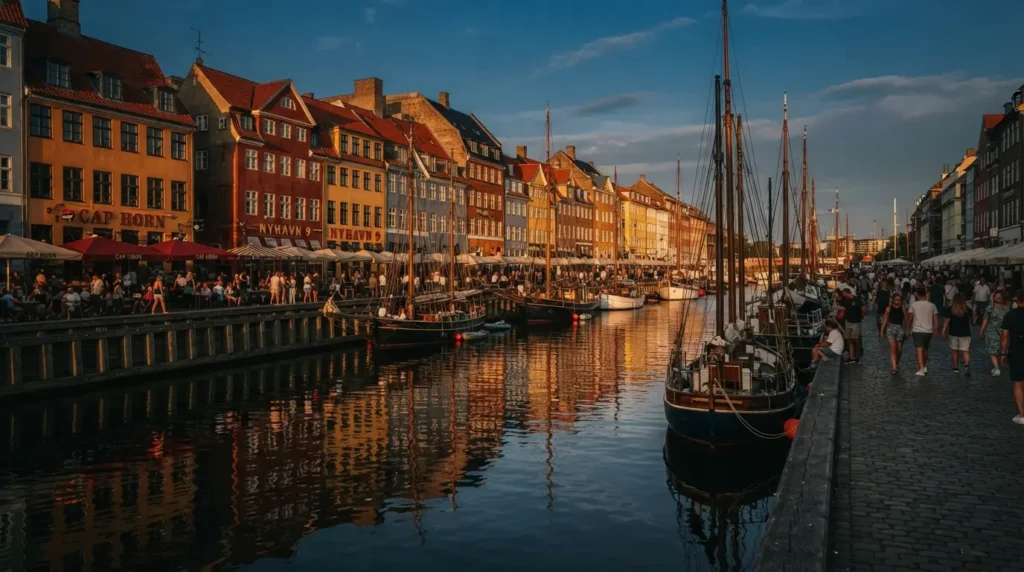
Nyhavn — the canal district of 17th-century painted merchant houses — is the most photographed view in Copenhagen and is worth the photograph. It is also one of the city’s most tourist-concentrated streets, with restaurant prices that reflect this. Walk through, take the photograph from the far end of the canal, and eat somewhere else. The waterfront promenade extends past Nyhavn toward the Opera House and the newer harbour district, which is worth a bicycle ride for the architecture and the harbour swimming spots (Islands Brygge and Kastrup Søbad are the correct options in summer — clean water, no entry fee, Copenhageners using them exactly as intended).
Tivoli Gardens
Tivoli, the amusement park in the centre of the city that has been operating since 1843, is one of the few genuinely charming theme parks in the world. Entry costs DKK 150–200 (€20–27) without rides; rides are additional. The gardens are the point — the illuminated paths, the bandstand, the restaurants of varying formality, the sense of a city making deliberate use of a central green space for entertainment rather than commerce. It is better in the evening than the afternoon. It is open from late March to late September and again in November and December for a winter version.
The free museums
The National Museum on Ny Vestergade houses the largest collection of Danish cultural heritage objects in existence — the permanent collection is free and includes Viking Age material, medieval church art, and Danish design history. The Statens Museum for Kunst permanent collection, including works by Rembrandt, Rubens, Matisse and the major Danish Golden Age painters, is free without reservation. Both require two to three hours to cover adequately. A Copenhagen architecture and museum walking tour covers the historic centre and the museum district with architectural context.
Louisiana Museum of Modern Art
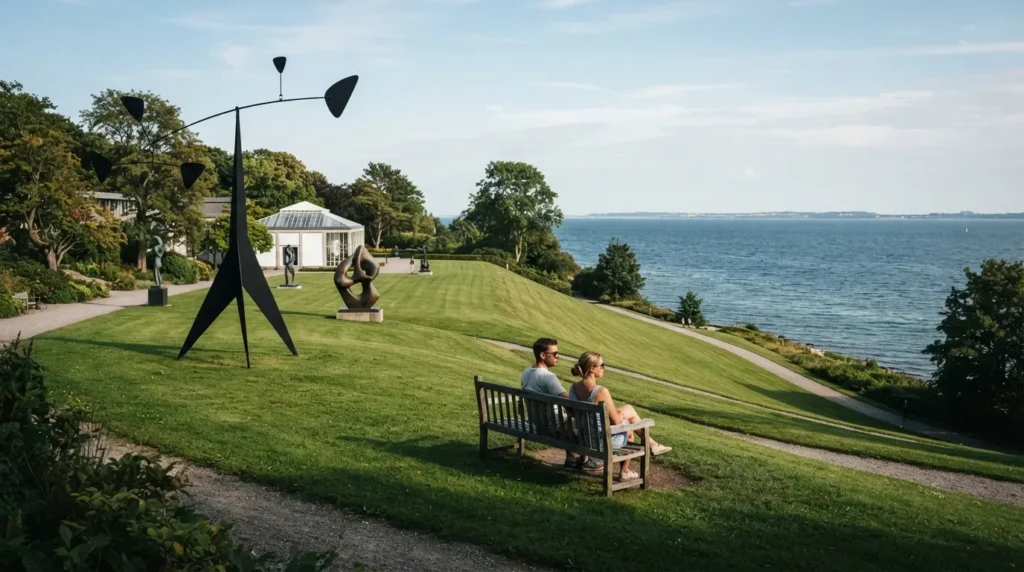
Louisiana, 35 kilometres north of Copenhagen by suburban train (approximately 40 minutes, S-train line C from Central Station), is one of the finest modern art museums in Europe. The collection — Giacometti, Calder, Warhol, Francis Bacon, Louise Bourgeois — is exhibited in a sequence of white pavilions connected by glass corridors that run through a sculpture garden above the Øresund strait. The view of Sweden on a clear day from the garden terrace is the reason to sit outside regardless of the weather. Entry costs DKK 185 (€25); the train adds DKK 88 (€12) return. Worth it without qualification.
Where do you eat in Copenhagen without the full damage?
The gap between market eating and restaurant eating in Copenhagen is large enough to significantly change the daily budget, and the market eating is excellent rather than merely adequate.
Torvehallerne — the covered food market at Nørreport — has hot food stalls serving everything from smørrebrød (open-faced Danish sandwiches, the correct lunch) to fresh oysters to Japanese ramen, at prices that run DKK 100–180 for a full lunch (€14–24). The market is open daily and is where Copenhagen’s food professionals eat at midday.
Reffen (seasonal, spring to autumn) is a container-city street food market on the harbour north of the city centre — 60+ street food stalls covering most continents in a converted industrial dock setting. Pricing runs DKK 80–150 per dish (€11–20). There is no reservation. The queue tells you which stall is worth the wait.
Smørrebrød specifically: the open-faced Danish sandwich on dark rye bread is the correct lunch and the most affordable way to eat well in a sit-down Copenhagen restaurant. Order two or three — they are typically DKK 100–180 each (€14–24) — and do not be alarmed by the small portion size. They are dense and more filling than they appear.
Noma, for those who want it: the reservation is genuinely difficult (the booking system opens weeks ahead and fills immediately), the price is DKK 2,000+ per person (€270+) and represents an extraordinary meal rather than a good value one. It is worth doing exactly once. The food is technically unlike anything available elsewhere and is the reason Copenhagen’s food culture is what it is. A Copenhagen food market and smørrebrød tour through Torvehallerne is the accessible version of what Copenhagen does with food.
Which Copenhagen neighbourhoods are worth time?
Nørrebro — the most multicultural district in Copenhagen, north of the lakes. The Assistens Cemetery, where Søren Kierkegaard and Hans Christian Andersen are buried and Copenhageners picnic on warm afternoons, is one of the more quietly distinctive spaces in the city. The vintage clothing shops and independent coffee roasters on Jægersborggade are the reason the neighbourhood appears in every Copenhagen guide written by someone under forty.
Vesterbro — the former meatpacking district (Kødbyen) is now the concentration of Copenhagen’s most interesting bars and restaurants. The Meatpacking District itself — white-tiled butcher buildings converted to restaurant and gallery spaces — operates at Thursday through Sunday evenings principally and is worth an evening specifically for the cocktail bar culture.
Christiania — the self-proclaimed autonomous collective established in 1971 in former military barracks south of Christianshavn. Photography is restricted in parts (the main market street, called Pusher Street, is the relevant section — follow the rules without question). The wider Christiania, including its community gardens, alternative architecture and café spaces, is open and interesting for an afternoon. It is a real place with real residents and not an attraction.
Should you hire a bike in Copenhagen?
Yes, for any stay of two days or more. Bicycle hire runs approximately DKK 100–200 per day (€14–27) from the numerous operators near Central Station and Nørreport. The cycling lanes are wide, well-signed, and entirely separated from motor traffic in most of the city. The experience of cycling Copenhagen — across the Dronning Louises Bro with the lakes on both sides, along the waterfront to the Opera House, through the residential streets of Frederiksberg — covers more of the city’s character in two hours than a full day on foot. A Copenhagen bike tour covers the major sights with a guide on the first morning and gives you the confidence to continue independently.
The one practical note: cycling on a pavement rather than a cycle lane is technically illegal and will irritate Copenhageners, who are correct to be irritated. The cycle lanes are obvious. Use them.
When is the best time to visit Copenhagen?
May and June, or September. The logic is consistent with most of northern Europe: shoulder seasons give you functional weather without peak season hotel premiums.
May brings the city fully to life — the harbour swimming spots open, the outdoor seating appears, the days are long (18+ hours of daylight by June 21 — Copenhagen experiences a version of the midnight sun in which it never fully gets dark). June extends this; the solstice period is the best light the city produces. July and August are peak: higher prices, busier tourist sites, but the harbour culture, Tivoli, and cycling are all at their most active.
September is the autumn equivalent of May — comfortable, less crowded, prices easing from the summer peak. October begins the colder, wetter period that runs through April, with the exception of the Christmas market season (late November to December 24) when Tivoli transforms and the city produces considerable warmth despite the temperature.
Copenhagen connects naturally to Norway and Iceland on a Scandinavian circuit. Our Norway fjords guide covers the practical next leg if you want to extend the trip north, and our solo female travel guide notes Copenhagen as one of Europe’s highest-rated cities for independent travel. Plan your Copenhagen trip on PlacesToday →
Frequently asked questions
Q: Is Copenhagen worth the cost in 2026?
A: Yes, if the cycling, the food culture and access to world-class free museums are things you will use. If you are looking for a beach holiday, a budget city break or a destination where eating out is affordable, Copenhagen is not the answer. For design, food, cycling and Scandinavian architecture, it is entirely worth the premium over other European capitals.
Q: What is the Copenhagen Card and is it worth buying?
A: The Copenhagen Card covers unlimited city transport and entry to 80+ attractions including Tivoli, Rosenborg Castle, the National Museum and canal tours. The 72-hour card costs 879 DKK (approximately £80). It breaks even at roughly three paid attractions plus daily transport use. For a first-time visitor spending three days and doing Tivoli, Rosenborg and at least one other paid attraction, it typically saves money. For a trip focused on free museums, markets and cycling, it does not (copenhagentourism.org, 2026).
Q: How do you eat affordably in Copenhagen?
A: Torvehallerne food market for lunch (DKK 100–180 for a full meal), Reffen street food market in the warmer months, and supermarket provisions for breakfast. The smørrebrød lunch at a local café is the most affordable sit-down meal — two or three open sandwiches cost DKK 200–360 and constitute a proper meal. Avoid the restaurant terraces on Nyhavn specifically, which price for their location.
Q: Is it easy to get around Copenhagen without a car?
A: Yes — significantly easier than most European capitals. The Metro runs 24 hours, the cycling lanes cover the entire city, and the S-train extends to the suburbs and to Louisiana Museum north of the city. A car is unnecessary and actively inconvenient given parking costs and the quality of alternative transport. Buy a 24-hour transport pass (DKK 120) or use the Copenhagen Card for the full duration.
Q: What is the best neighbourhood to stay in for a first visit?
A: The city centre (around Nørreport or Strøget) for proximity. Vesterbro for the best combination of interesting restaurants, manageable prices and metro access. Nørrebro for the most local character and best coffee. Christianshavn for the canal atmosphere and proximity to both Christiania and the city centre. All are within cycling distance of the main sights.
Copenhagen is expensive and worth it, which is not a contradiction — it is a specific kind of value proposition. The infrastructure functions so well that the city is less tiring to move through than most, the free museum offering is genuinely world-class, and the food at market level delivers the quality of the restaurant scene at a third of the price. Hire the bicycle on day one. Plan your Copenhagen trip on PlacesToday →