Peru is three distinct worlds stacked on top of each other geographically: a coastal capital with one of the world’s great food scenes, an ancient Andean valley still farmed the same way it was six hundred years ago, and a single archaeological site that is one of the genuine wonders of the world. Machu Picchu is capped at 5,600 visitors per day through November 2 in 2026, tickets must be booked through the official government site at tuboleto.culture.pe, and they sell out weeks ahead during peak season. Book them before you read the rest of this guide. Then come back.
Peru is one of those destinations that exceeds rather than matches expectations, which is a rarer quality than travel writing suggests. Lonely Planet ranked it among its best destinations for 2026 (Lonely Planet, 2026 annual ranking). The country welcomed 1.37 million international visitors in the first five months of the year (PromPeru). Machu Picchu alone drew 391,128 visitors January through May, 79.4% of them international (Peru Ministry of Tourism, 2026).
Those numbers tell one story. The other story is Lima — a coastal capital of ten million people that consistently ranks in the global top five for food, with three restaurants in the World’s 50 Best (Central, Maido and Astrid y Gastón), a ceviche tradition that has been refined for centuries by a Pacific fishing culture, and a neighbourhood in Barranco that operates like the best version of a city where the chefs happen to be better than everyone else’s. Most visitors to Peru give Lima one night and consider it a transit stop. This is the most common and most expensive mistake made in the country.
The country you arrive in at Lima’s coastal airport is a genuinely different world from the one you experience at 3,400 metres above sea level in Cusco. The altitude is not a metaphor and is not adequately managed by wanting it to be fine. It requires two days that most itineraries do not allocate, and skipping that acclimatisation is the second most common mistake made in Peru.
Is Peru safe to visit in 2026?
Yes, in the destinations that form the visitor circuit. Cusco, the Sacred Valley, Machu Picchu and Lima’s Miraflores and Barranco districts are all considered safe for international visitors. Violent crime against tourists is rare. Use Uber or InDriver rather than unmarked taxis, keep valuables out of sight in markets and transport hubs, and check your government’s current travel advisory before departure.
Citizens of the US, UK, EU, Australia and Canada can enter Peru visa-free for up to 90 days — no advance application required, just a valid passport with at least six months remaining and an onward or return ticket. This is confirmed through 2027 under Peru’s current bilateral agreement structure.
How do you book Machu Picchu tickets in 2026?
Only through the official government platform: tuboleto.culture.pe. There is no legitimate alternative. Third-party resellers charge a premium and do not guarantee access. Peru’s Ministry of Culture caps daily entry at 4,500 visitors on standard dates and 5,600 on peak-demand dates — including June 19 through November 2, which covers the entirety of the current high season.
During peak months, book a minimum of three to four months in advance. Specific time slots must be selected at the point of booking. The site is functional but not always stable during high-demand windows; try early morning. Tickets are non-refundable. Do not assume availability exists on your specific dates without checking.
The Inca Trail — the four-day trekking route to Machu Picchu — has its own separate permit system, also through the official site, and peak-season permits sell out six to eight months in advance. If you are reading this in July and hoping to hike the Inca Trail in July, those permits are very likely already gone. The Salkantay Trek (five to six days) and the Lares Trek are the main alternatives — both arrive at Aguas Calientes and Machu Picchu and are available with considerably more notice.
What is Peru’s essential route in 2026?
| Destination | Altitude | Days | Best for | Altitude note |
|---|---|---|---|---|
| Lima | Sea level | 2–3 | Food, culture, Pacific | None — start here |
| Cusco | 3,400m | 2 (acclimatisation) | Inca capital, colonial city, markets | Rest on arrival; no trekking day 1–2 |
| Sacred Valley | 2,800m | 1–2 | Pisac, Ollantaytambo, Inca terraces | Lower than Cusco — helps acclimatisation |
| Machu Picchu | 2,430m | 1–2 | The site | Lower than Cusco — actually easier |
| Amazon (optional) | 300m | 2–3 | Wildlife, jungle lodges | Much lower; warmer |
Sources: tuboleto.culture.pe (Ministry of Culture, 2026); peru.travel; PromPeru Jan–May 2026 data
The sequence that works: Lima first (two to three days minimum — the food alone justifies this), then fly to Cusco, spend two days resting and acclimatising before doing anything strenuous, then the Sacred Valley for one to two days before Machu Picchu, then back to Lima for the return flight. Add the Amazon at the start or end for a two-week trip. Ten days is the minimum to do this correctly. Anything less compresses the itinerary to the point where the altitude or the schedule becomes the dominant memory.
Why Lima deserves more time than most itineraries give it
Lima has been building its food reputation for twenty years and has now overtaken the cities most people assumed would hold the top position indefinitely. Central, operated by Virgilio Martínez, ranked first on the World’s 50 Best Restaurants list in 2023 and remains in the global top ten; Maido (Nikkei-Peruvian cuisine) and Astrid y Gastón (classic Peruvian) sit alongside it as internationally recognised restaurants that justify the Lima stopover as an experience in their own right.
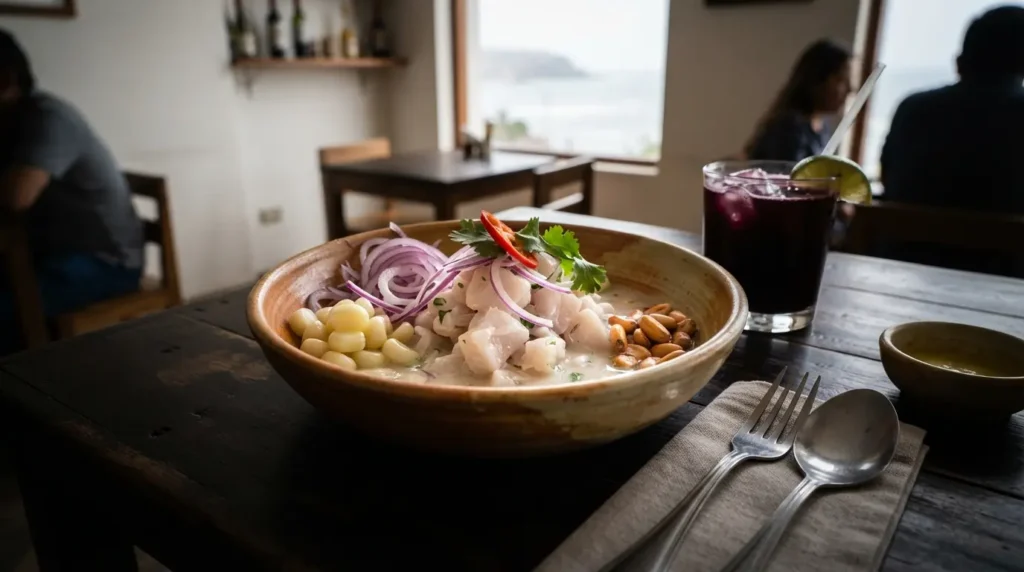
This is the fine dining version of what Lima does. The street food and neighbourhood restaurant version — which is where most visitors should be spending most of their time — is the actual reason to stay two or three nights rather than one. Ceviche, the country’s signature dish, reaches a quality and specificity in Lima that the exported version does not replicate: the leche de tigre (the citrus-chilli marinade) made fresh, the fish from the Pacific that morning, the combination with choclo (giant corn) and sweet potato that is exactly right every time at a neighbourhood cevichería that holds twenty tables.
A Lima food tour through Miraflores and Barranco covers the local restaurant culture in two or three hours and gives you the vocabulary and geography for the rest of the stay.
Miraflores vs Barranco
Miraflores is Lima’s international district — hotels, restaurants, the clifftop Larcomar mall above the Pacific, and the safest and most walkable central area. Stay here on a first visit. Barranco, directly south along the clifftop, is Lima’s bohemian neighbourhood — older buildings, street murals, the art gallery and museum circuit, and the best bars in the city. Take a taxi or Uber between them in the evening rather than walking after dark.
What should you do in the Sacred Valley before Machu Picchu?
The Sacred Valley — the Urubamba Valley between Cusco and Machu Picchu — is where most visitors spend half a day in transit. This is the wrong allocation.
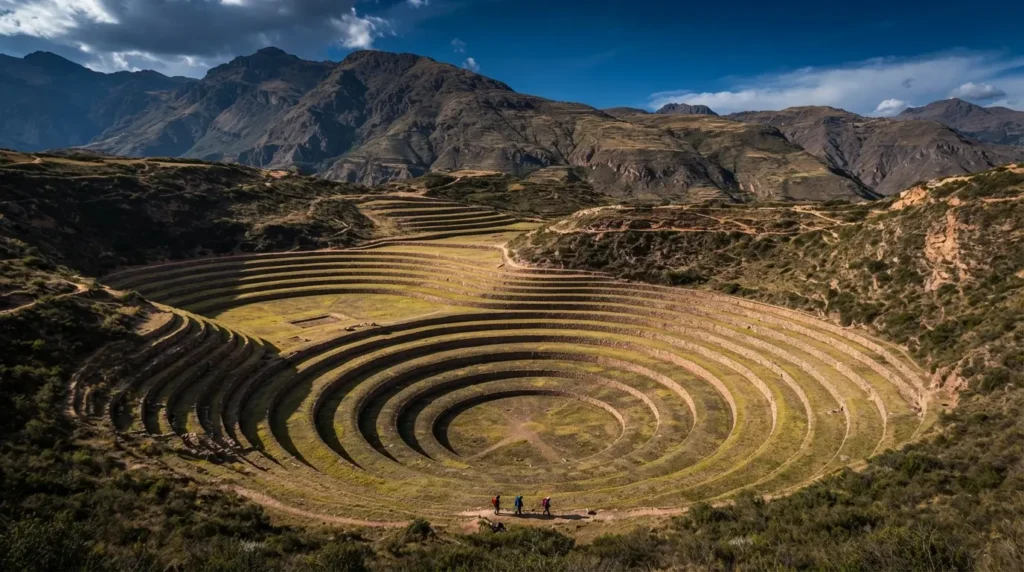
The valley sits at approximately 2,800 metres, roughly 600 metres lower than Cusco, which makes it useful for acclimatisation as well as extraordinary in its own right. The Inca agricultural terraces at Moray — concentric circular rings carved into the earth that were used, it is believed, as a kind of agricultural research station for testing crops at different temperatures — are unlike anything else in the valley or the world. The market and ruins at Pisac combine in a single morning: the Sunday market has been operating for centuries, the hilltop ruins above the town are among the most impressive Inca sites accessible without an overnight trek.
Ollantaytambo, at the valley’s far end, is the last Inca town whose street plan has survived more or less intact. Its fortress — a series of massive stone terraces climbing the hillside above the town — is the place where the Inca successfully defeated a Spanish force in 1537, one of the few military victories in the conquest’s history. The train to Aguas Calientes, the town at the base of Machu Picchu, departs from Ollantaytambo station.
A Sacred Valley and Pisac day tour from Cusco covers Pisac, Moray and Ollantaytambo in a full day with transport included.
What is Machu Picchu actually like in 2026?
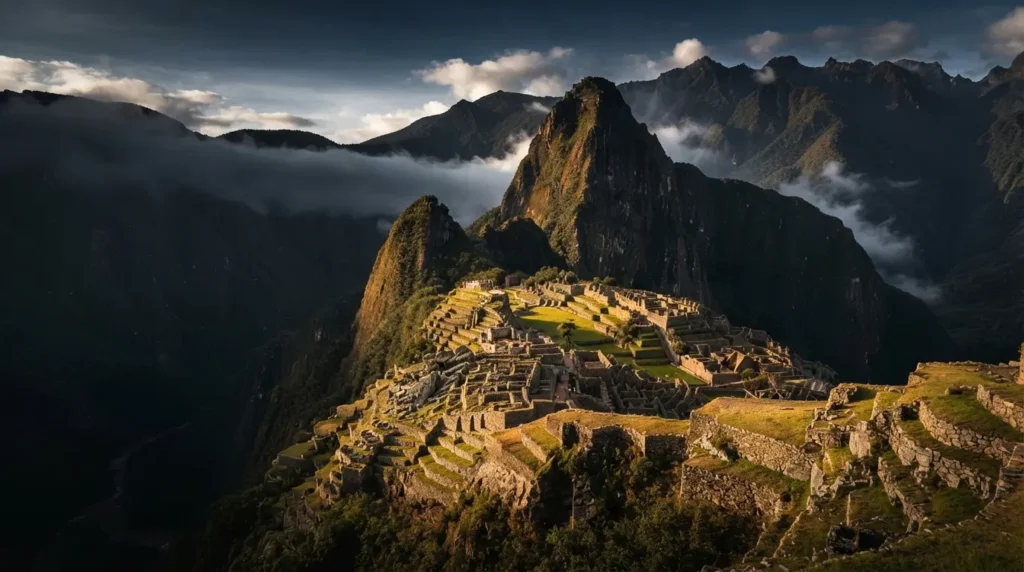
Genuinely extraordinary. The mist-clearing moment — the one where the citadel emerges from cloud with Huayna Picchu mountain above and the river valley hundreds of metres below — is one of those travel experiences that does exactly what the anticipation promises. At 2,430 metres, it is lower than Cusco and the air is warmer. The scale of the engineering — terraces carved into a mountain ridge, water channels that still function, buildings fitted together without mortar in stone blocks that cannot be separated — is more impressive on the ground than in any photograph.
The crowds are managed by timed entry circuits since 2023. You are assigned a route at the point of ticket purchase. The morning slot (6–7am entry) is the most photographed and the most atmospheric; book it. The site is open until 5:30pm; the afternoon circuit is less crowded than early morning but the mist is less reliable. Take the bus up from Aguas Calientes (tickets bought in town) rather than walking the steep road, unless you specifically want the additional forty-five minutes of climbing. Stay one night in Aguas Calientes at minimum to access the early morning entry slot — day trips from Cusco require leaving at 4am.
A Machu Picchu guided tour from Aguas Calientes with a licensed guide covers the main agricultural and urban sectors of the site with historical context that makes the engineering choices legible.
How do you manage altitude sickness in Peru?
By giving it the two days it requires. Arrive in Cusco, do nothing strenuous for the first day, drink water and coca tea (freely available everywhere in Cusco), sleep, and do not attempt significant hiking or physical activity until day three. Most cases of altitude sickness (soroche) are mild — headache, fatigue, slight nausea — and resolve with rest and hydration. Serious cases require descent.
Machu Picchu, at 2,430 metres, is actually lower than Cusco at 3,400 metres. Once acclimatised to Cusco, the Machu Picchu visit is typically easier. The Inca Trail, which reaches 4,215 metres at its highest pass, requires more thorough acclimatisation before departure — another reason to build Cusco time into the itinerary before attempting it.
Diamox (acetazolamide) is available from pharmacies in Cusco and prescribed locally. It helps most people. Take it 24 hours before arrival in Cusco if you choose to use it.
How much does Peru cost in 2026?
Less than Colombia or Mexico at comparable quality, and significantly less than Brazil. A mid-range traveller — decent hotel, restaurant meals, guided tours and internal transport — can expect $80–120 per person per day. Budget travellers in hostels eating at local restaurants manage $40–60. Lima is the most expensive city; Cusco and Aguas Calientes are comparable; the Sacred Valley is cheaper.
Machu Picchu tickets cost approximately $23–28 USD (students $10–14) at peak-season rates, purchased at tuboleto.culture.pe. The PeruRail or Inca Rail train from Ollantaytambo to Aguas Calientes costs $45–100 each way depending on the train class and booking timing. Internal flights (Lima to Cusco, approximately 1h20) run $70–150 each way booked ahead; $200+ last minute.
The Inca Trail permit costs approximately $630–900 per person for the four-day guided trek including all camping and entrance fees. Salkantay Trek alternatives run $350–600 for five to six days.
Frequently asked questions
Q: When should you book Machu Picchu tickets for 2026?
A: As soon as your dates are confirmed. Peak season (June 19–November 2) operates under a 5,600 daily visitor cap and sells out weeks ahead. Book only through the official government platform at tuboleto.culture.pe. Never buy from third-party resellers. Select your time slot carefully — morning entry (6–7am) is the most recommended and the first to fill.
Q: How many days do you need in Peru?
A: Ten days minimum for Lima, Cusco, the Sacred Valley and Machu Picchu done correctly. Seven days compresses the itinerary and leaves either Lima or the acclimatisation time inadequate. Twelve to fourteen days adds the Amazon, which is a completely different experience and worth treating as a separate trip component rather than a half-day.
Q: Is Lima worth spending time in before Machu Picchu?
A: Yes — two to three nights, not one. Lima ranks consistently in the global top five for food, with multiple World’s 50 Best restaurants and a street food and neighbourhood restaurant culture that is the best in South America. Miraflores is the safe, walkable base. Barranco adds the bar and museum culture in the evening. Treating Lima as an overnight transit stop is the most common mistake made in Peru.
Q: Is altitude sickness a real problem in Peru?
A: Yes. Cusco at 3,400 metres causes mild altitude sickness — headache, fatigue, nausea — in a significant percentage of visitors arriving from sea level. It requires two days of rest before any strenuous activity. Machu Picchu at 2,430 metres is lower and generally easier once acclimatised to Cusco. The Inca Trail reaches 4,215 metres at its highest point and requires thorough preparation. Diamox is available locally and helps most people.
Q: How does Peru compare to Colombia and Mexico as an Americas destination?
A: Peru is the most archaeologically significant of the three, with Machu Picchu and the Sacred Valley in a category that neither Colombia nor Mexico matches at a single site. Lima is arguably South America’s best food city, competing with Colombia’s Medellín and Mexico City’s extraordinary dining scene. Peru is the most expensive of the three for a comparable quality of experience, partly because the internal logistics — trains to Machu Picchu, guided tours — carry premium pricing. See our Colombia travel guide and Mexico City guide for the full Americas comparison.
Peru is the kind of country that reorganises the categories. You arrive expecting Machu Picchu and the Inca Trail. You leave talking about the ceviche in Barranco, the Moray terraces at four in the afternoon, and the morning the mist cleared. Both things are true at once. The booking logistics are real — Machu Picchu tickets through tuboleto.culture.pe, now, before you organise anything else. After that, Peru takes care of itself. Plan your Peru itinerary on PlacesToday →