The best version of Japan in 2026 is not in Tokyo or Kyoto — at least not in July or August, and not on the itinerary that most travel sites recommend. Kanazawa, Takayama, Naoshima and Kinosaki Onsen offer the same cultural depth with a fraction of the congestion. Hokkaido and Tohoku cover everything the regions to the south do not. A well-built Japan itinerary now treats the Golden Route as a brief introduction, not the whole trip.
Japan set a new record in 2025: 42.7 million international visitors, up from 37 million the year before. That number is not the problem. The distribution of those visitors is.
Seventy-three percent of overnight stays in Japan concentrate in just five prefectures — Tokyo, Osaka, Kyoto, Hokkaido and Fukuoka — according to the World Economic Forum. A survey of nearly 7,800 foreign visitors found that 32% cited congestion as the main issue during their trip, the most common complaint recorded (Mainichi Shimbun, 2024). The government’s March 2026 Basic Tourism Plan responded by explicitly directing visitors toward regional areas, and the departure tax has tripled from JPY 1,000 to JPY 3,000 from July 2026, with proceeds funding crowd management and rural infrastructure.
None of this means Japan is not worth visiting. It means the standard itinerary — Tokyo, Hakone, Kyoto, Nara, Osaka — is no longer the best version of the trip. There is a better way to see Japan in 2026, and it starts about two hours from where everyone else stops.
Is Japan too crowded to visit in 2026?
No. It is too crowded in a small number of specific locations, at specific times of day. Japan’s geography is too large and too varied for this to be a national problem. The issue is concentration, not volume.
Where the congestion is actually severe
The Arashiyama Bamboo Grove in Kyoto is shoulder-to-shoulder from nine in the morning until late afternoon on most days. Fushimi Inari Shrine’s famous torii tunnel photographs are now rarely empty of other visitors before seven in the morning. Shibuya Crossing in Tokyo, the Senso-ji approach in Asakusa, and the popular Lawson convenience store viewpoint of Mount Fuji — all of these have either been restricted or require deliberate timing to experience properly. A careful itinerary can reduce crowd exposure by 60 to 70 per cent without visiting any lesser sites (Plan Japan Smart, 2026).
What the government is doing about it
Kyoto has expanded its lodging taxes and introduced time-slot entry at several temples. The Japanese government’s March 2026 tourism plan introduces explicit redistribution targets — moving visitors to regional cities and rural areas while preserving the cultural integrity of the most pressured sites. This creates a practical opportunity for travellers willing to plan one step beyond the obvious.
Where should you go in Japan beyond Tokyo and Kyoto in 2026?
The alternatives are not consolation prizes. Several of them are, by most reasonable measures, better than the sites they replace.
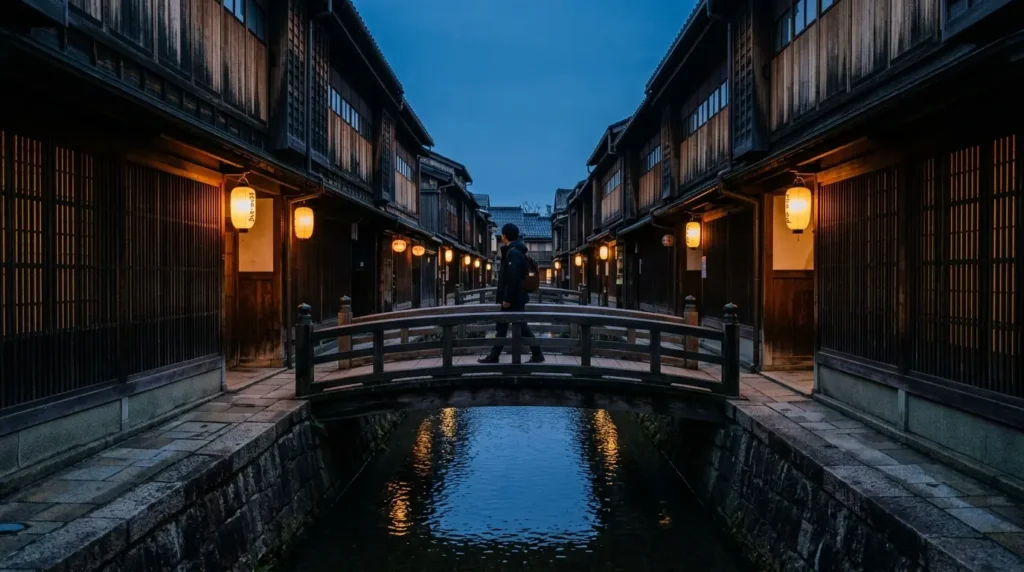
Kanazawa — for culture without the queue
Kanazawa is the most straightforward swap for Kyoto. It escaped wartime bombing, which means it retains intact samurai districts, functioning geisha quarters, a Noh theatre tradition, and Kenroku-en — consistently listed among Japan’s three finest landscape gardens. The difference from Kyoto is not the quality of what survives. The difference is that you can walk through it.
The Higashi Chaya district sees a fraction of Gion’s footfall. The Kenroku-en garden — unlike Kyoto’s most famous temple gardens in peak season — is spacious enough that you can sit with your thoughts for a few minutes without someone stepping around you. Kanazawa’s Omicho Market is one of Japan’s better fish markets and far easier to navigate than Kyoto’s Nishiki. Direct Shinkansen from Tokyo takes just over two hours. A sake tasting and traditional craft tour in Kanazawa gives you the kind of afternoon that Kyoto’s most famous experiences were meant to provide before they became something you book four months in advance.
Takayama — for old Japan without the performance
Takayama, in the Hida highlands of Gifu prefecture, contains one of Japan’s best-preserved Edo-period streetscapes. Unlike many historic districts, it functions as a town rather than a set. The morning markets on the banks of the Miyagawa River sell produce and pickles from local farmers, not souvenirs for tourists. The sake breweries along Sannomachi-dori have been producing the same styles for generations and allow tastings that cost a few hundred yen.
A day trip from Takayama to the UNESCO World Heritage village of Shirakawa-go — with its distinctive gassho-zukuri thatched farmhouses — is the logical extension. The village itself has been under pressure from day-tripper volume for years, but the surrounding area including Ainokura and Suganuma remains considerably quieter and equally striking. A Hida beef cookery class in Takayama is one of the more honest food experiences available in Japan, the beef itself being genuinely one of the country’s finest.
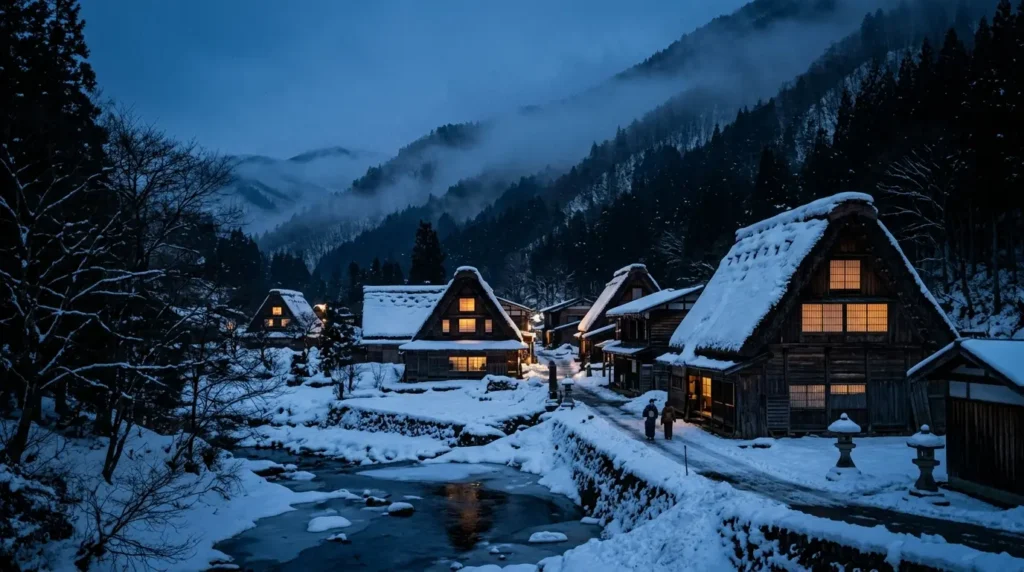
Naoshima — for art in the Seto Inland Sea
Naoshima is one of the more unusual places in Japan. A small island in the Seto Inland Sea, accessible by ferry from Uno or Takamatsu, it has been transformed over the past three decades into a serious contemporary art destination — home to Tadao Ando’s Chichu Art Museum, the Benesse House Museum, and a scattering of Art House Projects throughout the old village. The museums are genuinely world-class.
It suits travellers who want something Japan does not typically offer elsewhere: contemporary art and architecture taken seriously, in a fishing village context, on an island nobody rushes through. Cycling between installations along the island’s quiet roads, with the Inland Sea visible between the hills, is an afternoon that stays in the mind. Naoshima is also one of the better answers to the question of what to do with a day or two between Hiroshima and Osaka or Kyoto on the return leg of a longer trip. Our full Japan travel guide covers how to add Naoshima to a standard route without significant backtracking.
Kinosaki Onsen — for the correct onsen experience
Most visitors to Japan who want an onsen experience go to Hakone. Hakone is not wrong, but it is also extremely well-discovered. Kinosaki Onsen, on the Sea of Japan coast of Hyogo prefecture, is where the experience was built — a small town of seven public bathhouses where guests move between them in yukata and wooden geta sandals, which is precisely the image most people have of Japanese onsen culture before they arrive and realise Hakone’s version is considerably more resort-like.
The town is small enough to walk end to end in twenty minutes. Dinner is at your ryokan, where the seasonal kaiseki courses are structured around whatever arrived from the coast that morning. The Sea of Japan in winter means excellent crab. The town receives almost no foreign visitors relative to its quality, and the seven bathhouses remain affordable rather than luxury-priced.
Which Japan region is worth a week of your time in 2026?
The case for spending meaningful time outside the standard circuit is straightforward. Each of Japan’s major regions offers a different version of the country.
Hokkaido — for summer
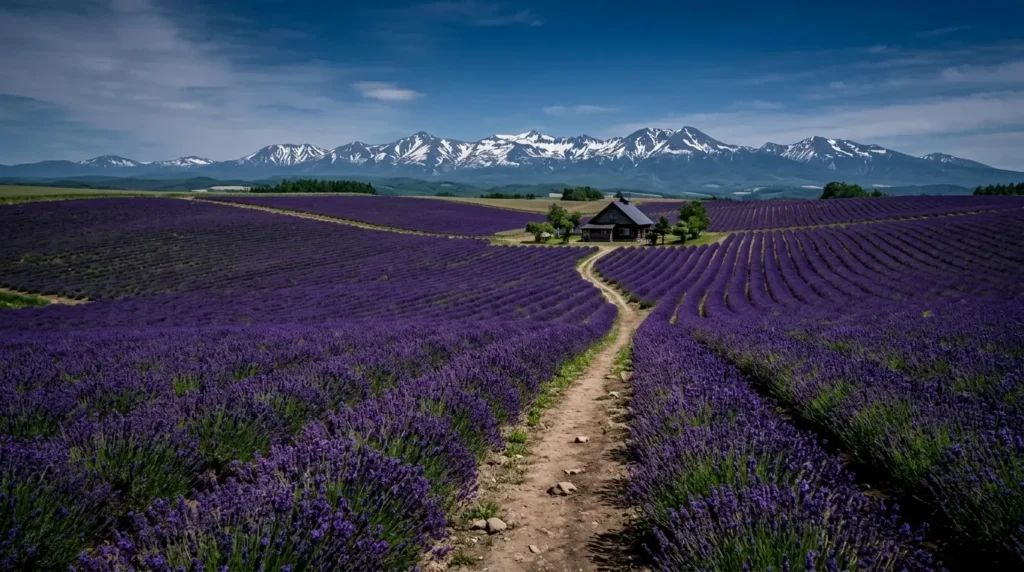
Hokkaido is Japan’s answer to a season that is otherwise difficult across most of the country. While Tokyo and Kyoto operate in high summer heat and humidity, Hokkaido’s temperatures in July and August are considerably more comfortable — the lavender fields of Furano peak in mid-July, and the hiking conditions in Daisetsuzan National Park are among the best in the country during these months. Sapporo itself is a well-functioning city with serious food — the miso ramen here is the correct form, and the seafood market at Nijo is among the country’s best.
Tohoku — for the festivals
Tohoku, the northeastern region of Honshu, remains one of Japan’s least-visited major areas by international tourists despite containing some of its most dramatic festivals. The Aomori Nebuta Matsuri in early August involves enormous illuminated lantern floats paraded through the city streets at night. The Akita Kanto Festival, in the same week, is built around balancing poles hung with dozens of lit paper lanterns. Both are listed among Japan’s three largest festivals by the Japan National Tourism Organization. The coastline of Iwate and the mountain temples of Yamagata add a depth to Tohoku that single-city itineraries never reach.
Kyushu — for volcanoes, onsen and food
Kyushu is the island closest to continental Asia and feels genuinely different from the main island’s famous corridor. Fukuoka has a serious food culture — its ramen style, Hakata tonkotsu, is richer and more deeply flavoured than the Tokyo versions. Nagasaki carries its history quietly. Beppu and Ibusuki both offer onsen experiences on a scale that makes Hakone look modest — Beppu alone has more hot spring output than anywhere else in Japan outside the United States in total volume. The active volcano on Sakurajima, viewable from Kagoshima across the bay, is one of the more quietly dramatic sights in the country.
Should you still visit Kyoto and Tokyo?
Yes. The point is not to skip them but to build the trip so they serve a specific purpose rather than carrying the whole weight of the itinerary.
Tokyo warrants two to three days and handles them well. It is one of the world’s most competent cities and worth the time — the specific districts of Yanaka and Shimokitazawa, the Nezu Shrine, Nakameguro’s canal — give you far more than the Shibuya Crossing and the Senso-ji approach. Kyoto is worth two nights minimum and best approached with morning-only visits to the headline sites and afternoons spent in the less-mapped quarters. Arriving at Fushimi Inari before six in the morning, when the lower approach is already waking up but manageable, is a different experience from the midday version. The upper trails beyond the first hour of climbing see far fewer visitors at any hour. Neither city deserves to be avoided. Both deserve to be edited.
What does a well-built Japan itinerary look like in 2026?
It starts with a question: what do you actually want from Japan? The food and the craft tradition are in Kanazawa and Takayama as much as anywhere. The temples are better experienced in smaller doses. The natural landscape — mountains, hot springs, coast — is far better covered by leaving the Golden Route entirely.
A fourteen-day trip that divides as Tokyo (three nights), Kanazawa and Takayama via Shinkansen (four nights), Kyoto as a base for one well-edited day (two nights), Naoshima (one night), and Hiroshima (two nights) before returning covers the cultural essentials without the congestion. The JR Pass makes this route practical — Shinkansen access between these cities is direct and fast. Planning around an occasion and letting the structure follow what you actually value, rather than what the standard itinerary assumes, is precisely what makes the difference. You can build a Japan itinerary around your occasion on PlacesToday and adjust the structure from there.
Frequently asked questions
Q: Is Japan still worth visiting in 2026 despite the crowds? A: Yes, if you plan carefully. Japan is worth visiting precisely because the quality of the experience outside the five most congested prefectures remains very high. The overtourism problem is real but geographically concentrated. A trip built around Kanazawa, Takayama, Naoshima and regional Japan alongside brief, well-timed stops in Tokyo and Kyoto delivers the country’s best qualities without the congestion that most travellers are now encountering on standard itineraries.
Q: What is the best alternative to Kyoto for culture in Japan? A: Kanazawa is the most direct equivalent — intact samurai districts, a geisha quarter, Kenroku-en garden, and a functioning Noh theatre tradition, all considerably less crowded than Kyoto’s equivalent sites. Direct Shinkansen from Tokyo takes just over two hours. Takayama and Koyasan are strong secondary options depending on whether you want mountain town character or mountain temple atmosphere.
Q: When is the best time to visit Japan to avoid crowds? A: January to early March and June to late August see lower foreign visitor volumes in the major cities, though June is Japan’s rainy season and July–August bring the opposite problem of domestic family travel to the coasts and mountains. The sweet spot for manageable conditions across the country is early November for autumn foliage, or late September when summer’s heat has passed and domestic school travel has returned to routine.
Q: How much has Japan’s departure tax increased in 2026? A: The departure tax tripled from JPY 1,000 to JPY 3,000 from July 2026, applied to all departing international travellers. This is equivalent to approximately £15 or $19 per person and forms part of Japan’s broader strategy to fund crowd management and rural infrastructure development.
Q: Is the JR Pass worth buying for a Japan trip focused on regional destinations? A: For a trip of ten days or more that includes two or more Shinkansen journeys between major cities and regional destinations — Tokyo to Kanazawa, Kanazawa to Kyoto, Okayama to Naoshima and back, Hiroshima to Osaka — the fourteen-day JR Pass typically covers its cost. For shorter trips or those concentrated in a single region, individual tickets or an IC card are often more economical. Calculate against your specific route before buying.
Q: What is the best way to experience a Japanese onsen in 2026? A: Kinosaki Onsen, on the Sea of Japan coast of Hyogo prefecture, is the most considered answer. Seven public bathhouses, a functioning ryokan culture, and a town that operates for the experience rather than the volume of visitors make it a more authentic version of what most people are imagining when they picture a Japanese hot spring town. Beppu in Kyushu is the alternative for those already in the south. See our Japan travel guide for planning a ryokan stay alongside the wider regional trip.
The correct approach
Japan in 2026 rewards the traveller who asks, before booking, which part of the country they are actually trying to see — rather than defaulting to the itinerary that worked fifteen years ago and now carries three times the volume it was built for. The quality is there. It is distributed more widely than most first-time itineraries acknowledge, and the access, via Shinkansen and a well-considered route, is straightforward. The trip is better for it.
Ready to build your Japan itinerary around what you actually want to see? Plan your trip on PlacesToday →