Japan’s autumn foliage (kōyō) in 2026 is forecast to peak later than average, according to the Japan Meteorological Corporation’s September 2 release: red maples in Tokyo around November 29, in Osaka around December 4, and in Kyoto around December 11 — approximately six days behind Kyoto’s long-term average and inside the “average” band for most other cities. Most guides written before September 2026 have outdated peak dates. This guide uses the current forecast. The practical implication: plans built around mid-November in Kyoto specifically should shift to late November or early December for the 2026 season.
The received wisdom about visiting Japan in autumn is that it is the secondary season — beautiful, but not the priority that cherry blossom season represents. This is inaccurate in two ways. The autumn foliage season is longer than cherry blossom season (six weeks versus the ten to fourteen days of usable cherry blossom, which varies significantly by location and year). It is also arguably more spectacular in specific locations — the maple gardens of Kyoto’s temple district at peak colour have no equivalent in spring, because the temples and their moss gardens were designed with autumn maple viewing as the primary aesthetic consideration, not cherry blossoms. The crowd levels at the most famous spots in autumn are high but rarely reach the density of the Tokyo and Kyoto cherry blossom peak.
The other inaccuracy in the received wisdom is that autumn Japan is expensive. It is not cheap — Kyoto in late November requires accommodation booked three to four months ahead, and hotel prices reflect the demand — but it is cheaper than peak cherry blossom season and significantly cheaper than the July-August summer peak.
When does Japan’s autumn foliage actually peak in 2026?
The key fact for 2026 specifically: the season is running late. The Japan Meteorological Corporation’s initial 2026 forecast puts the peak dates later than average in Hokkaido and the mountain regions, and average to slightly late in the major cities (japanspecialist.com; selfguidejapan.com; Japan Meteorological Corporation, September 2, 2026).
| Region | First colour | Peak 2026 (forecast) | Key spots |
|---|---|---|---|
| Hokkaido | Late September | Early–Mid October | Daisetsuzan NP, Sounkyo Gorge, Sapporo parks |
| Japanese Alps | Late September | Early–Mid October | Kamikochi, Norikura, Matsumoto |
| Nikko (Tochigi) | Mid-October | Late October–Early November | Toshogu, Irohazaka switchbacks, Chuzenji Lake |
| Tohoku | Early October | Mid-Late October | Hachimantai, Lake Towada, Narugo Gorge |
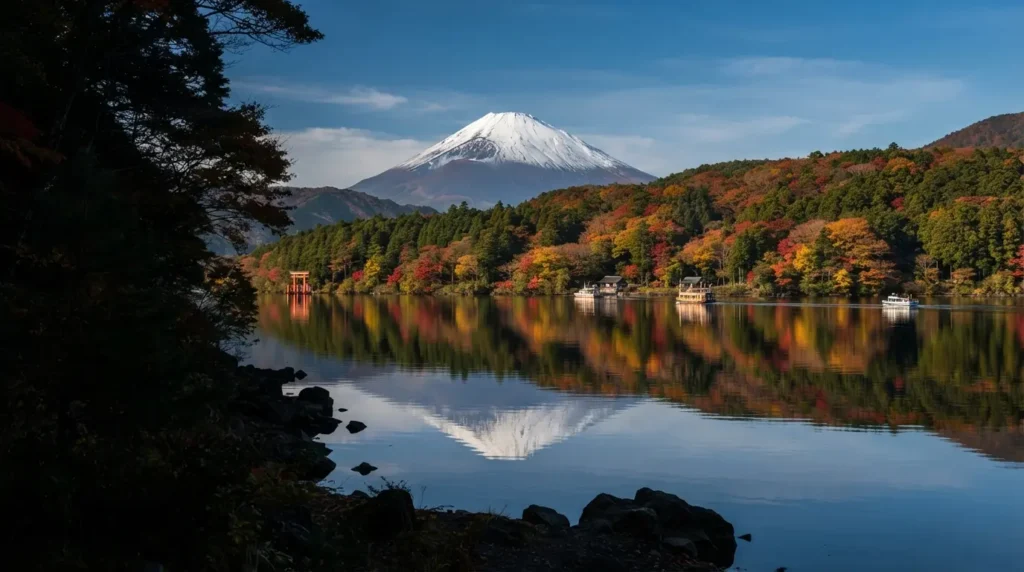
| Hakone | Early November | Mid-November | Mt Fuji backdrop, Hakone Open Air Museum |
| Tokyo | Mid-November | Nov 29 (red maple) | Rikugien, Shinjuku Gyoen, Koishikawa Korakuen |
| Kyoto/Osaka | Mid-November | Dec 11 (Kyoto), Dec 4 (Osaka) | Tofuku-ji, Eikan-do, Arashiyama, Minoo Park |
| Hiroshima/Miyajima | Mid-November | Late November | Miyajima island, Senjokaku pavilion |
| Kyushu | Late November | Early December | Fukuoka, Nagasaki, Kagoshima |
Sources: Japan Meteorological Corporation forecast, September 2, 2026; japanspecialist.com; alojapan.com autumn foliage guide 2026; selfguidejapan.com Japan autumn leaves 2026
The critical 2026-specific note: Kyoto’s red maple peak is forecast for December 11. Most Kyoto autumn tourism planning assumes a late November peak. In 2026, the colour will still be developing during the last week of November at many central Kyoto temples. Early December — December 1 to 10 — may be stronger than usual for central Kyoto temple gardens. Build flexibility into the itinerary rather than fixing on a single date.
What is the “chasing the colour” strategy for autumn Japan?
Koyo moves south and from higher to lower elevation. Cherry blossoms sweep north-to-south from Kyushu in March; kōyō sweeps south-to-north from Hokkaido in early October. An autumn trip structured to follow this movement can catch peak colour in multiple regions sequentially.
The sequence: begin in Hokkaido or the Japanese Alps in early to mid-October (peak in those regions before the end of October), move to Nikko in late October, reach Tokyo in late November, and arrive in Kyoto for the December 11 peak. This is an extended trip — four to five weeks for the full sequence, which is too long for most visitors.
The practical version: most visitors choose either the early part of the season (Nikko, the Alps, Hokkaido — October, less crowded, requires getting further from the standard Tokyo-Kyoto circuit) or the late part (Tokyo and Kyoto — late November through early December, maximum colour, maximum crowds).
Which are the best autumn foliage spots in Japan for 2026?
Tofuku-ji — the single most spectacular view in Japanese autumn
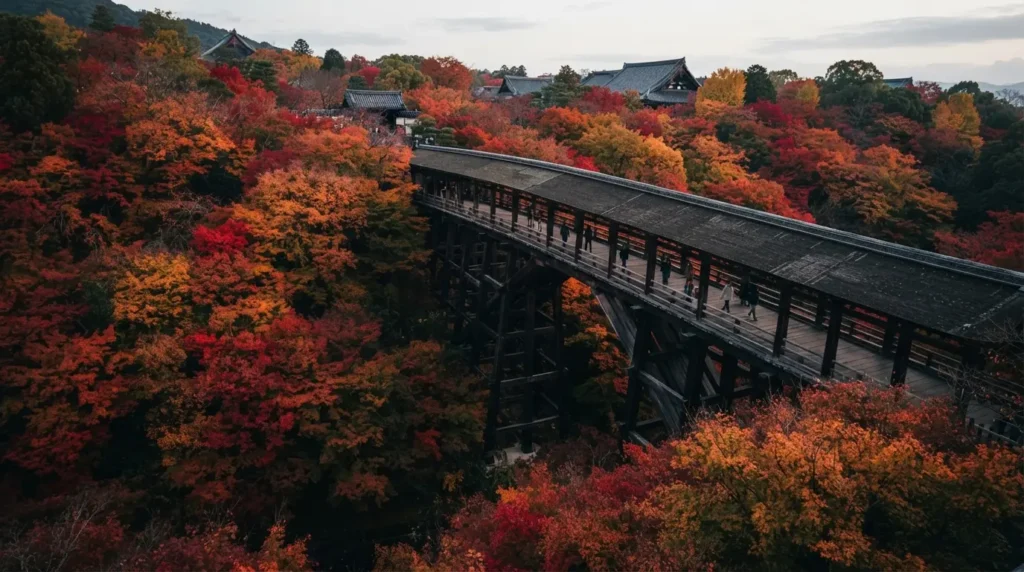
Tofuku-ji, a Rinzai Zen temple in southern Kyoto, contains the Tsutenkyo bridge — a wooden covered walkway that crosses a ravine entirely filled with maple trees. At peak colour, the view from the bridge into the maple valley is the most concentrated koyo spectacle available in Japan. This is not opinion; it is the consistent ranking by Japanese travel publications and the crowd levels that accumulate by 9am confirm it.
The strategy: arrive at opening time (8:30am). The first hour at Tofuku-ji during peak koyo is among the more extraordinary mornings available in any city, anywhere. By 10am the bridge has crowds that reduce the view to a queue management exercise. By 11am it is the most photographed bridge in Japan on that day. These are different experiences.
Evening illumination events run during the peak koyo period, transforming the maple valley under artificial light. Book in advance — the illumination tickets sell out. A Kyoto Tofuku-ji autumn evening illumination tour covers entry to the illumination event with a guided context of the temple and the season.
Eikan-do — the correct alternative when Tofuku-ji is at maximum capacity
Eikan-do (formally Zenrinji temple) is fifteen minutes’ walk from Tofuku-ji and contains a multi-level temple complex built on a hillside above a pond, with maples at every level reflecting in the water below. The composition — stone lanterns, maple reflections, multi-storey temple building — is among the best in Kyoto. It is also extremely busy at peak koyo. The same early-morning rule applies; the evening illumination events here are considered among Kyoto’s finest.
Nikko — the correct October choice
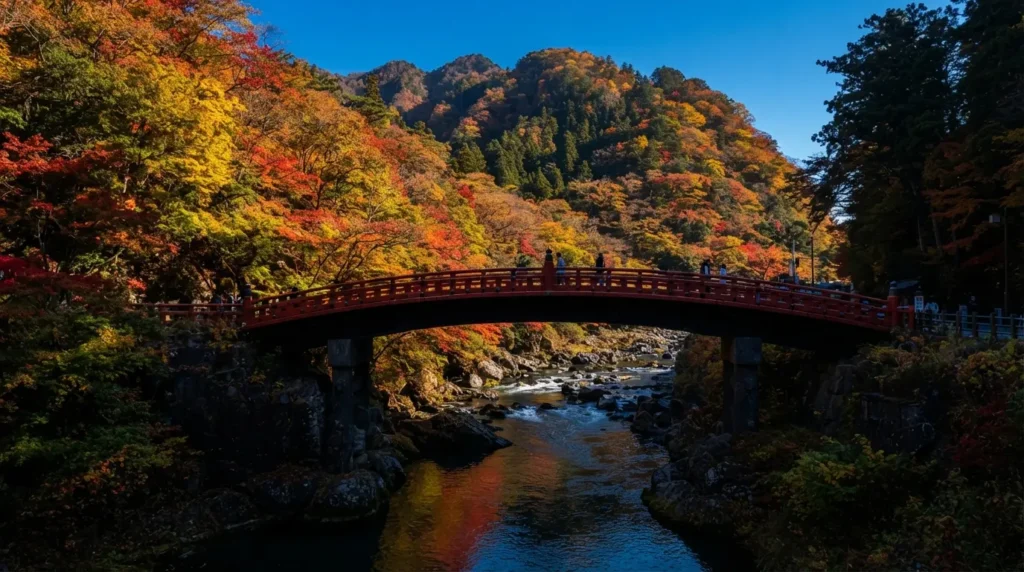
Nikko, ninety minutes north of Tokyo by Limited Express train, contains the Toshogu shrine complex (the most ornate Edo-period shrine in Japan) surrounded by cedar forest and, on the mountain roads above the town, the Irohazaka switchback road that passes through the peak koyo of the mountains on the way to Chuzenji Lake. In late October and early November — specifically before the colour reaches Tokyo — Nikko offers peak autumn at a fraction of the Kyoto crowd density.
The irohazaka switchbacks (48 hairpin turns on the way up, 20 on the way down, one-way traffic) in peak koyo are one of the most dramatic driving or bus experiences in Japan. The lake at the top, with Mount Nantai above it and autumn colours on every slope, is worth the journey specifically for the scale. A Nikko temples and autumn foliage day tour from Tokyo covers the shrine complex, the irohazaka and the lake in a single full day with transport.
Tokyo — the most accessible late-season option
Tokyo’s red maple peak in 2026 is forecast for November 29 — within the average range. The correct Tokyo koyo spots are the formal gardens: Rikugien in Bunkyo (one of Tokyo’s finest gardens, with an evening illumination that turns the central pond into a reflection of the maple canopy), Shinjuku Gyoen (three distinct garden styles with different species extending the viewing window), and Koishikawa Korakuen (the oldest remaining garden in Tokyo, compact and excellent).
The Meiji Jingu Gaien’s famous ginkgo avenue — the rows of yellow ginkgo trees photographed every November — peaks slightly earlier (around November 26 for ginkgo in the 2026 forecast) and should be visited before the maple peak for the full Tokyo sequence.
When should you book accommodation for Japan autumn 2026?
Kyoto in late November and early December: now, or as early as possible if reading this in October. Kyoto autumn is Japan’s single most in-demand travel window of the year — alojapan.com (2026) notes that Kyoto’s late-November peak is “Japan’s single most in-demand autumn travel window” requiring accommodation booked 4–6 months ahead. For a December 11 peak in 2026, travellers who have not yet booked Kyoto accommodation should check availability immediately.
Nikko in October: two to four weeks ahead is typically sufficient. The crowds are significantly lower than Kyoto.
Tokyo in late November: three to six weeks ahead recommended. Tokyo has far more accommodation inventory than Kyoto and the booking pressure is lower.
The practical strategy for last-minute planning: if Kyoto accommodation in late November or early December 2026 is no longer available at acceptable rates, consider basing in Osaka (thirty minutes from Kyoto by bullet train) or in a ryokan in a smaller town like Otsu or Uji adjacent to Kyoto. Both reduce accommodation costs and increase availability without materially affecting access to the Kyoto koyo sites.
Is autumn better than cherry blossom season for visiting Japan?
For most visitors, autumn is the more reliable season. The cherry blossom window is narrow — ten to fourteen days of usable viewing, dependent on weather, variable by year — and requires booking twelve months ahead for Kyoto accommodation during peak sakura. The kōyō season is six weeks long, moving south from early October to mid-December, which gives significantly more flexibility for trip planning. The 2026 season running late (Kyoto peak December 11 rather than late November) provides an additional week of flexibility compared to an average year.
The crowd comparison: both seasons are among the busiest in Japan. The specific Kyoto cherry blossom peak (typically early April) arguably generates more total visitors than the koyo peak, partly because the cherry blossom window across the country is shorter and more concentrated, and partly because cherry blossom has more international marketing weight. The experience at peak autumn Tofuku-ji at 10am and peak spring Maruyama Park at 4pm are equivalent in crowd density. The 8am version of both is entirely different.
For an extended Japan trip combining autumn: our Japan 10-day itinerary guide covers the standard Tokyo-Kyoto-Osaka routing applicable in all seasons. Our Japan beyond Tokyo and Kyoto guide covers Nikko, Kanazawa and the destinations that extend the circuit.
What does Japan in autumn cost?
Autumn pricing falls between the spring cherry blossom peak (highest) and the summer season (moderate). Kyoto accommodation in late November at the koyo peak runs similarly to early April cherry blossom pricing — high enough that booking early saves meaningfully. October in Nikko and the Alps is the most affordable window of the autumn season, with accommodation costs at roughly summer levels or below.
The JR Pass calculation for an autumn trip that combines Tokyo, Nikko, and Kyoto differs from the standard Golden Route: adding Nikko by Limited Express from Tokyo adds approximately ¥5,700 each way to the independent-ticket cost. A trip covering Tokyo (three nights), Nikko (one night), and Kyoto (three nights) typically justifies the 7-day JR Pass at ¥50,000 more easily than the standard Golden Route without Nikko. Calculate against your specific itinerary before purchasing — the guidance in our Japan 10-day itinerary covers this calculation in detail.
Frequently asked questions
Q: When does Japan’s autumn foliage peak in 2026?
A: According to the Japan Meteorological Corporation’s September 2, 2026 forecast: red maple in Tokyo around November 29, in Osaka around December 4, and in Kyoto around December 11 (slightly later than average). Hokkaido and the Japanese Alps peak in early to mid-October. Nikko peaks late October to early November. The 2026 season is running late in Hokkaido and the mountains; approximately average in the major cities.
Q: Is Kyoto autumn foliage best in November or December in 2026?
A: December, specifically December 1–11, for the red maple peak at the major temple gardens (Tofuku-ji, Eikan-do). The 2026 forecast puts Kyoto’s maple peak at December 11 — later than average — meaning the last week of November will have colour developing but not yet at peak in central Kyoto. November 20 onwards is still worth visiting for the temples that peak slightly earlier (Kibune, Ohara), but for the classic Tofuku-ji experience, early December 2026 is the correct window.
Q: Which is the best single spot for autumn foliage in Kyoto?
A: Tofuku-ji, for the Tsutenkyo bridge view over the maple-filled ravine. Arrive before 8:30am during the peak period. The evening illumination events at Tofuku-ji and Eikan-do are worth the separate advance booking. Eikan-do is the correct alternative if the Tofuku-ji queue is prohibitive at your arrival time.
Q: Is autumn in Japan better than cherry blossom season?
A: For most travellers, autumn is more practical. The kōyō season spans six weeks (October through mid-December), compared with ten to fourteen days of peak cherry blossom. Accommodation for Kyoto autumn needs to be booked three to four months ahead — earlier than for most autumn trips, but with far more flexibility in dates than cherry blossom planning requires. The colour intensity at peak koyo is equivalent to cherry blossom; many experienced Japan visitors consider autumn the more beautiful season.
Q: How far ahead should you book accommodation for Japan’s autumn foliage in 2026?
A: Kyoto in late November and early December: immediately, or as early as possible. Kyoto’s autumn accommodation books out 4–6 months ahead for peak dates. October in Nikko and the Alps: two to four weeks ahead is generally sufficient. Tokyo in late November: three to six weeks ahead recommended.
Japan’s autumn is the season that experienced Japan visitors consistently recommend for a second or third trip and that, on reflection, most first-time visitors say they wish they had timed their first trip around. The 2026 forecast puts Kyoto’s peak at December 11 — later than most guides currently state. Plan around that date, book Tofuku-ji illumination tickets in advance, arrive at the bridge before 8:30am, and the rest of the season organises itself. Plan your Japan autumn itinerary on PlacesToday →